We recently sat down as a research team to talk over key theme within private markets as part of the L&G Talks Asset Management series.
Discussion centred on why we believe global diversification matters more than ever, how we think it’s possible to balance inflation resilience with a total‑return mindset, and the practical implications for real estate, infrastructure and private credit.
Below, we’ve summarised some of the key takeaways from the episode.
Private credit and infrastructure delivered another year of steady returns in 2025. Real estate valuations appeared to bottom out, meaning income was the main driver of return (see table below).
Meanwhile, global public equities performed strongly. From a total portfolio perspective, this would have reduced private market weightings for many asset owners, potentially setting up a more active year for allocations in 2026.
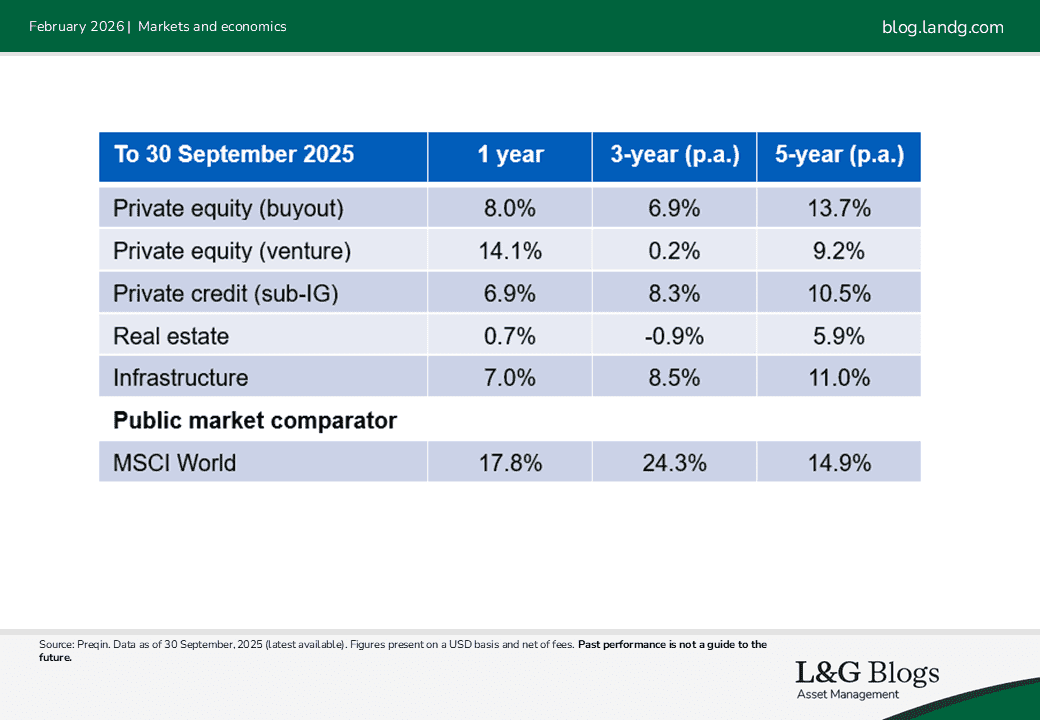
New capital allocations were mixed. Based on fund closes in 2025, it was a record year for infrastructure, modest improvement for real estate and weaker in private equity and credit.
Our three main themes for 2026 are as follows:
Long‑term expected returns look reasonable around 7% in the UK and US, a little lower in Europe. The dispersion between sectors is less pronounced than in the past decade, so a simple “own more XYZ sector” approach is unlikely to be a free lunch.
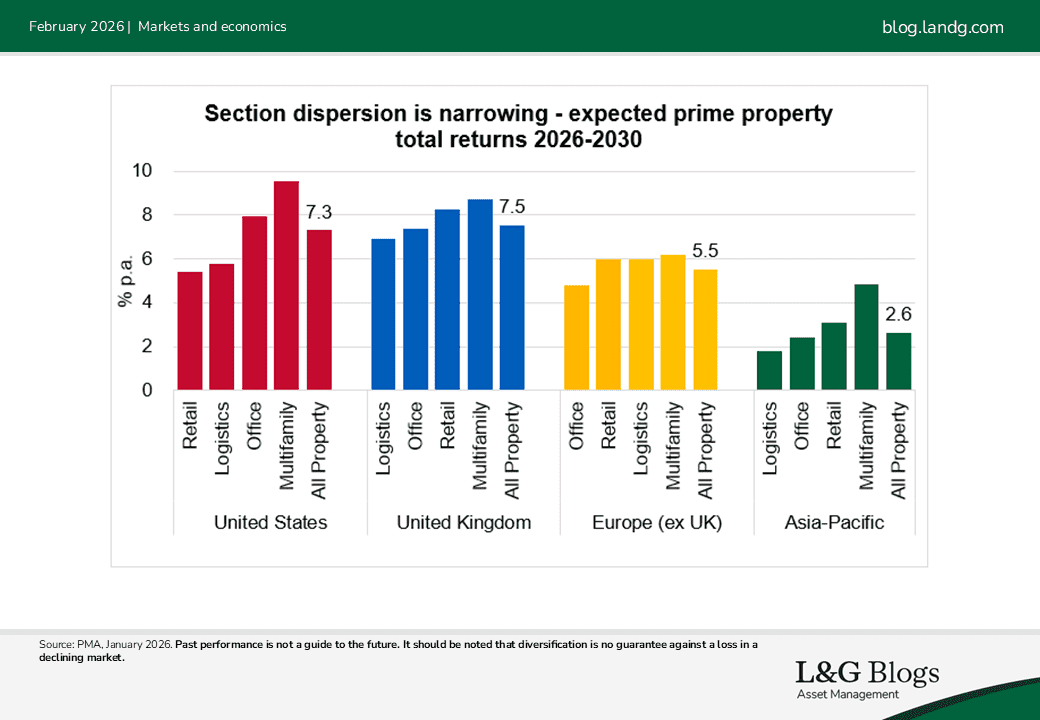
In such an environment, we believe the following approaches may help investors find alpha:
Big Tech capex continues to dominate the digital infrastructure market. Data centre demand continues to outpace constrained supply, underpinning strong rental growth and higher valuations for power‑rich capacity. We expect strong US growth to continue. While European demand growth is relatively more moderate, we see data sovereignty continuing to drive investment. Regions with abundant, stable, lower‑cost clean power, such as Iberia and the Nordics, are drawing mounting interest.
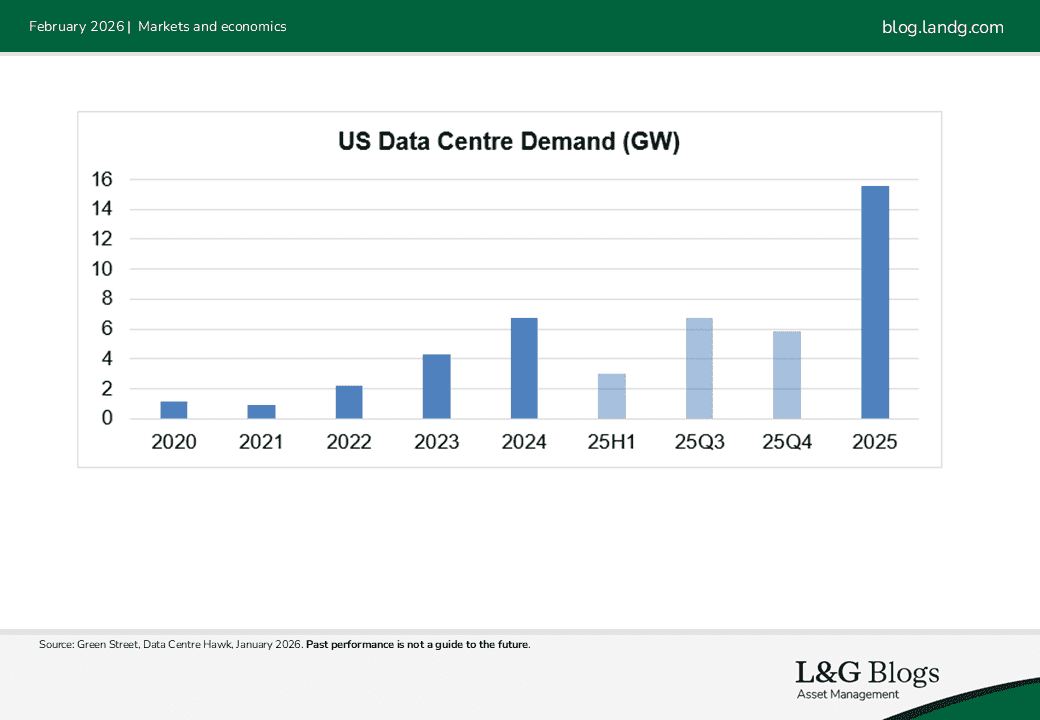
How might investors approach digital infrastructure?
2025 was a record year for IG private credit issuance, led by infrastructure and utilities. Spreads are tight, but higher base rates keep all‑in yields attractive, in our opinion, relative to history. Credit quality has also been resilient. We retain high conviction here for 2026.
In sub investment‑grade (sub-IG) credit, the high‑profile First Brands* bankruptcy made headlines in late-2025, prompting a healthy re‑examination of portfolio credit quality and underwriting standards. Activity slowed in Q4, but we see no evidence of systemic stress to date.
Defaults remained relatively low. Returns moderated (c. 9.5% in 2025 vs c.11% in 2024) mainly due to the rates/spread backdrop rather than loss severity.
What are the key considerations for sub-IG in 2026?
2026 is shaping up to be an active and complex year. We believe that focus on global diversification, pricing power and alpha generation are the key to resilience and outperformance.
Assumptions, opinions, and estimates are provided for illustrative purposes only. There is no guarantee that any forecast will come to pass.
It should be noted that diversification is no guarantee against a loss in a declining market.
*For illustrative purposes only. Reference to a particular security is on a historic basis and does not mean that the security is currently held or will be held within an L&G portfolio. The above information does not constitute a recommendation to buy or sell any security.
More about Lushan Sun
Head of Cross-Asset Research, Private Markets, Asset Management, L&G
LGIM Blog – Lushan Sun, Private Credit Research Manager
Disclaimer: Views in this blog do not promote, and are not directly connected to any L&G product or service. Views are from a range of L&G investment professionals, may be specific to an author’s particular investment region or desk, and do not necessarily reflect the views of L&G. For investment professionals only.