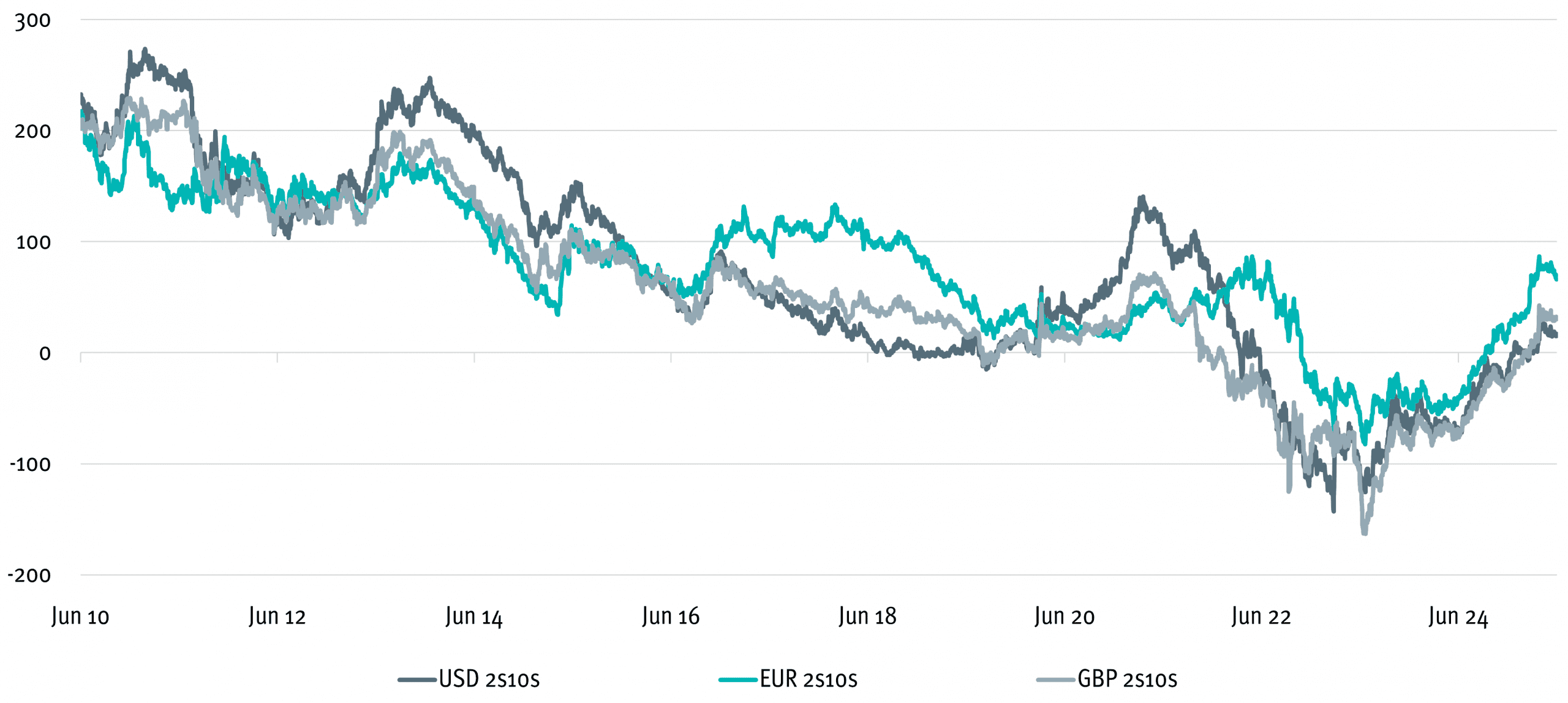
Since mid-2024, we have seen a steady and rapid rise in yield curves in the US, UK and Europe. As an example, the chart shows the yield curve between two- and ten-year swaps. Of course, this is because we are in a rate cut cycle. After the rapid rise in key interest rates in response to global inflation, the curves also started from strongly inverted levels. So a certain normalization was definitely necessary.
For some months now, however, the focus has increasingly shifted back to fiscal policy and swelling deficits. The USA will continue to report an annual deficit of more than 6 percent in the coming years, while in Great Britain the budget will become tighter and tighter with every rise in interest rates, although investments are already calculated out of the deficit limit. France's situation was already covered in the last issue of our newsletter, and even Germany is suspending its debt brake.
At a time when interest rates are close to 0 percent and inflation is too low, most governments have become accustomed to not having to fear consequences for additional debt. Stimulus in times of crises such as Covid also makes perfect sense, only times have changed. In many countries, annual spending on interest is now higher than the budget for defense or education. The refinancing costs of the high debt legacy continue to drive up the deficits and there is a risk of a "doom loop". The increased supply of government bonds is offset by falling demand from pension funds and insurance companies, especially at the long end.