The German Real Estate Association (IVD) has now published its 2026/2027 Commercial Property Price Index. The analysis of market data from around 410 towns and regions reveals a commercial property market that is becoming increasingly polarised. Whilst modern, energy-efficient office space in prime locations continues to see rent increases, the risk of vacancies is rising for older buildings. In the retail sector, the decline in shop rents is continuing, particularly in medium-sized and large towns and cities. Prices for commercial building land, by contrast, have largely stabilised following the falls seen in recent years.
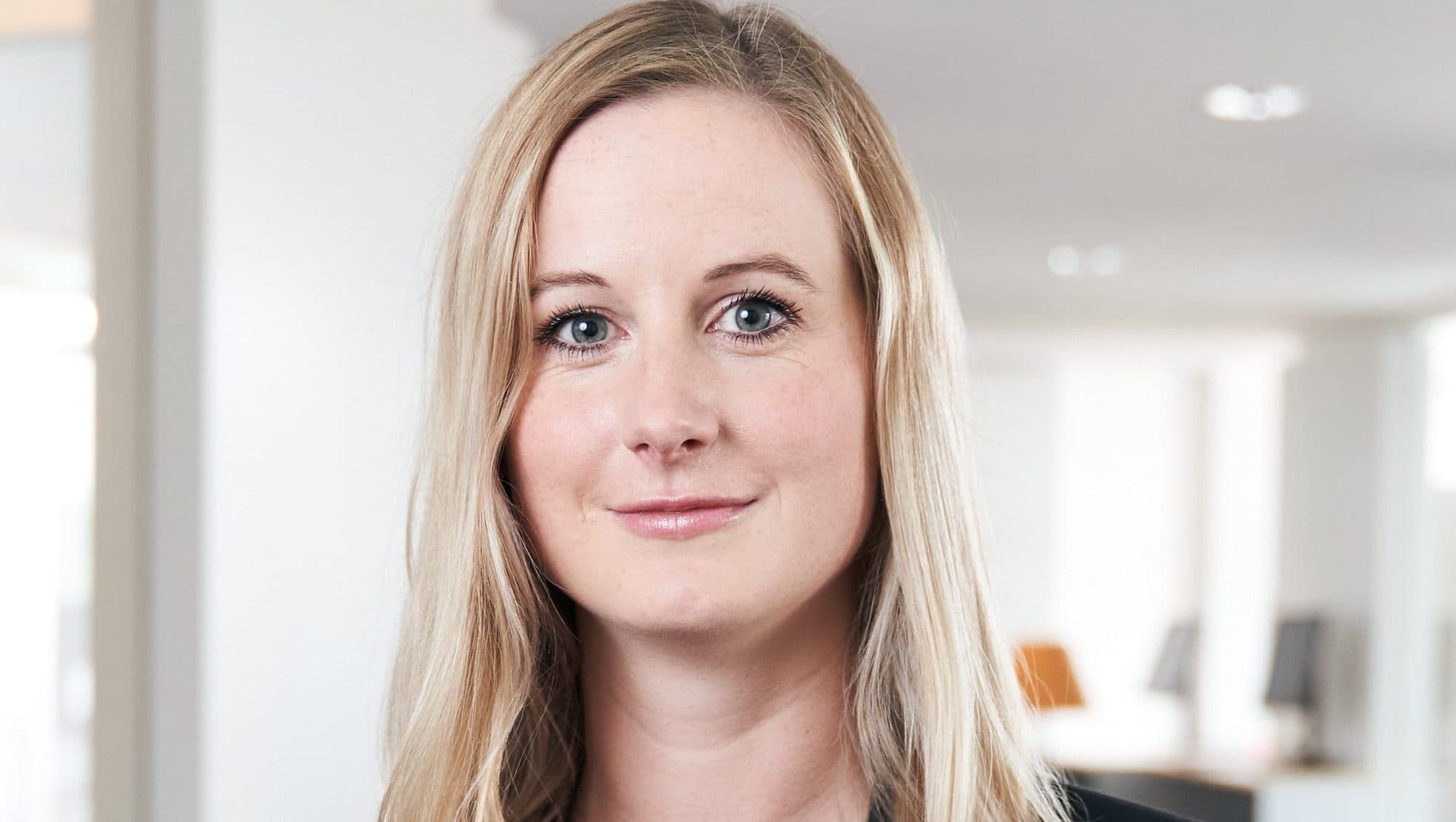
“The commercial property market is increasingly becoming a market of varying speeds. Whilst modern office space remains in demand, older properties are coming under pressure. In the retail sector, too, a central location and high footfall alone are no longer sufficient to maintain previous rent levels,” says Jeanette Kuhnert, a commercial estate agent in Hamburg and IVD Vice-President. Axel Quester, also an IVD Vice-President and property entrepreneur from Duisburg, adds: “The results show how important it has become to consider each property and its location on a case-by-case basis. Energy efficiency, technical specifications and potential uses are increasingly decisive factors in determining whether a property can be operated profitably in the long term. For owners, this means investing in the future viability of their portfolios in good time.”
Office property: High-quality space is rising in value, whilst standard offices are stagnating
Demand for modern office space remains comparatively robust. In the first half of 2026, rents for office space with good utility value rose by 1.6 per cent nationwide compared with the same period last year. Prime office rents rose by 1.4 per cent. However, rent growth has slowed compared with the previous year. For office space with average utility value, the nationwide rent increase was just 0.3 per cent, whilst rents for basic office space remained flat.
In the second quarter of 2026, average monthly net rents (excluding service charges) across Germany stood at 8.90 euros per square metre for basic office space, 11.90 euros for mid-range office space and 16.80 euros for high-quality office space. A longer-term comparison puts these increases into perspective: whilst office rents have risen by between 37 and 41 per cent in nominal terms since 2010, depending on the segment and including prime rents, when adjusted for inflation, rents for basic, mid-range and high-quality premises are between 1.3 and 3.2 per cent below the levels seen at that time.
At the same time, the vacancy rate is rising. In 15 selected office locations, the vacancy rate rose from 6.4 to 7.3 per cent within a year. In the seven most important German office locations (the ‘Big 7’), it stood at 9.0 per cent at the end of the third quarter of 2026. Whilst companies prefer modern, energy-efficient and easily accessible offices, larger, older premises are often left behind following relocations. The sluggish economic recovery, working from home and flexible working models are also contributing to companies reviewing their space requirements.
“We are not seeing a general shift away from the office, but rather a change in demand. Companies want attractive working environments that can be run cost-effectively and offer added value to their employees. The main problem is properties that no longer meet these requirements,” explains Kuhnert. “For owners, the question is increasingly arising as to whether modernisation is still worthwhile or whether a different use would make more sense.”
City comparison: Munich remains the most expensive office location
In Germany’s eight largest cities, rents for high-quality office space rose by an average of 0.5 per cent compared with the previous year. There were slight falls in rents for basic and mid-range office space.
- Munich remains the most expensive location for high-quality office space, at 52 euros per square metre per month. The prime rent reached 62 euros at the end of the third quarter.
- Cologne saw a rise of just over 2 per cent for high-quality office space, whilst Munich saw a rise of 4 per cent.
- Düsseldorf, by contrast, recorded a fall of just over 14 per cent in this segment.
- Leipzig remains the most affordable of the eight locations, with rents for good-quality office space at 13.50 euros per square metre.
These varying trends show that there is no uniform market trend even within the major office hubs.
Retail property: Even the best locations are losing ground
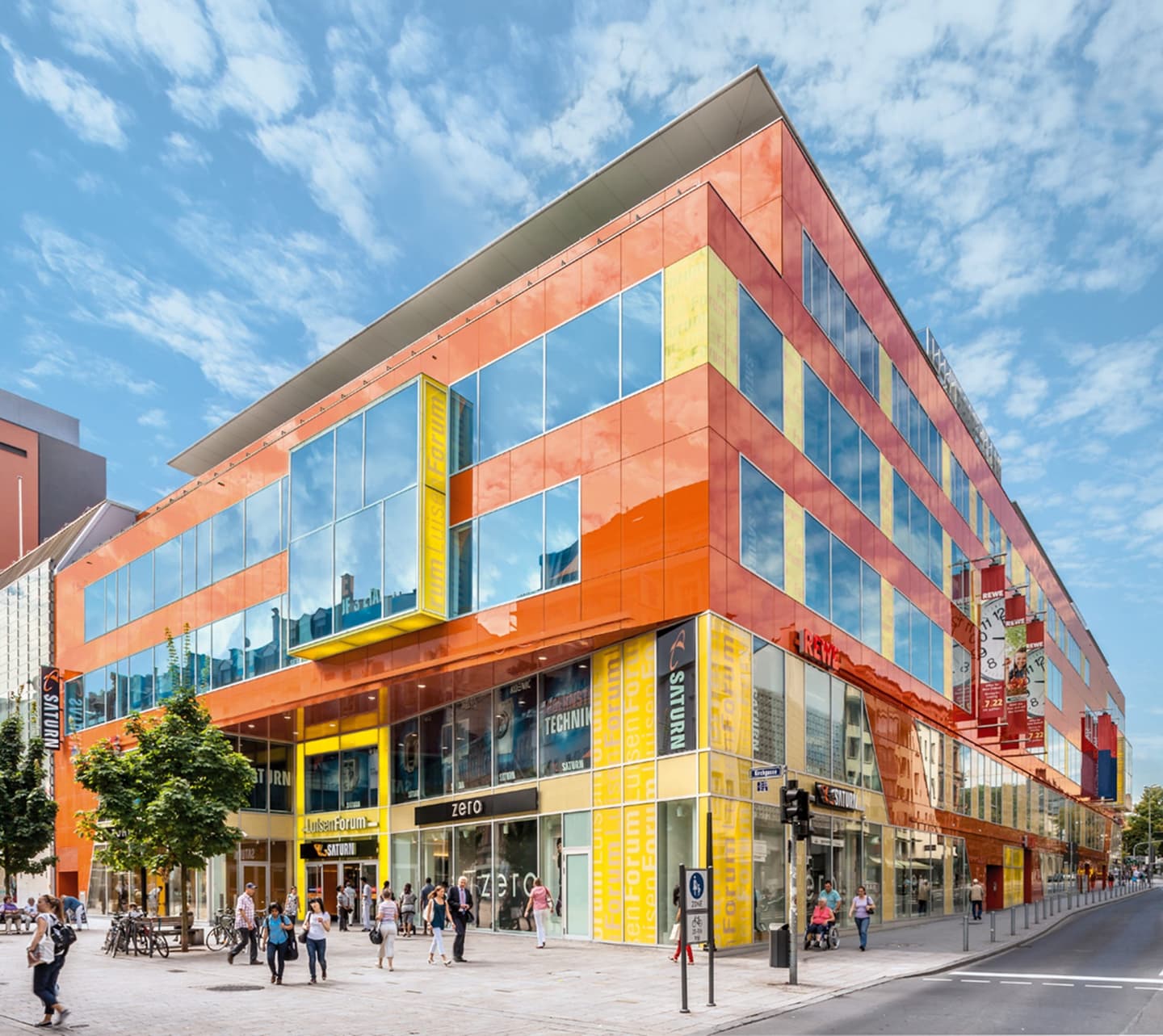
The situation in the high-street retail sector remains tense. In prime locations (1a) within city centres, shop rents fell nationwide in the first half of 2026 compared with the same period last year, by 3.2 per cent for large premises and 3.7 per cent for small premises. This marks a steeper decline in rents compared with the previous year. In secondary locations (1b), rents fell by 1.0 per cent and 2.5 per cent respectively. Prime rents in the best retail locations also fell by around 6.6 per cent. Since their peak in 2017, rents in prime locations have fallen by around 30 per cent in nominal terms. Adjusted for inflation, they are now a good 40 per cent below the 2010 level.
However, this trend is not affecting all towns and cities equally. Whilst further falls in rents are being observed in large and medium-sized towns and cities, retail locations in small towns are proving comparatively stable. There, rent changes in the commercial and secondary centre locations examined ranged from minus 0.1 to plus 1.1 per cent. One reason for this is likely to be the greater importance of local amenities and everyday services in smaller towns. In major shopping streets, by contrast, consumer caution, changing shopping habits and online retail are having a greater impact on demand for retail space. The number of high-street shops is also continuing to fall. According to the sector forecast cited in the price index, this figure is expected to fall by a further 4,900 to around 296,600 by 2026. Ten years ago, the figure stood at 366,800.
“The fall in shop rents is a clear sign that our town centres are undergoing structural change. Not every retail space that stands empty today will be able to be used as a shop again in the future,” said Kuhnert. “We therefore need town centres where retail, hospitality, services, culture and housing interact in a meaningful way. Attractive public spaces, good accessibility and uses that regularly draw people into the centres are crucial.”
City comparison: Significant differences in retail rents
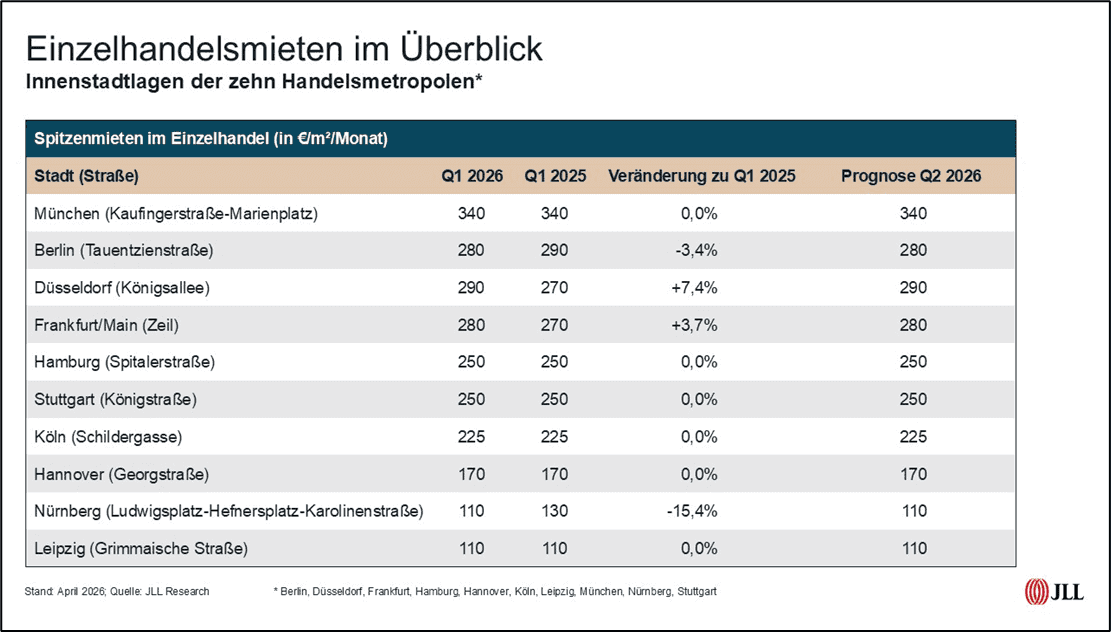
Munich remains one of the most expensive locations in Germany for the retail sector. Rents for small retail units in prime locations within the city centre’s commercial hubs can reach 300 euros per square metre per month. Leipzig, at 95 euros, is less than a third of this level. In Germany’s eight largest cities, rents for large retail units in prime locations fell by an average of 1.8 per cent, whilst those for small units fell by 1.3 per cent. This means the downward trend is continuing even in the leading shopping destinations.
Commercial plots: Price falls come to a halt
Prices for land in light industrial estates are showing signs of stabilisation. Following several years of falling prices, they remained largely unchanged nationwide in the first half of 2026. The rates of change ranged from 0.0 per cent to plus 0.2 per cent. In medium-sized and small towns, by contrast, price rises of between 1.2 and 2.0 per cent were recorded once again. In around two-thirds of all towns surveyed, prices remained unchanged. Price rises were reported around six to seven times as frequently as falls.
“As far as commercial property is concerned, there are many indications that the price correction of recent years has, for the time being, come to an end. However, this does not yet signify a broad-based market recovery,” explains Quester. “When it comes to demand, companies’ economic prospects remain just as crucial as a location’s infrastructure. An efficient energy supply, good transport links and reliable planning conditions are key competitive factors.”
There are also positive signs from the industrial and logistics lettings market. Take-up rose by 24 per cent in the first half of 2026 compared with the same period last year. This underlines the fact that, despite the subdued macroeconomic outlook, there remains demand for suitable commercial premises.
Investment market: Higher rents do not automatically mean higher purchase prices
The situation remains challenging in the investment market too. According to a supplementary market analysis by the vdp, new let rents for office properties rose by 2.7 per cent in the second quarter of 2026, and by 1.5 per cent for retail properties. At the same time, however, purchase prices fell by 1.2 per cent and 0.2 per cent respectively. The volume of commercial property investment reached around 17.1 billion euros in the first three quarters of 2026, which was two per cent below the previous year’s level. For retail properties, the transaction volume actually fell by around a quarter. Rising financing costs and cautious investors are hampering the market recovery. Whilst higher rents are helping to stabilise property values, they do not necessarily lead to rising purchase prices.
Outlook: Facilitating change of use and rethinking town centres
From the IVD’s perspective, the findings of the Commercial Property Price Index show that the challenges facing the commercial property market cannot be resolved by an economic recovery alone. New uses are needed, particularly for older office buildings and retail space that is no longer in demand.
The federal programme ‘Gewerbe zu Wohnen’, launched in July 2026, can help to convert suitable office and commercial premises into housing. However, not all existing buildings are suitable for such a conversion. In addition to the structural requirements, the economic conditions must also be right.
“We must not allow buildings to remain permanently vacant when they would be suitable for other uses. Where a change of use makes technical and economic sense, the necessary conditions under planning and building regulations must be put in place,” demands Quester. “To achieve this, we need faster planning permission processes, greater flexibility when carrying out works on existing buildings, and local authorities that actively support this transition.”
The IVD also sees a need for political action in city centres. Local authorities should amend their urban development plans where new mixed-use developments open up viable long-term prospects. The increased funding for urban development can support this transformation.
“The commercial property market will continue to change. It is crucial that we do not merely manage this change, but actively shape it. This involves investing in future-proof properties, as well as being prepared to think beyond existing patterns of use and to design new buildings to be more resilient,” concludes Kuhnert.
The IVD Trade Price Guide 2026/2027, containing detailed results and analyses, is available from the IVD online shop: http://www.ivd-shop.com.