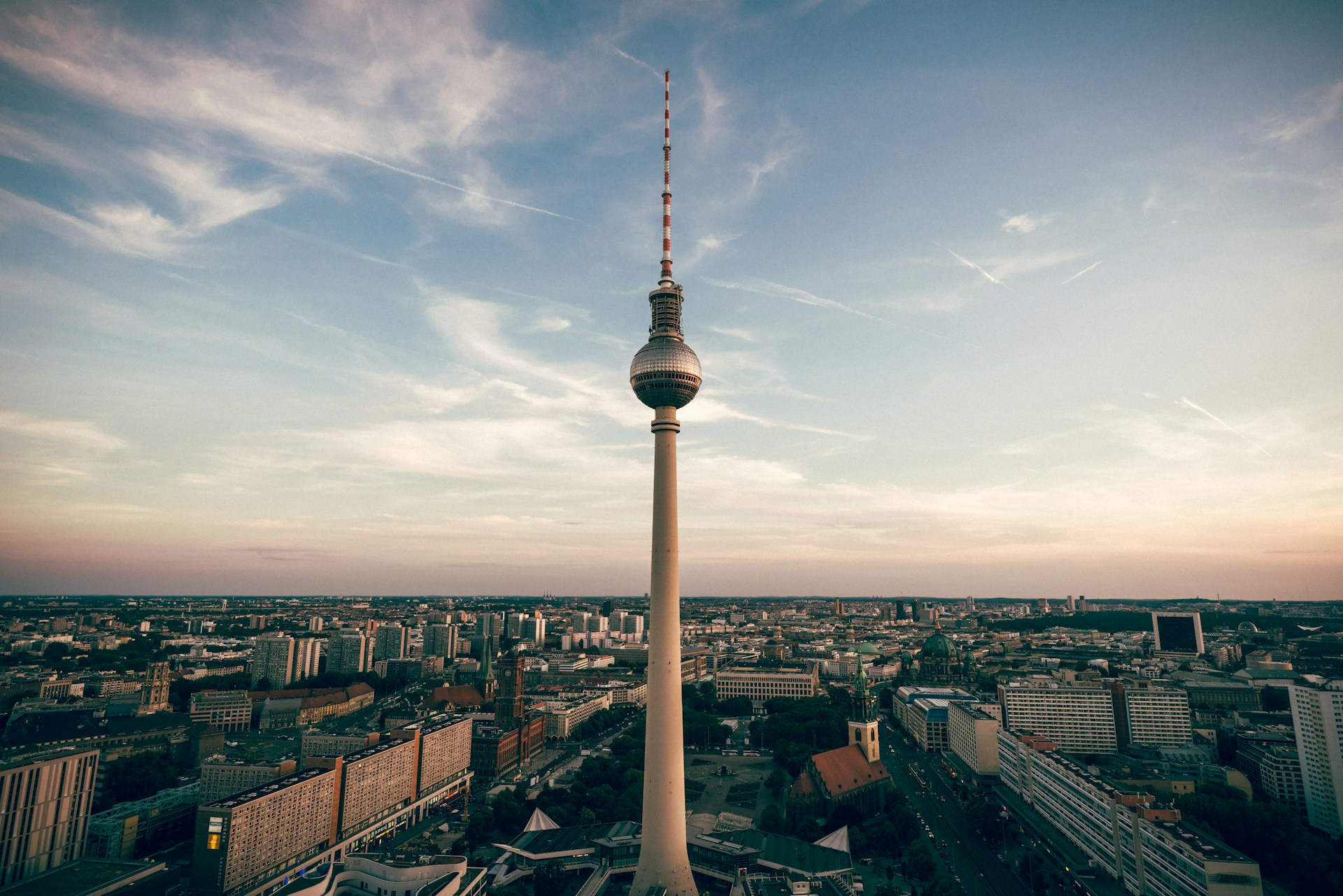
After the first six months, the Berlin office market can look back on a good first half of 2026 in many respects. At around 373,000 m², the capital had already achieved take-up at the end of June, which was not even achieved after three quarters due to the predominantly small-scale market activity in the previous year (Q1–3 2025: around 362,000 m²). Another positive signal for Berlin as a business location is the comparison with the ten-year average value, which was exceeded by almost 10% in the middle of the year despite the challenging market environment. This is the result of the analysis by BNP Paribas Real Estate.
“The second quarter of 227,000 m² made a decisive contribution to the pleasing interim results, which was the second strongest period of the year in the last five years due to several deals, some of which were very large. In this context, however, it should be pointed out that the high turnover could only be achieved with the help of the owner-occupier deals of the public administration,” explains Jan Dohrwardt, Managing Director and Berlin Branch Manager of BNP Paribas Real Estate GmbH. In the past three months, the expansion of the Federal Ministry for Economic Cooperation and Development over around 31,500 m² (1.3 Potsdamer-/Leipziger Platz) and the Berlin City cleaning over around 16,500 m² (2.7 Wilmersdorf/Schöneberg/Tempelhof).
With regard to prime rents, there are premium properties in which the level of €50/m² can be exceeded, but overall the €47/m² achieved several times can still be considered relevant to the market. While demand is shifting towards modern, ESG-compliant space, the supply overhang for older existing buildings away from the top locations is increasing, making extensive incentive packages increasingly relevant.
ICT technologies before the public sector, total vacancy rate at 2.1 million m², vacancy rate rises to 9.6%
When it comes to the sectoral composition of take-up, two sectors stand out in the first place, which have so far accounted for a good 42% of total take-up. In this context, ICT technologies (over 22%) and public administration (around 20%) should be mentioned in this context. In addition to the aforementioned major deals in the public sector by the Federal Ministry for Economic Cooperation and the Berlin City Cleaning Service, the ICT division has been active in the past three months, especially in the form of the software company JetBrains: In the future, the tech company will be able to realize a new office location of around 18,500 m² in the HAINWERK in submarket 2.4 Friedrichshain/Prenzlauer Berg. But even apart from these two sectors, the Berlin market can be attested to a wide range of users with industrial administrations, consulting firms (10% each) and the high shares of the two collective categories “Other” and other services.
The vacancy volume rose by 5% to just under 2.1 million m² in the second quarter. At the same time, the vacancy rate also rose again somewhat, reaching 9.6% in the middle of the year. Modern space currently totals 1.29 million m², which corresponds to a market share of 61%. In particular, there is only very limited availability of new-build space in the central prime locations. All in all, however, there is no shortage of supply in the modern segment either. The challenge, however, is that supply and demand meet in terms of location and equipment in a price-sensitive market.
Prospects
In the first half of the year, the Berlin office market laid a very good foundation for the summer and autumn months. The major deals that were missing last year were concluded in the first two quarters of 2026 – and that also, but not exclusively, by the public administration.
“Against the background that the Q3 result from the previous year was already topped at the end of June, the capital can start the third quarter with confidence. In addition, the sometimes large-volume applications are optimistic, which could additionally boost sales in the further course of the year if there is sufficient space. On the other hand, however, it is also important to point out that the market environment remains challenging: the continuing sluggish economic recovery, geopolitical uncertainties and, increasingly, the effects of AI tools on the labour market, which are difficult to predict, are influencing sentiment and marketing conditions or periods,” says Jan Dohrwardt.
Since the positive factors predominate, especially in the highly sought-after sub-markets, an above-average balance cannot be completely ruled out at the end of the year and a good result is even likely. Due to the high demand pressure on absolute premium space, it can be assumed that prime rents will continue to decline in the short to medium term in the range of
50 €/m² mark.