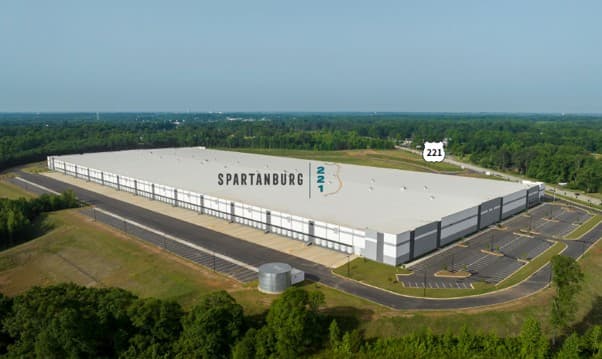
The renewed rise in financing and capital market interest rates noticeably slowed market activity in the German industrial and logistics investment market in the third quarter. At 3.7 billion euros, the transaction volume was 6 per cent below the previous year’s figure. Nevertheless, this property sector maintained its position as the second most popular among investors, with a market share of 24 per cent.
Christian Kah, Head of Industrial & Logistics Germany at Colliers: “The market is not currently being held back by a lack of capital. Rather, we are seeing buyers keen to invest coming up against sellers who remain cautious. This is prolonging marketing and due diligence processes and making it more difficult to close deals, even though the fundamentals of the logistics market remain strong. High demand in the lettings markets and positive prospects for rent growth ensure that logistics properties remain right at the top of investors’ agendas.”
The German logistics property market is the focus of foreign investors
On a quarter-on-quarter basis, the summer months proved to be the busiest period of the year for the market. Whilst a transaction volume of around 1.1 billion euros was recorded in the first quarter, the third quarter accounted for around 1.4 billion euros. Foreign investors have played a key role in shaping market activity since the start of the year. At 66 per cent in the first quarter, their share of the transaction volume remained at a consistently high level, rising to 68 per cent by the third quarter.
“We note that foreign investors are viewing Germany as an investment destination in an increasingly positive light. According to several studies, including PwC’s ‘Emerging Trends in Real Estate Europe 2026’ and KPMG’s ‘Business Destination Germany 2026’, Germany ranks among the top countries in Europe. In discussions, too, we recognise that the country scores highly, particularly thanks to its economic diversity, political stability and central location within Europe. Furthermore, the German economy has proved robust over the course of the quarters and has surprised with growth, particularly in the export sector. Investments in the defence sector, as well as special investments in areas such as the federal government’s infrastructure, have made a significant contribution to this,” explains Kah.
At the end of the third quarter, the share of portfolio transactions in the overall industrial and logistics property market remained below average at 24 per cent, falling well short of the five-year average of 38 per cent. Portfolio transactions continue to be influenced by the price-setting phase. Whilst the expectations of buyers and sellers are increasingly converging, decision-making remains challenging, particularly for portfolios comprising properties in peripheral locations. This is due to the retrospectively weak take-up figures from 2023 and 2024. International investors base their investment decisions heavily on quantitative market indicators. However, the market recovery has already begun and is evident in numerous sub-markets. Due to the inherently retrospective nature of the data, this positive development has so far been reflected only to a limited extent in the published key figures. Among the deals shaping the market was the sale of a portfolio by Blackstone, in which ten properties – including five within the top-8 markets – were sold to a US REIT.
Outlook: A well-stocked pipeline will ensure a strong end to the year
Geopolitical tensions and the resulting shift in the financing environment confirmed market expectations, with the result that the gross prime yield for core logistics properties rose by 5 basis points to 5.05 per cent at the end of the third quarter. This is the second adjustment to yields following a stabilisation phase lasting around two years. The rise in yields reflects not so much a deterioration in fundamentals as an adjustment to a financing environment that has once again changed. In many parts of the lettings market, demand and rental growth remain intact.
“We are starting the fourth quarter with a pipeline worth just under one billion euros. Many transactions have not been cancelled, but merely postponed due to changes in financing assumptions. We therefore continue to expect full-year results to be on a par with last year’s. However, for a broader market recovery, investors need greater certainty regarding future interest rate trends,” concludes Kah.
At the same time, according to Kahs’ assessment, the current market environment presents attractive opportunities for specialist properties. “Specialist properties, such as temperature-controlled or cross-dock facilities, offer many investors an attractive high-yield addition to their portfolios. Furthermore, the current surge in demand for specialised properties in the lettings market ensures stable re-letting prospects and attractive potential for rent growth. Despite these positive fundamentals, the investment market is not expected to see a sustained recovery until 2027, once financing costs and asking prices have stabilised further,” concludes Kah.