Affordable housing is increasingly becoming a central challenge on the German housing market. A recent analysis by Wüest Partner on the housing cost burden in all German municipalities shows that while rental apartments still remain comparatively affordable for many households, the purchase of residential property is increasingly becoming a financial stress test.
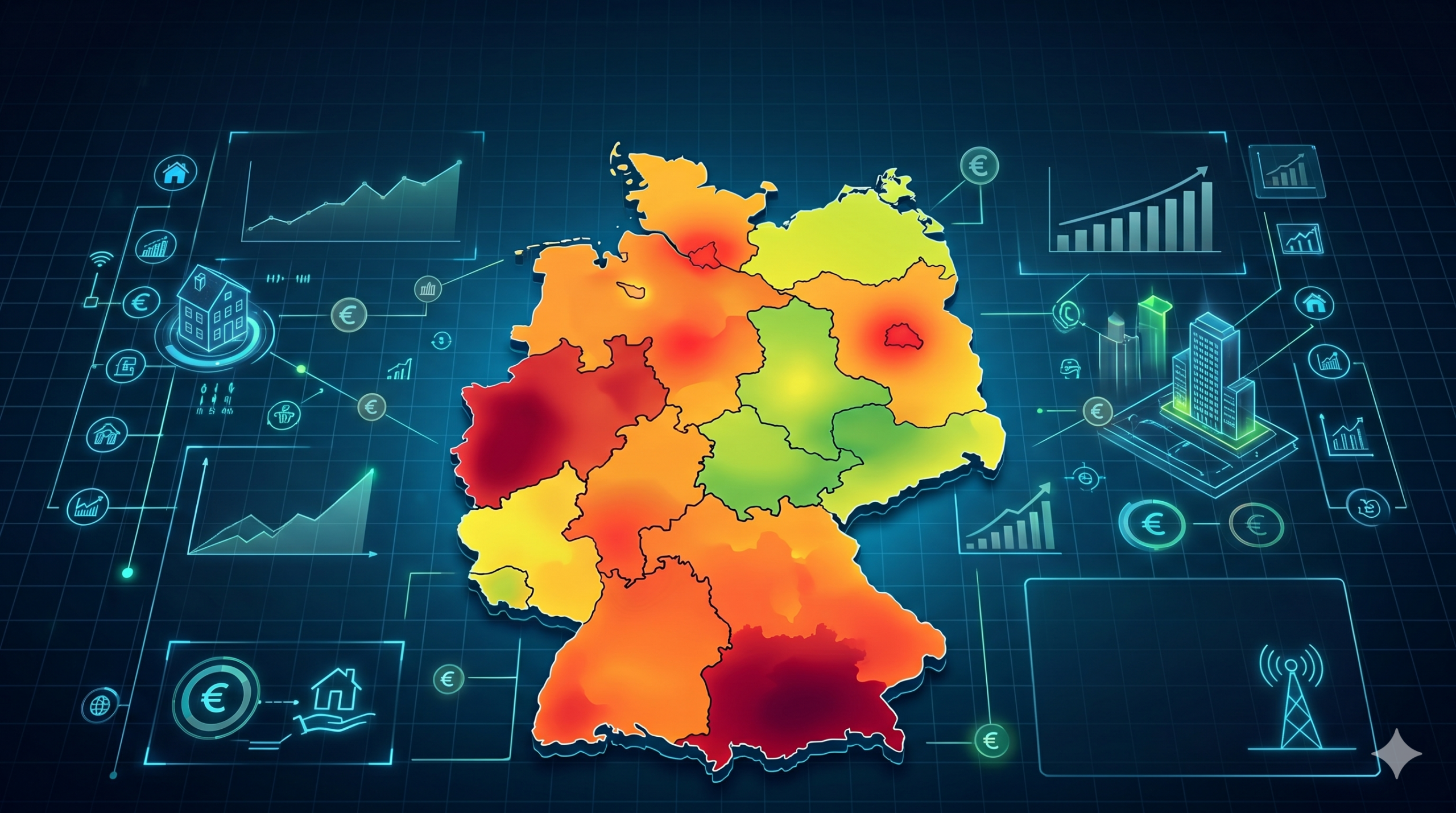
The study not only looks at rents and purchase prices, but also puts the actual housing costs in relation to disposable household income. This creates a differentiated picture of the regional affordability of housing.
Property significantly more heavily burdened than rents
In the rental housing market, the housing cost burden in most municipalities is between 14 and 19 percent of disposable household income. A burden of over 30 percent remains the exception. The calculations are based on median asking rents, the average purchasing power per household and a standardised apartment size (70 sqm).
The situation is different for home ownership: In around 90 percent of municipalities, the housing cost burden is already above 20 percent, and in about one in twenty municipalities even above the generally recognized affordability limit of 30 percent. In addition to median bid prices, assumptions on financing costs as well as maintenance and maintenance costs are also taken into account.
“The results clearly show that today it is no longer real estate prices alone that determine affordability. The decisive factor is the interaction of housing and financing costs as well as income,” says Sophie Nieder, Senior Economic Market Analyst at Wüest Partner.
Metropolises are reaching their limits
The situation is particularly tense in Germany’s major cities. In the top 7 cities, the average rental cost burden is already 27.7 percent. With 30.9 percent, Berlin is the only one of the large metropolises to exceed the frequently used orientation value of 30 percent. Frankfurt am Main (29.7 percent) and Munich (29.3 percent) follow closely behind.
The burden is even more pronounced when it comes to home ownership. In all top 7 cities, it exceeds the 30 percent mark. The front-runner is Munich with a housing cost burden of 36.5 percent. High purchase prices of around 8,000 euros per square metre ensure that even above-average incomes can only partially offset the financial burden. Berlin (35.8 percent) and Hamburg (35.1 percent) also have very high pollution rates.
Suburbs and holiday regions particularly affected
In addition to the metropolises, economically strong surrounding communities and touristic regions are increasingly coming under pressure. Especially in the Munich area, on Lake Tegernsee and on the North Frisian islands, limited supply and high demand come together. Purchase prices of more than 10,000 euros per square metre are not uncommon there, and in some municipalities values of over 13,000 euros are even reached.
Rural regions remain comparatively affordable
Significantly lower levels of pollution are found above all in rural regions of eastern Germany and in parts of Rhineland-Palatinate. There, the rent burden ratios are often between 14 and 16 percent. This is mainly due to lower rents and lower demand pressure.
Housing cost burden as an early indicator of market developments
The results provide a reliable basis for municipalities, investors, project developers and political decision-makers. They show where additional housing is particularly urgently needed and in which regions affordability could come under further pressure in the future.
“The analysis makes it clear that the housing issue is increasingly a question of regional affordability. In order to keep housing affordable in the long term, the expansion of the housing supply remains the decisive lever,” says Sophie Nieder.