Leading companies in the AI industry are warning of the risks posed by a technology that they themselves are driving forward at breakneck speed. One of the consequences that is repeatedly discussed is greater control, more regulation and, possibly, slower development.
The debate on security is important.
From an investor’s perspective, however, there is a second, less frequently discussed question:
What would a slowdown in AI development actually mean in economic terms?
This question becomes particularly interesting when one shifts one’s focus from the models to the physical infrastructure behind them.
After all, AI has long since ceased to be merely a software issue. It requires data centres, energy, cooling, network connectivity and connectivity. A digital megatrend thus gives rise to very real investment decisions.
And this is where two completely different paces collide.
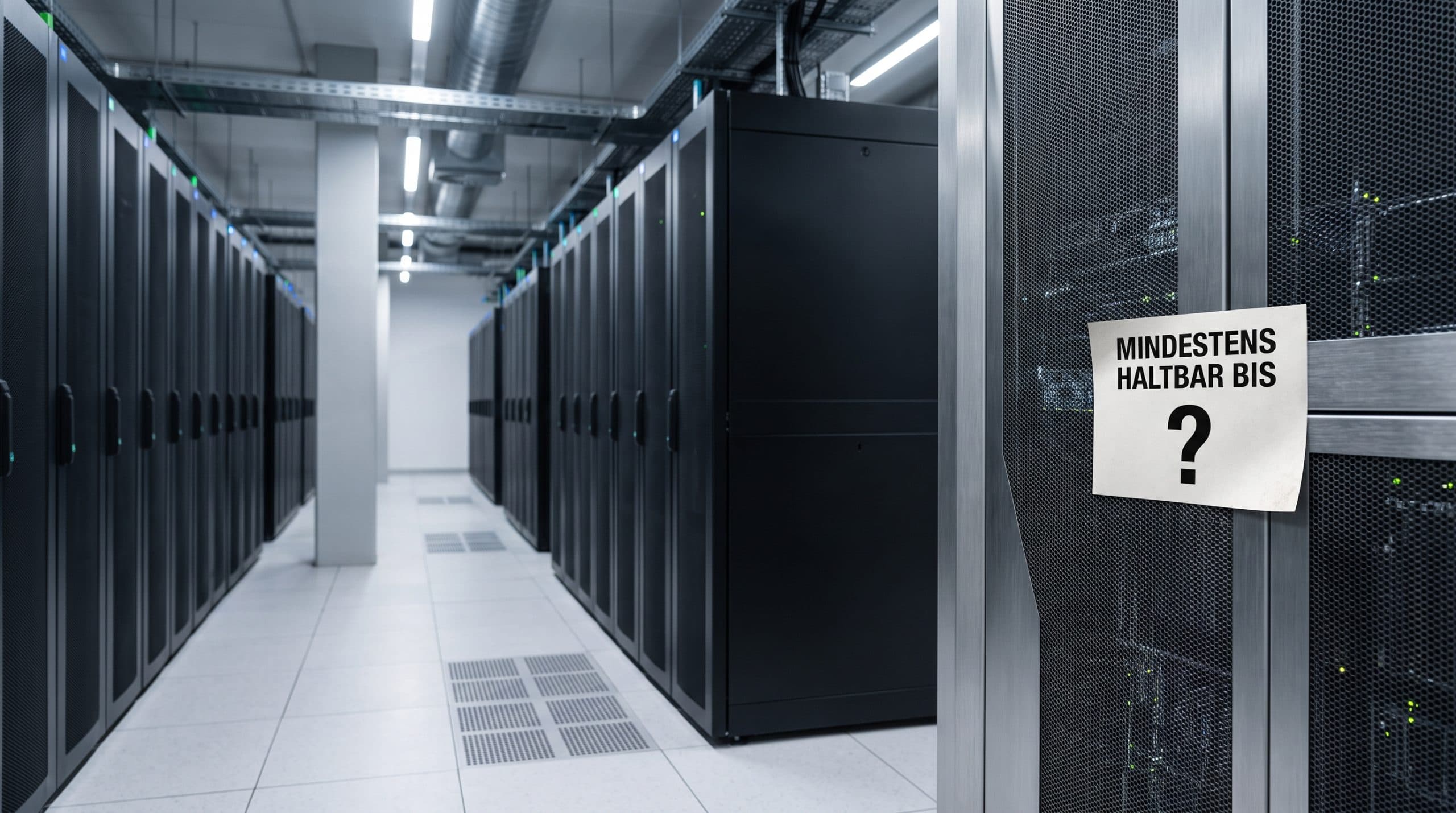
AI models can change within a short space of time. The infrastructure behind them is financed for years.
For institutional investors, this creates an interesting area of tension.
Abundant capital meets rapid technological development
The AI boom is generating a significant demand for infrastructure.
For an investor, however, the expectation of rising demand is not enough. The crucial factor is whether a specific investment will remain competitive even if the requirements for computing power, energy supply or cooling change.
This problem is familiar from other infrastructure markets:
A large amount of available capital does not automatically create good assets.
Capital must be channelled into projects that are technically suitable, economically viable and usable in the long term.
The AI boom adds a further dimension: technological obsolescence.
In real asset investment, it can be valuable to invest early. Investing early in the wrong technical specification, on the other hand, can prove costly.
A slowdown could alleviate four problems simultaneously
This adds an interesting second layer to the discussion about slower AI development from an investment perspective.
Four effects are at least worth considering as hypotheses.
1. Capital
Building up AI capacity requires substantial capital. And the investment does not stop at the chip.
Data centres, energy supplies and other infrastructure must also be built and financed.
A slower pace of technological development could give investors and operators more time to build up infrastructure, utilise existing investments to full capacity and understand which technical requirements will actually stand the test of time.
2. Return on investment
Ultimately, what matters to investors is not the speed of technological development, but an asset’s ability to generate sustainable returns.
The faster technical requirements change, the more difficult it becomes to make assumptions about utilisation rates, future capital expenditure, obsolescence and economic useful life.
A slowdown does not eliminate these risks.
However, it could make them more predictable.
3. Regulation
Regulation of AI is often discussed as a software issue.
For real asset investors, the perspective is broader.
Data centres link digital infrastructure with energy supply, land and other physical requirements. Developments surrounding AI can therefore also become relevant for investors who do not develop a single AI model themselves.
What initially appears to be technology regulation may eventually become an investment issue.
4. The next business area
Now comes my favourite part.
First, we invest heavily in AI and the necessary infrastructure.
Next, we need governance, monitoring and safety measures for the technology.
And as complexity increases, we need better data and systems for the physical infrastructure underpinning it.
One can’t help but admire this vertical integration.
So the opportunity might not just lie in owning the infrastructure.
It could also lie in understanding it better.
Which assets will remain competitive? Where will new capital expenditure requirements arise? Which operational data will influence value in the long term? And which risks that appear technological today will become investment risks tomorrow?
Software cycles are getting shorter. Investment cycles are not.
For institutional investors, this is precisely where the crucial question lies.
Not:
How strongly will the market for AI infrastructure grow?
But rather:
Which assets can keep pace economically with the speed of technological development?
Location, financing and long-term demand remain key factors. At the same time, technical adaptability, energy supply, future capital expenditure and potential obsolescence are becoming more integral to the same investment thesis.
This also changes the role of data.
The value of good data does not lie in producing yet another dashboard.
It lies in being able to recognise at an early stage whether the assumptions on which a long-term investment is based are still valid.
This is because technology and capital move at fundamentally different speeds.
An AI model can be replaced.
A data centre that is the wrong size is much more difficult to replace.
And that is precisely why the most important question for institutional investors might be a different one:
When investing in AI infrastructure, are we really investing in a long-term megatrend, or are we investing in today’s technical response to that megatrend?
The difference may sound small. For capital invested for the long term, it could be significant.
Perhaps this is also the real lesson to be learnt from the current AI debate: the faster technological change becomes, the less investors should confuse growth with investment security.
You can be absolutely right about the megatrend and still own the wrong asset.
What implications should this have for investment decisions?