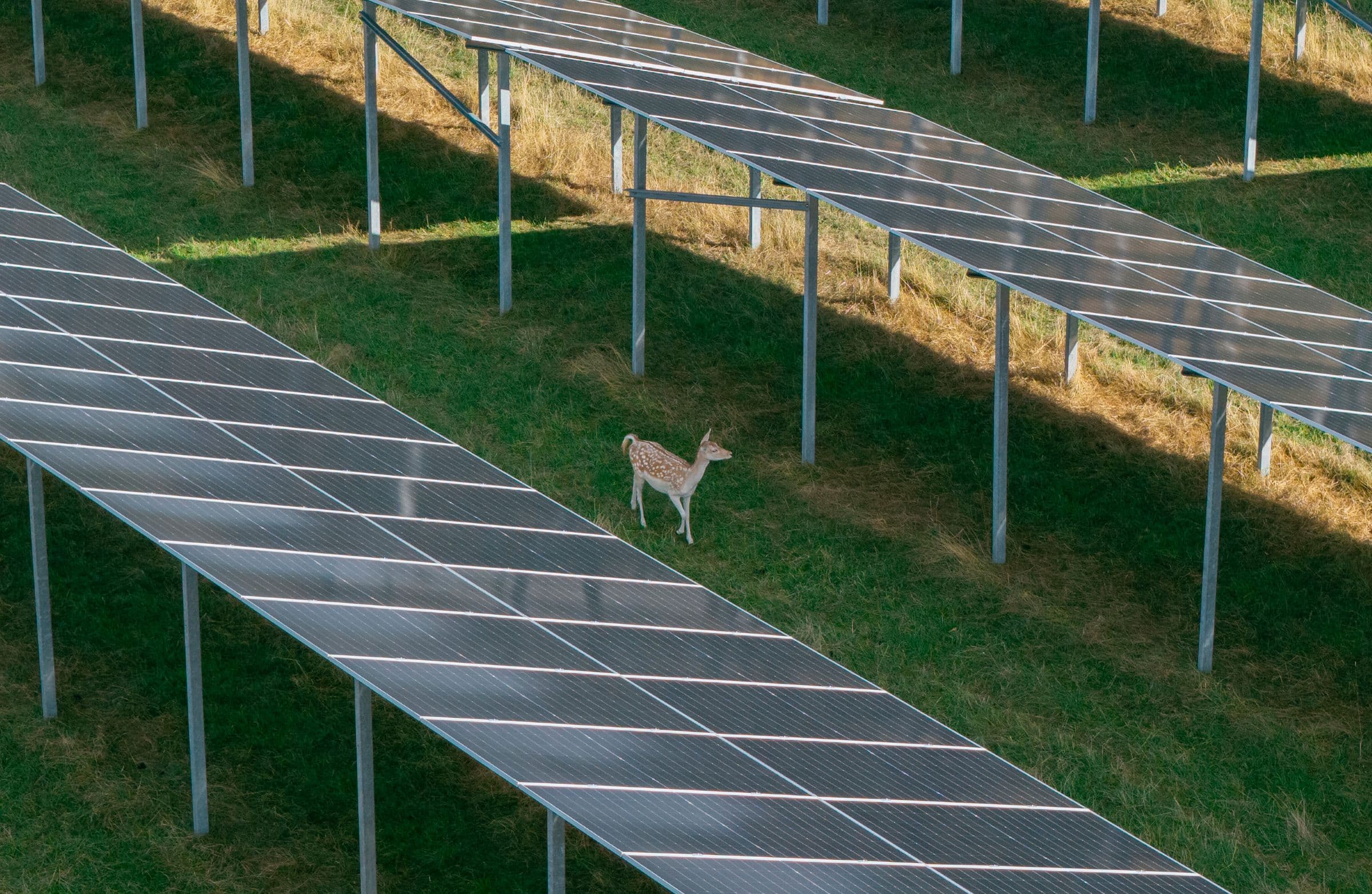
Perigus Energy Deutschland GmbH has successfully commissioned Germany's first wildlife park PV system at the Weiherhof in Sötern (municipality of Nohfelden) in Saarland. The unique project combines the keeping of fallow deer with the generation of renewable energy and shows how agriculture and the energy transition can interact in a meaningful way.
During the ceremonial inauguration on 1 September 2026, Petra Berg, Saarland's Minister for the Environment, Climate, Mobility, Agriculture and Consumer Protection, also emphasised the special importance of the project: "The opening of the WildparkPV plant is a Saarland milestone for environmental and climate protection and the economy. The Welter family's Weiherhof shows how well sustainable, modern and future-oriented agriculture can work."
Perigus Energy has built the elevated solar plant on a 6.9-hectare section of the Weiherhof's fallow deer gate and will operate it for the long term. It has a capacity of 8.3 megawatt peak (MWp) and is expected to generate around 9.5 million kilowatt hours of electricity annually. This will enable around 3,200 households to be supplied with renewable energy and the equivalent of around 5,530 tonnes of CO2 to be saved annually.
Focus on animal welfare and environmentally friendly implementation
During the planning and implementation of the WildparkPV system in Sötern, the focus was on the protection of the animals, careful handling of the area and safe construction. For the duration of the construction phase, which lasted around nine months, the fallow deer grazed on alternative fenced areas of the Weiherhof. At the same time, the interference with nature and the landscape was reduced to the necessary minimum and the facility was designed in such a way that fallow deer husbandry and renewable energy generation can be combined in the long term.