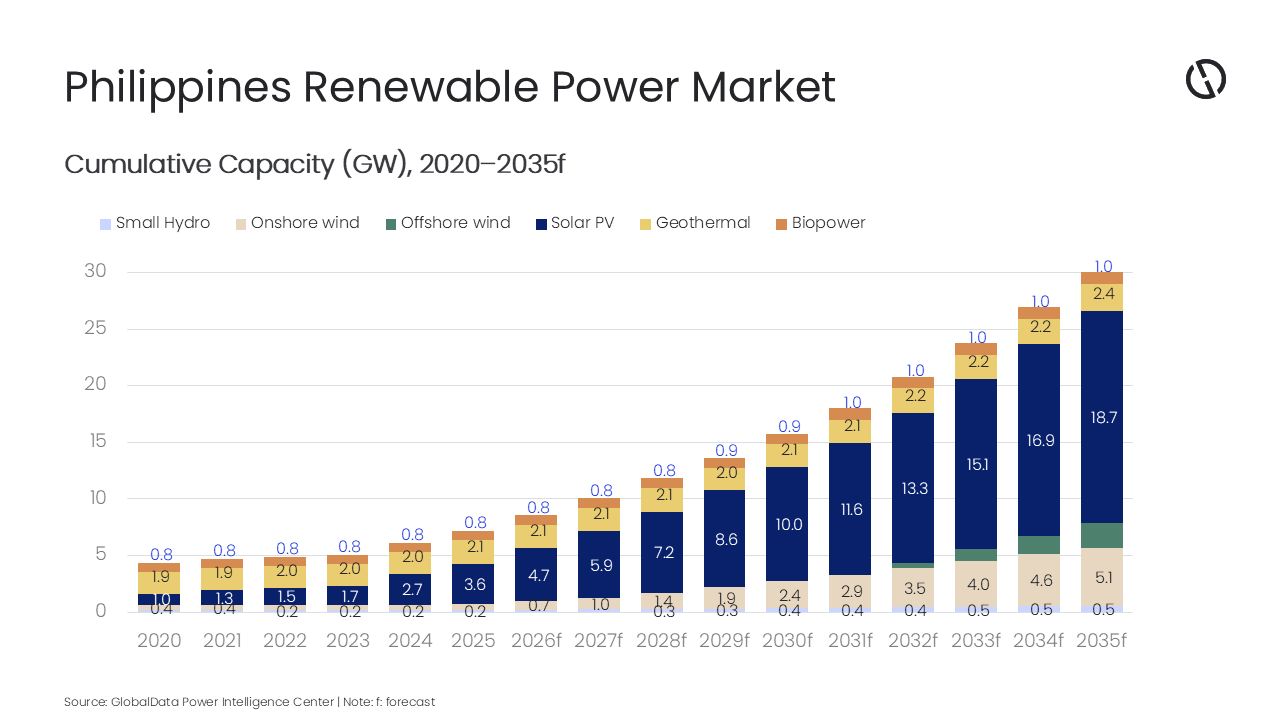
The power sector in the Philippines has historically relied on coal fired generation to meet baseload electricity demand, with renewable energy largely concentrated in geothermal and hydropower. In recent years, the country has been expanding solar and wind capacity as part of a broader shift in its generation mix. Against this backdrop, the country’s cumulative renewable power capacity is forecast to reach approximately 30GW by 2035, increasing from around 7.1GW in 2025, according to GlobalData, a leading intelligence and productivity platform.
GlobalData’s latest report, “Philippines Power Market Trends and Analysis by Capacity, Generation, Transmission, Distribution, Regulations, Key Players and Forecast to 2035“, identifies solar PV and wind as the main contributors to renewable capacity additions in the country. Solar PV capacity is projected to increase from approximately 3.6GW in 2025 to around 18.7GW by 2035, while wind capacity is expected to grow from about 0.5GW to around 7.4GW over the same period, including both onshore and offshore developments.
Mohammed Ziauddin, Power Analyst at GlobalData, comments: “Solar PV deployment has accelerated in recent years, with installed capacity reaching 3.6GW by the end of 2025, following the addition of approximately 899MW in 2025, primarily from utility scale projects. Competitive procurement through the Green Energy Auction Program has resulted in large scale project awards, including more than 10GW of renewable capacity across recent auction rounds, with solar accounting for a significant share. These projects are scheduled for commissioning between 2026 and 2029, supporting near-term capacity growth.”
Rooftop solar installations are also expanding among commercial and industrial consumers, supported by net metering and direct supply arrangements. Declining technology costs and the absence of fuel costs have improved the relative economics of solar generation, while falling wholesale electricity prices linked to renewable deployment are reinforcing its role in the power mix.
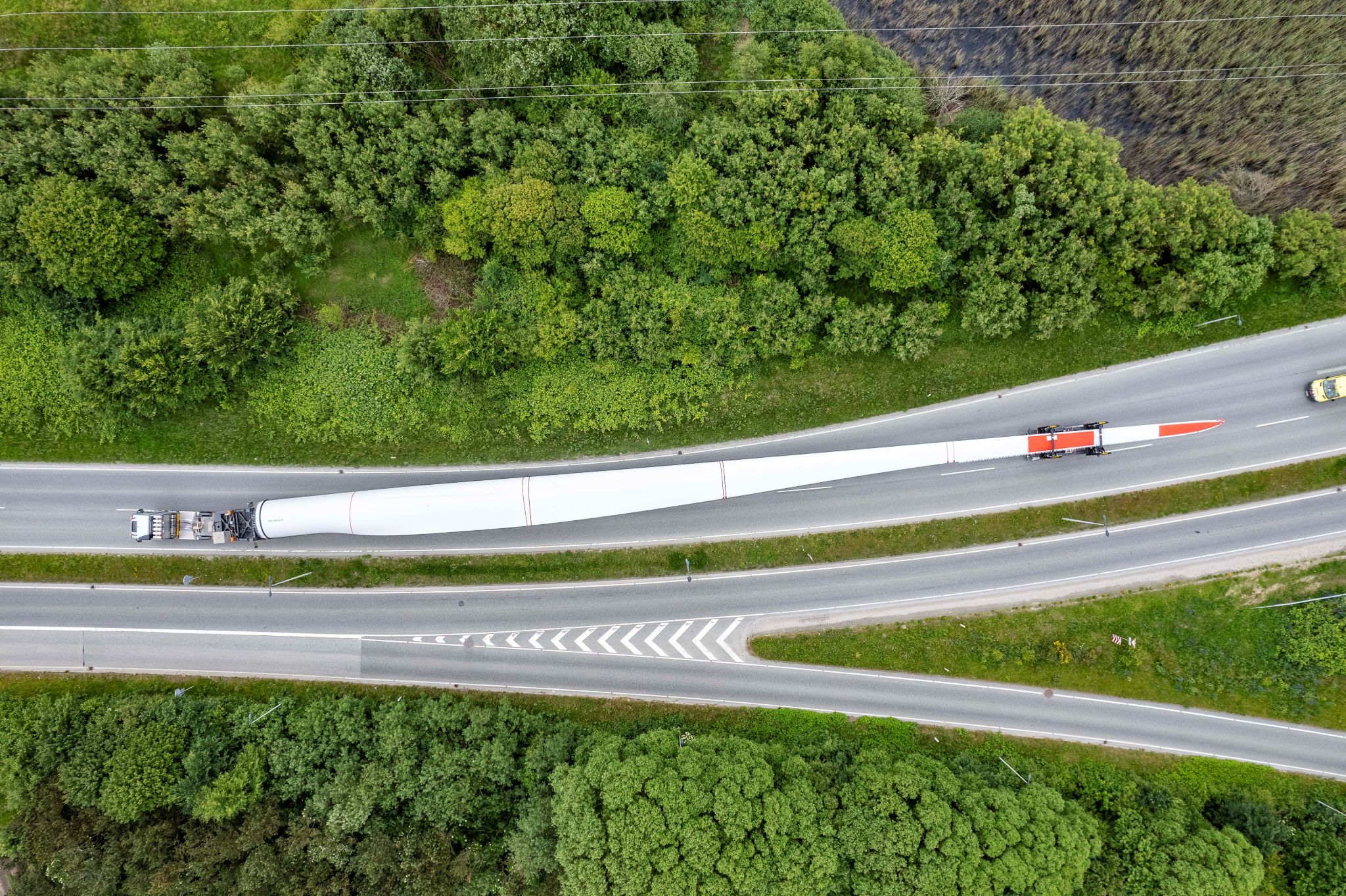
Wind capacity growth remains at an early stage but is supported by an expanding pipeline of awarded projects. Installed onshore wind capacity remains limited at around 519MW, while recent auction rounds have awarded more than 2.5GW of onshore wind capacity, with projects expected to come online between 2026 and 2029. Offshore wind development is also progressing, with service contracts awarded for more than 60GW of potential capacity, indicating a significant long-term project pipeline, although most developments remain at an early stage and are subject to permitting, financing, and grid readiness.
Ziauddin adds: “Renewable energy expansion is being driven by regulatory and investment reforms, including the liberalization of foreign ownership in 2022, which allows full foreign participation in renewable energy projects. Policy mechanisms such as the Renewable Portfolio Standards and auction-based procurement frameworks are creating long-term demand visibility, while initiatives such as EVOSS (Energy Virtual One-Stop Shop) and the Green Lane are improving project execution timelines. These measures have contributed to a sharp increase in renewable energy investments and project pipelines in recent years.”
Thermal generation continues to dominate the Philippines’ power mix, particularly coal-fired capacity, which is projected to increase from approximately 13.0GW in 2025 to around 15.4GW by 2035, maintaining its role in baseload supply. Natural gas capacity is expected to expand from about 5.1GW to over 10.3GW, supported by LNG import infrastructure and new gas-fired projects, while oil-based capacity is projected to remain relatively stable at around 3.4GW, primarily serving peaking and backup requirements.
Ziauddin continues: “Continued reliance on thermal generation reflects the need to ensure system reliability and grid stability in an archipelagic system with limited interconnections, where dispatchable generation remains essential to balance variability from renewable sources and meet growing electricity demand.”
In addition, the Philippines is planning to introduce nuclear power as part of its long-term energy strategy, with initial capacity expected to reach approximately 0.3GW by 2035, contributing to the diversification of the generation mix.
Zia concludes: “Over the next decade, renewable capacity growth in the Philippines will be driven by solar PV and wind, supported by auction mechanisms, policy frameworks, and improving investment conditions. While renewable energy will expand significantly, coal and natural gas will continue to play a central role in ensuring system reliability, with nuclear energy expected to emerge as an additional source of baseload generation.”