The market for office properties is undergoing a fundamental upheaval: rising vacancies, changing demand for space and new requirements for use and quality are increasingly calling existing concepts into question. What requirements do office properties have to meet today in order to be economically viable? And which concepts will prevail in practice? These questions were the focus of the online press conference organized by RUECKERCONSULT “Conversion, modernization or demolition: What’s next for the office?” Representatives of AUKETT + HEESE, CELLS, Covivio, FAY Projects and HIH Projektentwicklung used concrete projects to show which strategies are currently proving themselves in practice: from refurbishments with space expansion to multi-use concepts to adaptation of use and restructuring.
Expansion of space pays off
The majority of the office buildings that exist today were built before the year 2000. Anna Lena Stoephasius, member of the management at the architectural firm AUKETT + HEESE, says: “Buildings that are thirty years old or older not only have rigid floor plans, but also, for example, outdated building technology, i.e. inefficient heating, ventilation and cooling systems with high energy consumption and no needs-based control. The aim is to reconcile space efficiency, quality of stay and ESG compliance through a comprehensive renovation of such properties,” Stoephasius continues.
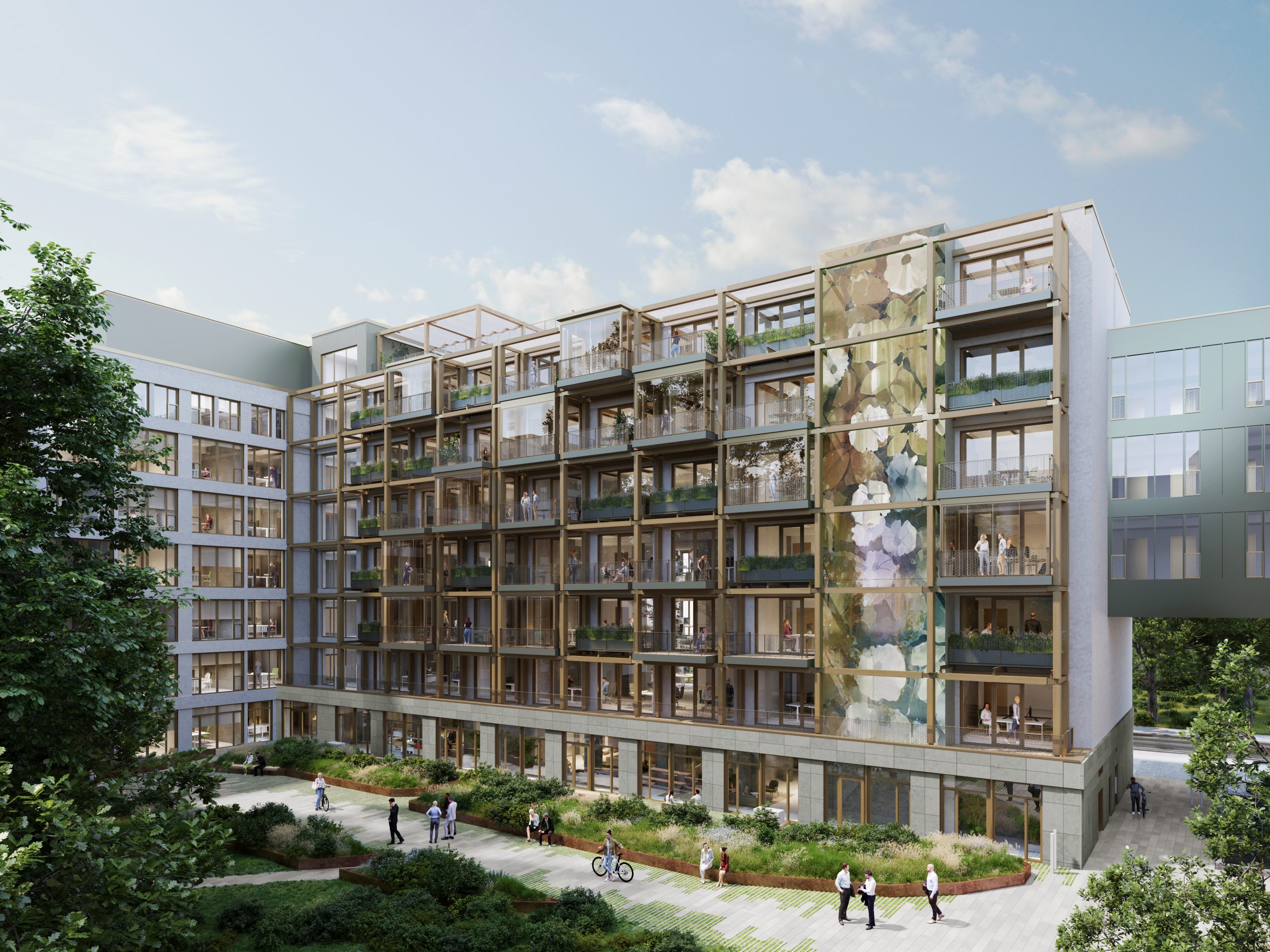
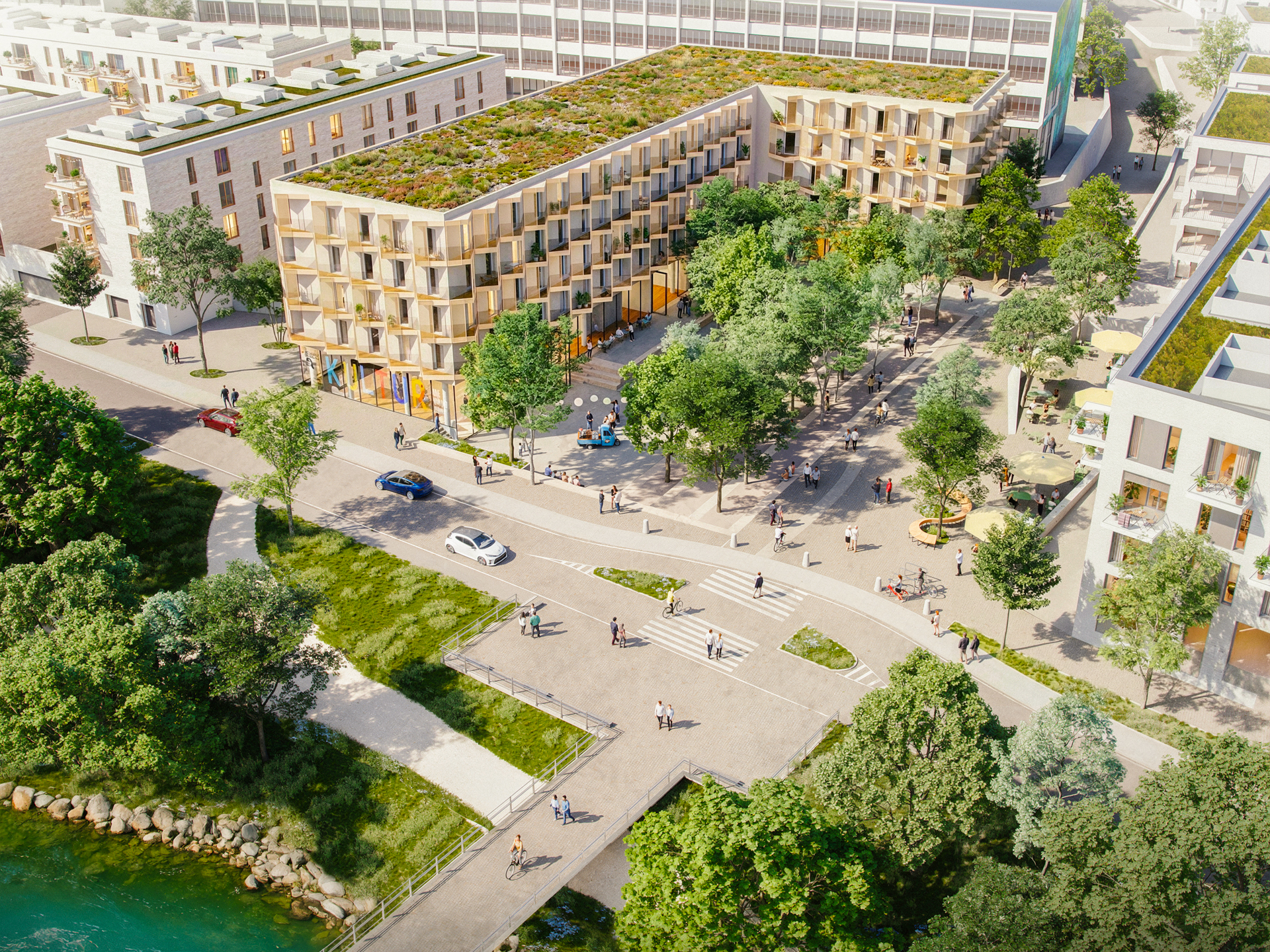
The existing Berlin project “Karlsgärten” by the client CA Immo from the 1990s is an example of how this principle works: The structural concept of the architects of AUKETT + HEESE relies on the preservation of the shell structure as an essential lever for the reduction of grey energy, as well as on targeted structural interventions such as adding storeys in timber hybrid construction, activating roof areas, and adding private balconies on each floor. These measures generate an increase in 2,700 square metres of rental space – a clear economic added value.
“The biggest challenge in the transformation of existing buildings from the 1990s lies in the transformation of rigid building structures into flexible, sustainable working environments,” explains Sebastian Nau, member of the management at AUKETT+HEESE. “Our approach combines the maximum preservation of the existing substance with targeted interventions in the supporting structure and façade in order to redefine both technical and spatial qualities.”
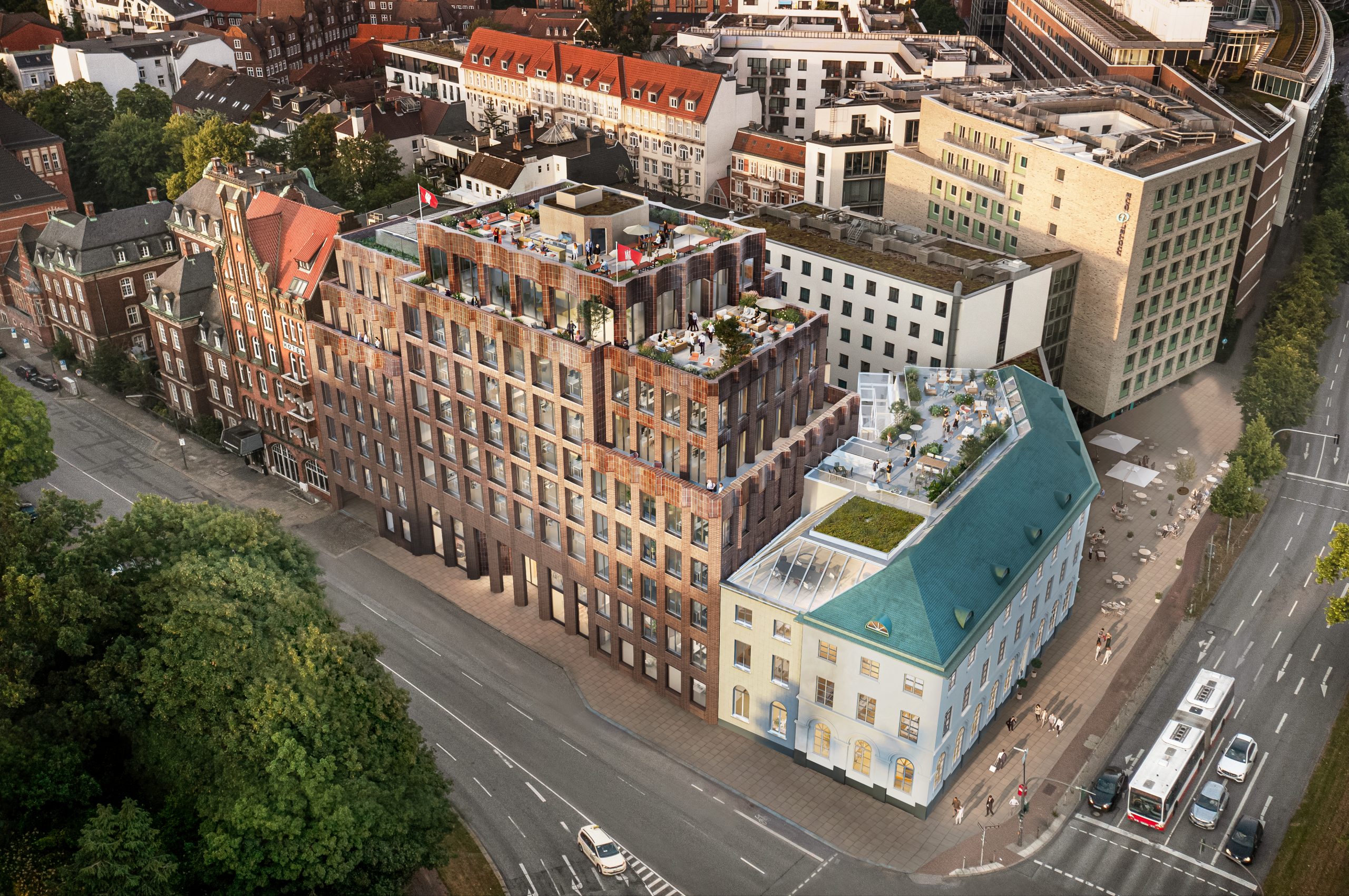
Project developer CELLS is pursuing the same strategy with the existing Hamburg project “Am Holstenwall”. Almost the entire building structure could be preserved. The considerable number of terrace areas creates recreational areas that are also accessible to the public. The rental area of the building, which was previously vacant for twelve years, was increased by more than 40 percent from 8,150 square meters to 11,700 square meters. Jan Trenn, CEO of CELLS, says: “The expansion of rental space is the biggest lever for the economic viability of office refurbishments. In most cases, pure modernization is not economically viable.” The success of the project development is confirmed by the occupancy rate of 83 percent one year before completion. The completion of the ensemble is imminent and is scheduled for the second quarter of 2026. The usage concept provides for a mix of office, gastronomy and fitness.
Mixed-use concepts and services support changing demand
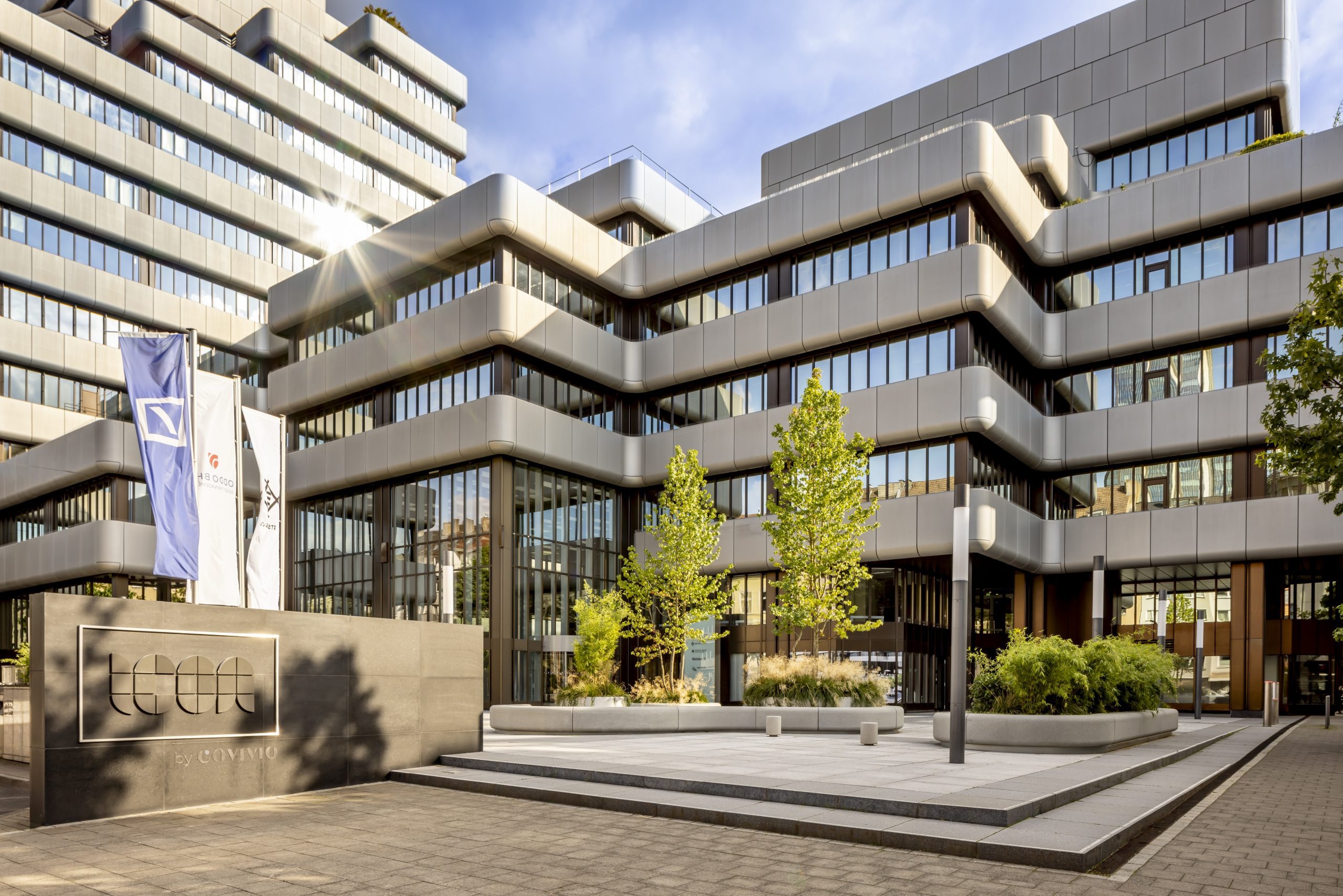
The change from monofunctional office properties to mixed-use properties, such as the “Am Holstenwall” refurbishment, is a key lever for sustainable projects. The European real estate company Covivio is pursuing a strategy of functional opening of classic office properties in the Düsseldorf project “ICON by Covivio”, among other things. The integration of gastronomy, service offerings and supplementary uses creates a multi-use concept for the iconic listed property from the 1970s, which aligns the property more closely with the needs of the users and increases its long-term marketability.
Katharina Greis, COO Offices at Covivio Germany, says: “For us, multi-use concepts are not an add-on, but a central component of modern office developments. With our hospitality approach, we are specifically transferring service and amenity qualities from the hotel industry to office properties, for example through concierge services, digital service offerings or curated common areas. In this way, we are consistently aligning the space with the needs of the users and keeping it competitive in the long term.”
Adaptation of use in response to changing market conditions
However, not every property can be economically stabilised by expanding space or multi-use concepts alone. Especially with large-volume developments, classic office approaches are increasingly reaching their limits.
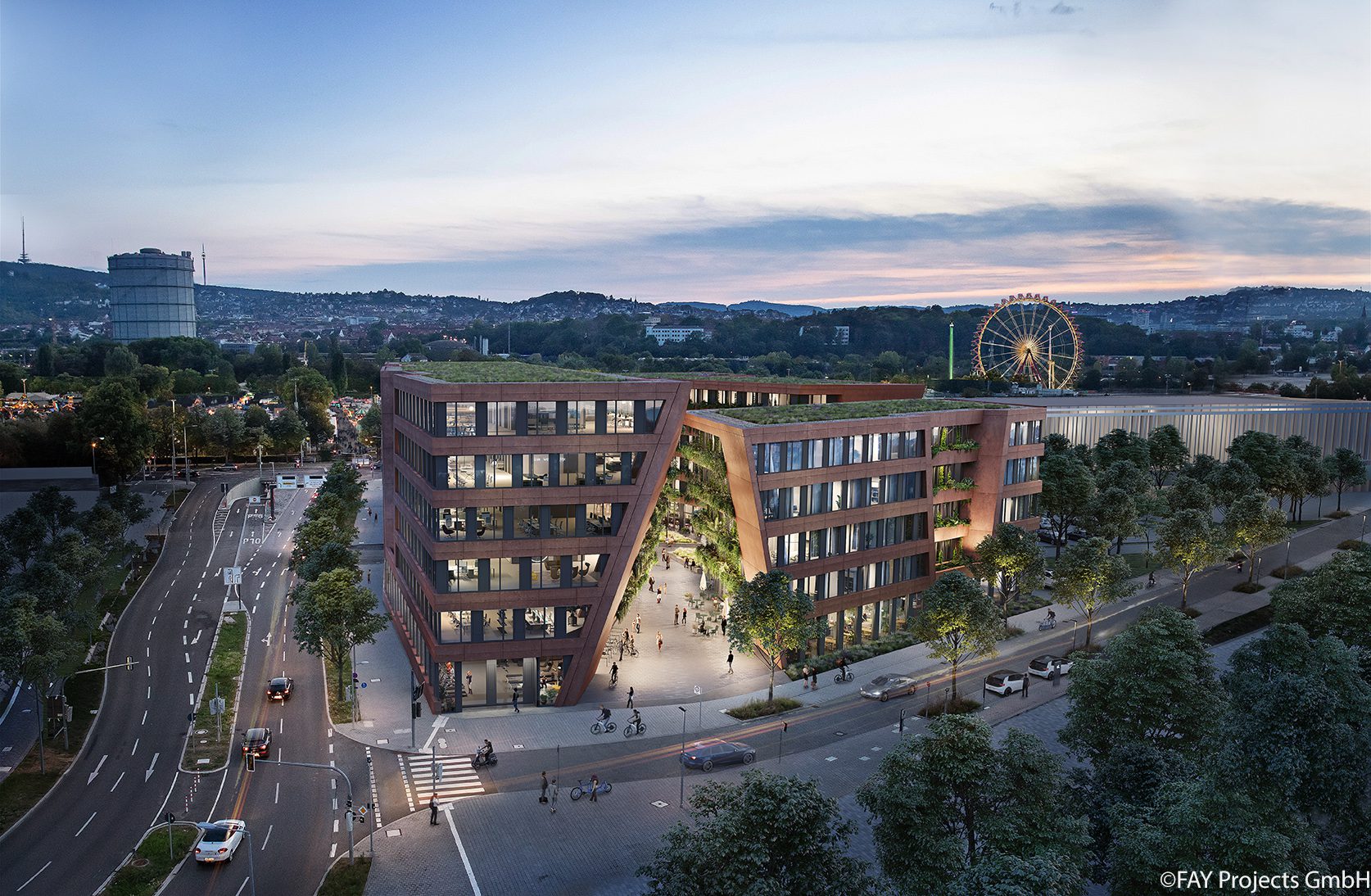
Ingo Lindner, Managing Director of FAY Projects, describes this using the example of the Stuttgart project “CANNION”, which was originally designed as a classic office development: “We had to realise that classic office space of this size could no longer be placed as planned under the current market conditions. The decisive step was to consistently question and realign the concept.”
The project with around 27,000 square metres of gross floor area above ground will therefore be repositioned in the course of development. Instead of a monofunctional office use, FAY relies on a mix of uses consisting of office, hotel, gastronomy and fitness. The concept is supplemented by long-stay offers, which are primarily in response to the increasing demand for flexible forms of living and working.
Conversion and restructuring are gaining in importance
Approaches go even further, in which office properties are completely removed from their original use. Particularly in the case of structural vacancies or properties that are no longer marketable, the focus is on conversion to alternative uses.
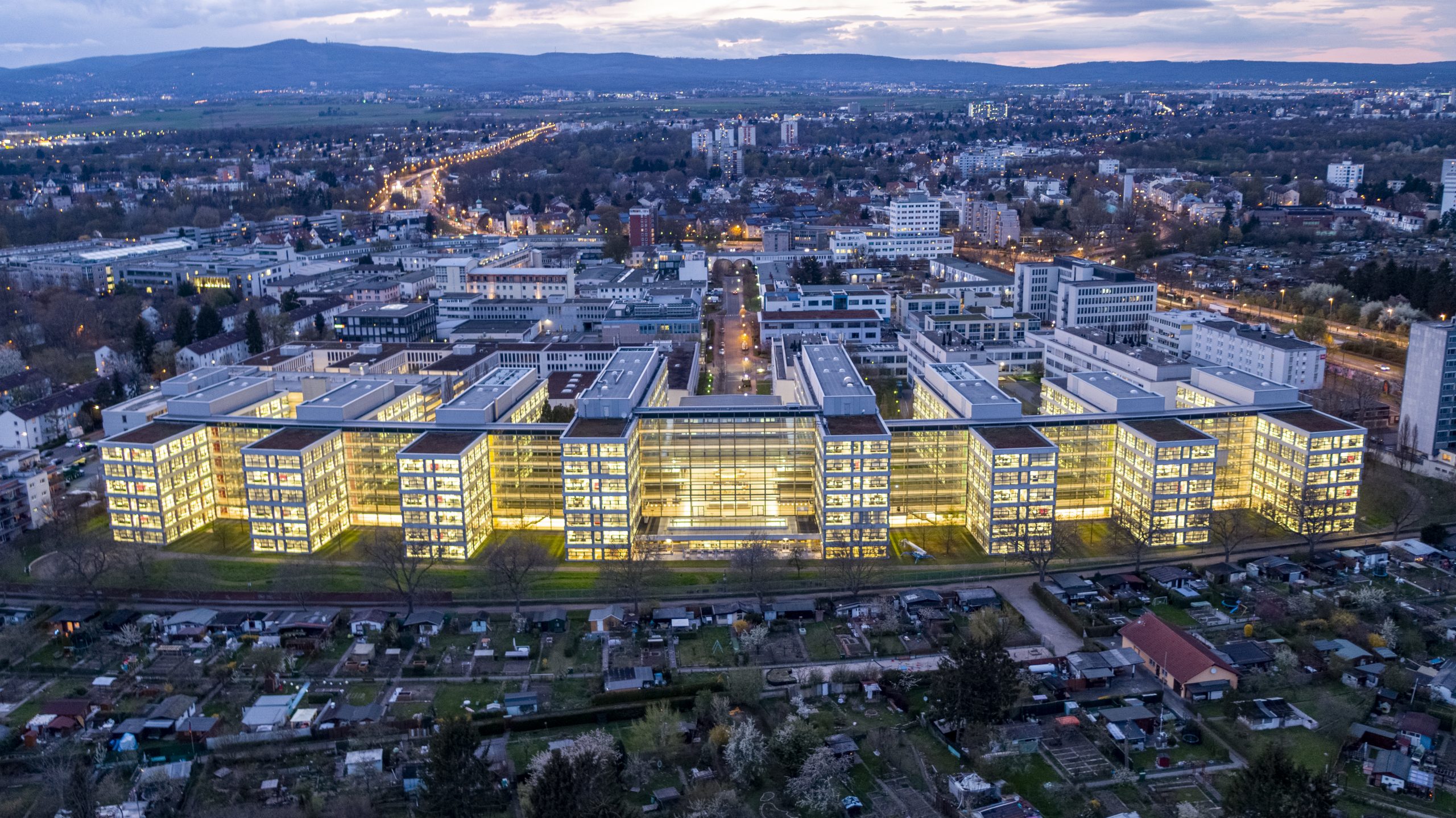
Jens Fieber, Managing Director of HIH Projektentwicklung (HPE), says: “Not every office property has a future as an office. But many buildings have qualities that are very suitable for other uses, such as education.” In Hanover, HPE is pursuing corresponding approaches. Here, a school is being developed from a former office on an area of more than 16,000 square metres on the listed former HANOMAG site. CELLS is also demonstrating how a transformation into a school campus with capacity for several thousand pupils can succeed with the conversion of the former headquarters of Deutsche Börse in Frankfurt am Main, the “Lateral Towers” with 46,000 square metres of rental space, into a complex with three schools. The last construction phase will be handed over to the city of Frankfurt at the end of May.
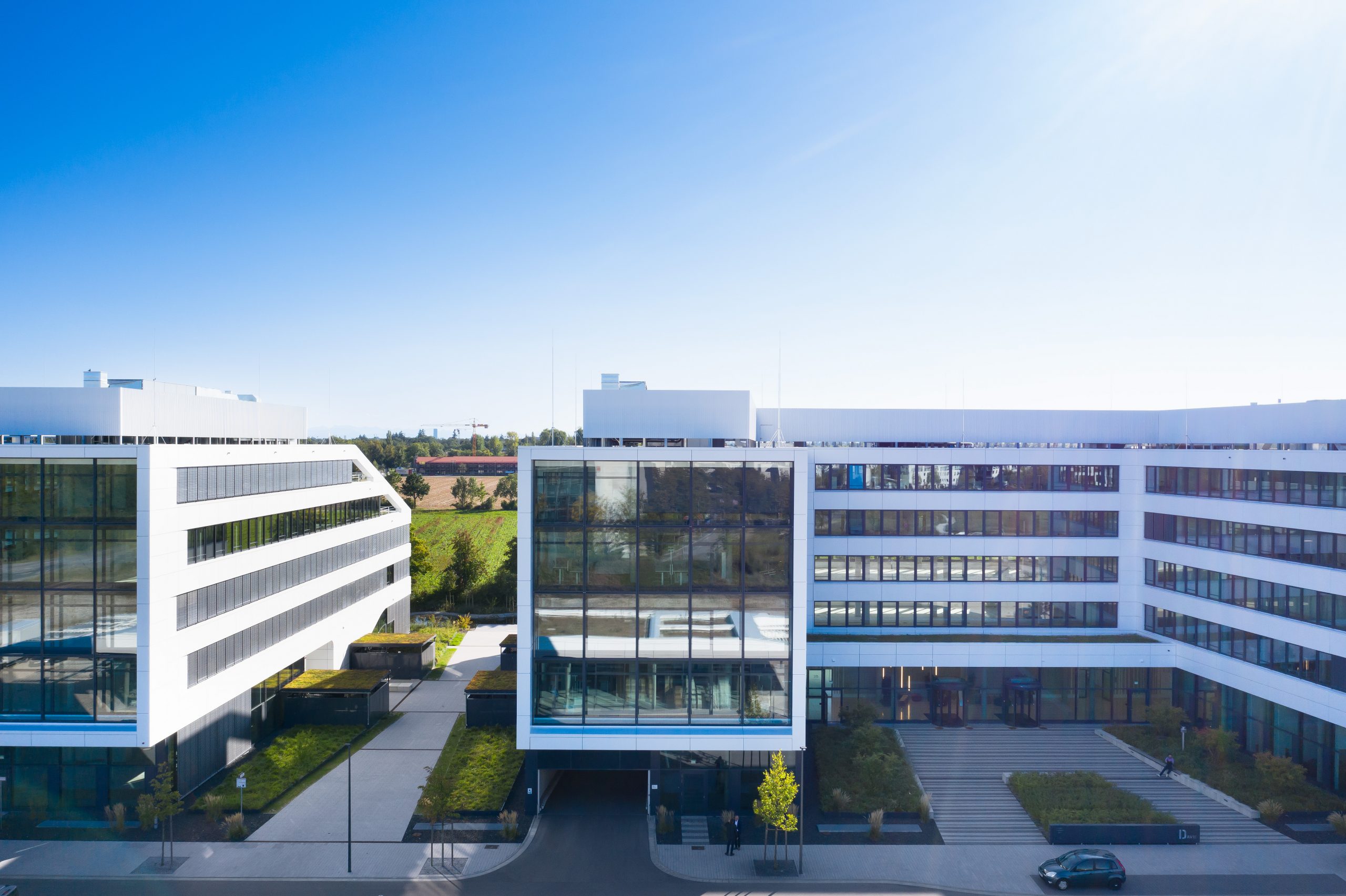
At the same time, the restructuring of stalled project developments is gaining in importance. Especially where projects have to be rethought as distressed assets as a result of changed market conditions, complex financing structures and too little letting. One example of this is the KORYFEUM project in Unterschleissheim near Munich. HPE has taken over the restructuring mandate there. Together with HIH’s Asset Management, the original overall concept will also be readjusted and vacant space in the office buildings that have already been realised will be rented: Contrary to the original plans, the still undeveloped areas will no longer be completed with additional office buildings, but with alternative uses, such as those from the light industrial segment.