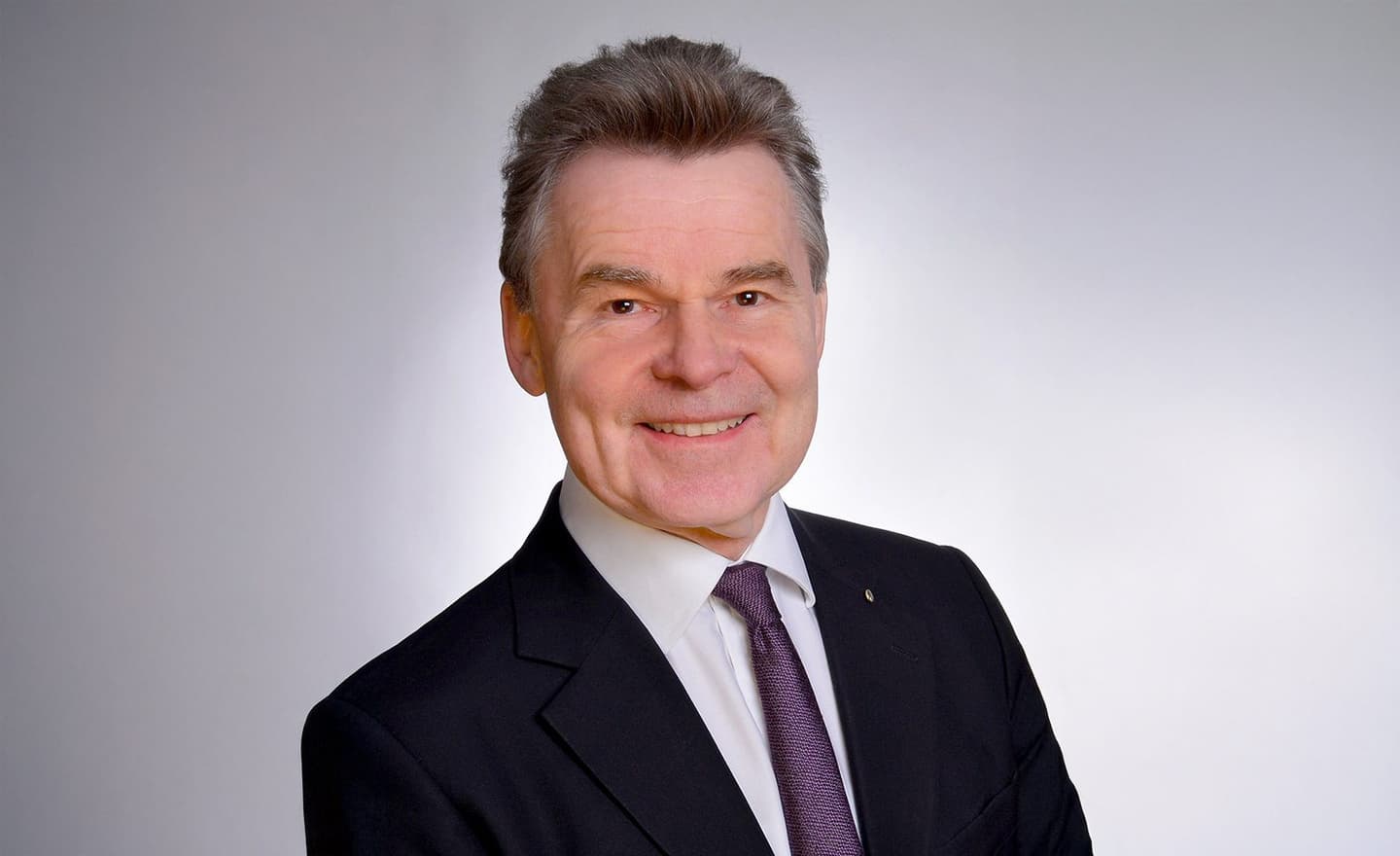
To prevent the loss of practical judgement in investment management, the experience of senior experts must be passed on to the next generation in a targeted manner, says Dr Georg Allendorf FRICS – expadBridge Advisors GmbH.
Brandenburg.Legal warns against unrealistic expectations regarding the conversion of offices into housing: only around 30 per cent of vacant offices are technically and in terms of planning law suitable for such conversion, and only a fraction of these can be converted economically. In Munich, Colliers forecasts 1,200 flats in the short term rather than 10,000; calls are being made for faster planning procedures.
On 21 May 2026, the Federal Court of Justice ruled that property managers may not charge landlords a commission when letting their own properties. Prof. Martin Häublein criticises this as wrong and warns of a wave of claims for reimbursement. He believes it is now up to the legislature to act.
In its analysis of the election programmes, the ApartmentAllianz Berlin criticises a lack of hospitality and a clear strategy of Berlin's politics. The Left Party and the Greens rely on control and regulation, the SPD on city tax funds. A quality- and guest-oriented development is demanded.
North Rhine-Westphalia is amending the state building code: The new BauCode NRW will come into force on September 1, 2026. Aengevelt sees significant simplifications and cost-cutting potential in this – including fewer DIN obligations, more procedure-free projects, digital applications and fictional approval.
A broad alliance of business and civil society presents a joint position paper on the continuation of Berlin's administrative reform. It calls on the Senate and the House of Representatives to consistently continue the reforms until and after the election – with stronger districts, faster procedures and digitalisation.
A market commentary by Wüest Partner: The cabinet decision of 12 August 2026 leaves the national CO₂ price 2027 at 55–65 €/t. From 2028, ETS 2 will take effect with market-based, potentially higher prices – particularly risky for inefficient buildings. Investors should plan for higher scenarios.
Aengevelt evaluates initial experiences with the "construction turbo", which has been in force since 30.10.2025: Many municipalities are hesitant due to complexity, legal risks, tight deadlines and a lack of capacity. Progress: Paderborn approved for the first time; Frankfurt used instruments in 40% of 22 projects (approx. 900 units).
In July 2026, photovoltaics in Germany fed 12 billion kWh into the public grid for the first time. At lunchtime, the average solar output was over 40,000 MW. The IWR explains misunderstandings about EEG subsidies and emphasizes the role of differential costs.
Aengevelt warns that the "bio-staircase" of the new Building Modernization Act will make heating costs much more expensive. Biomethane is scarce and more expensive than natural gas; the IW expects +80% by 2040 and +119% by 2045, with landlords having to bear part of the additional costs.
The German government has adopted the 2027 amendment to the Renewable Energy Sources Act (EEG) and the grid connection package in the cabinet. Alterric criticizes higher costs, uncertainty and investment risks and calls for improvements in the Bundestag. The company assesses facilitations for co-location positively.
The vdp welcomes the EU communication on the competitiveness of the banking sector, but criticises the lack of concrete measures. In view of rising capital requirements, he calls for the output floor to be permanently fixed at 50%; Otherwise, affected banks would have to hold around 20% more capital by 2032.


 Analysis
 Article
 Comment
 Discussion
 Infographic
 Interview
 News
 Podcast
 Report
 Survey
 Video
 Weekly
 Whitepaper