A market commentary by Jürgen Michael Schick
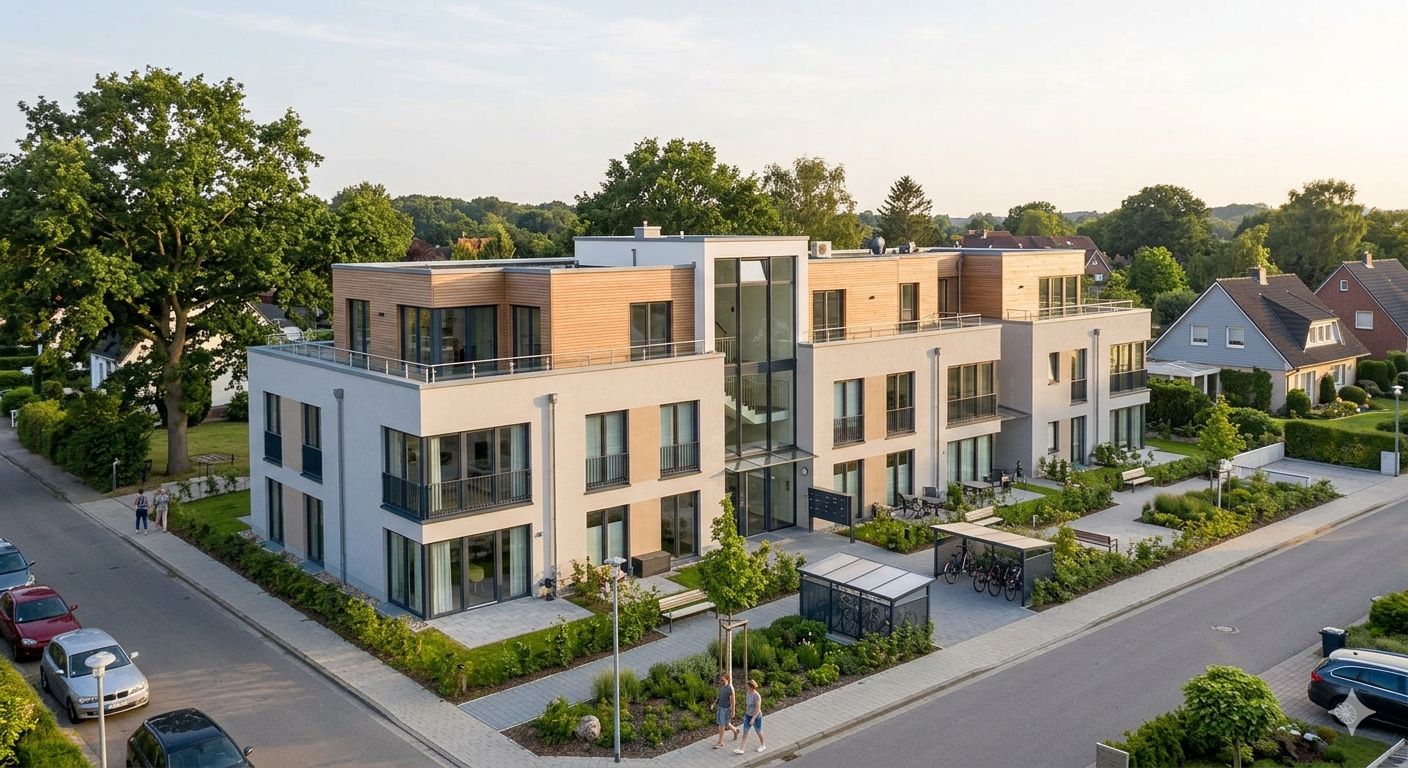
Geopolitical uncertainty, higher energy prices and the growing sovereign debt problem are currently shaping the capital markets. For investors, this once again raises the question of which asset classes offer stability. Residential real estate and residential and commercial buildings remain attractive in this environment – for private and institutional investors.
They stand for real substance, current income and long-term security. At the same time, classic “safe assets” such as government bonds are becoming less commonplace. Prof. Friedrich Heinemann classifies this as follows: “Bunds were normally considered a safe haven. Now we are experiencing rather the opposite. There is a loss of confidence in classic safe assets.”
Real estate comes into focus as a safe haven
Yields on German government bonds have risen to around three percent in the meantime. At the same time, Germany is taking on significantly more debt. “The high supply of government bonds suggests that yields will not fall back to previous levels in the short term. The time of pre-Corona interest rates is over,” says Prof. Heinemann.
This changes the relative attractiveness of the asset classes. Real estate, especially residential real estate, is becoming increasingly important for investors looking for security, predictability and substance. They combine real values with current income and can play a stabilising role in an uncertain environment.
Inflation can support residential real estate
The inflation trend also does not speak against residential real estate. Higher energy prices have an impact on many other prices – such as transport, agriculture and food. Prof. Heinemann describes this effect as follows: “Fossil energy prices eat into other prices. Even if the war ends quickly, this pressure does not recede immediately.”
For residential real estate, inflation is ambivalent, but not necessarily negative. It is true that higher interest rates make financing more expensive. At the same time, inflationary developments can lead to rising rents and higher restoration costs in the long term. Real estate remains real assets and is therefore less directly affected by the loss of monetary value than nominal investments.
Private investors think more long-term
Klaus Schmitt, CEO of Domicil: “The impact of the current environment differs significantly between private and institutional investors. Institutional investors are reacting more strongly to interest rate movements, valuation issues and expiring financing. Private investors, on the other hand, often take a more long-term view of residential real estate.”
Klaus Schmitt emphasizes: “The private investor sees it differently. Yes, interest rates make the investment more expensive, but they are not the only decisive factor. Security in uncertain times, tax aspects and rising rents also play an important role.”
“In addition, many investors no longer want to invest only indirectly via funds, but decide for themselves in which properties and locations they want to invest capital,” says Schmitt. This strengthens the importance of direct residential real estate investments.
Residential and commercial buildings also benefit
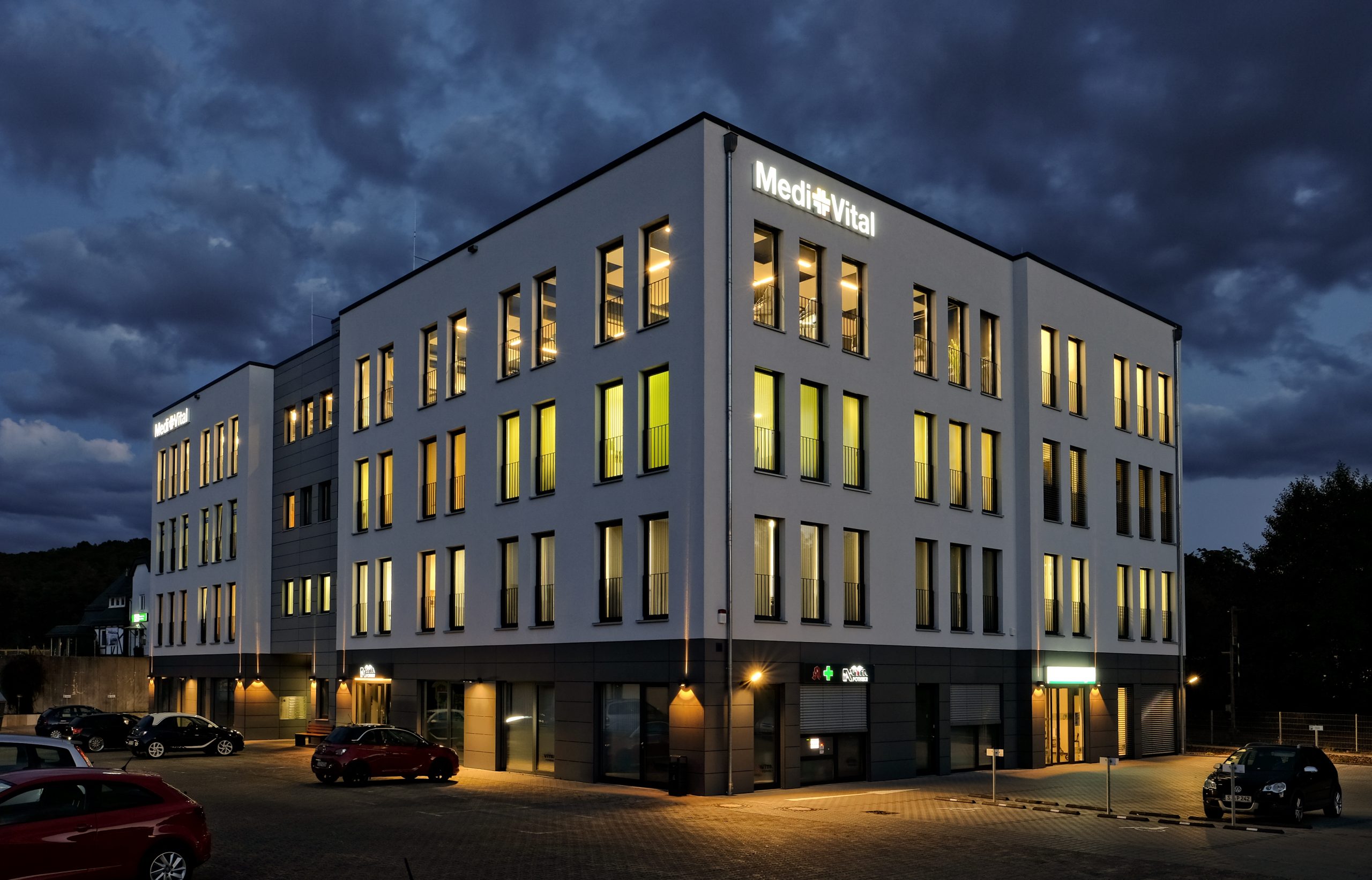
Residential and commercial buildings also remain attractive. They combine residential stability with additional income potential from commercial space. Especially in established locations, they can be interesting for investors looking for long-term value stocks and diversification.
From a geopolitical point of view, there is a positive outlook for the real estate asset class. We are also experiencing this in the residential and commercial building segment – also internationally.
Despite economic weakness, Germany continues to be perceived as a stable market in terms of the rule of law. This is boosting demand for German residential real estate – including from international investors.
Short-term crises do not change the long-term picture
“The current Iran conflict and other geopolitical risks are leading to uncertainty and wait-and-see behavior in the short term. In the long term, however, structural factors remain decisive: housing demand, scarcity, inflation protection, tax conditions and the search for safe real assets,” says Schmitt.
Heinemann classifies the Iran conflict accordingly: “The Iran conflict is temporary. Both sides want to get out of the war. Inflation concerns are more of a tailwind for real estate purchases.”
Diversification is becoming more important
Germany remains economically challenging. Deindustrialization, demographic change and job insecurity are putting a strain on the location. In addition, banks are paying more attention to energy efficiency; many existing properties are still far from the best energy classes.
For investors, this means that not every property and not every location is equally attractive. Property quality, energy efficiency, micro-location and economic diversification will be decisive. Klaus Schmitt puts it this way: “The diversification aspect is crucial. Assets should not depend on one’s own income.”
Conclusion: Residential real estate remains a stable building block
Residential real estate and residential and commercial buildings remain attractive in an environment of geopolitical uncertainty, higher energy prices, inflation and rising government debt. They offer real substance, current income, tax advantages and long-term security.
Short-term crises change the framework conditions, but not the fundamental strength of the asset class. Long-term investors in particular can benefit from residential real estate – provided they pay attention to location quality, energy efficiency, financing structure and diversification.