

With the AI Act, Europe is creating the world's first comprehensive legal framework for artificial intelligence. But in addition to transparency, governance and supervision, the law raises another question: Does it also change the competitive structure of an industry in the long term?
The AI Act provides artificial intelligence with a comprehensive regulatory framework for the first time. In the financial sector, BaFin, among others, will take over market surveillance in the future. In the future, anyone who wants to use AI professionally will have to deal with governance, documentation, transparency, human supervision and organizational responsibilities. The process of future final exams requires little imagination.
There is currently a lot of talk about the democratization of knowledge through artificial intelligence. Economically, however, another effect appears to be even more interesting: the democratization of productivity. Small teams can now create analyses, review contracts or develop investment ideas that used to require entire departments.
This would be a remarkable change for asset management. For decades, size itself seemed to be a decisive competitive advantage. Artificial intelligence promised to break up this logic for the first time. Because when technology lowers the barriers to entry of a market, new competitors emerge. More competition often leads to more innovation, higher productivity and better offers.
However, a look at the AI Act shows where another development could arise from.
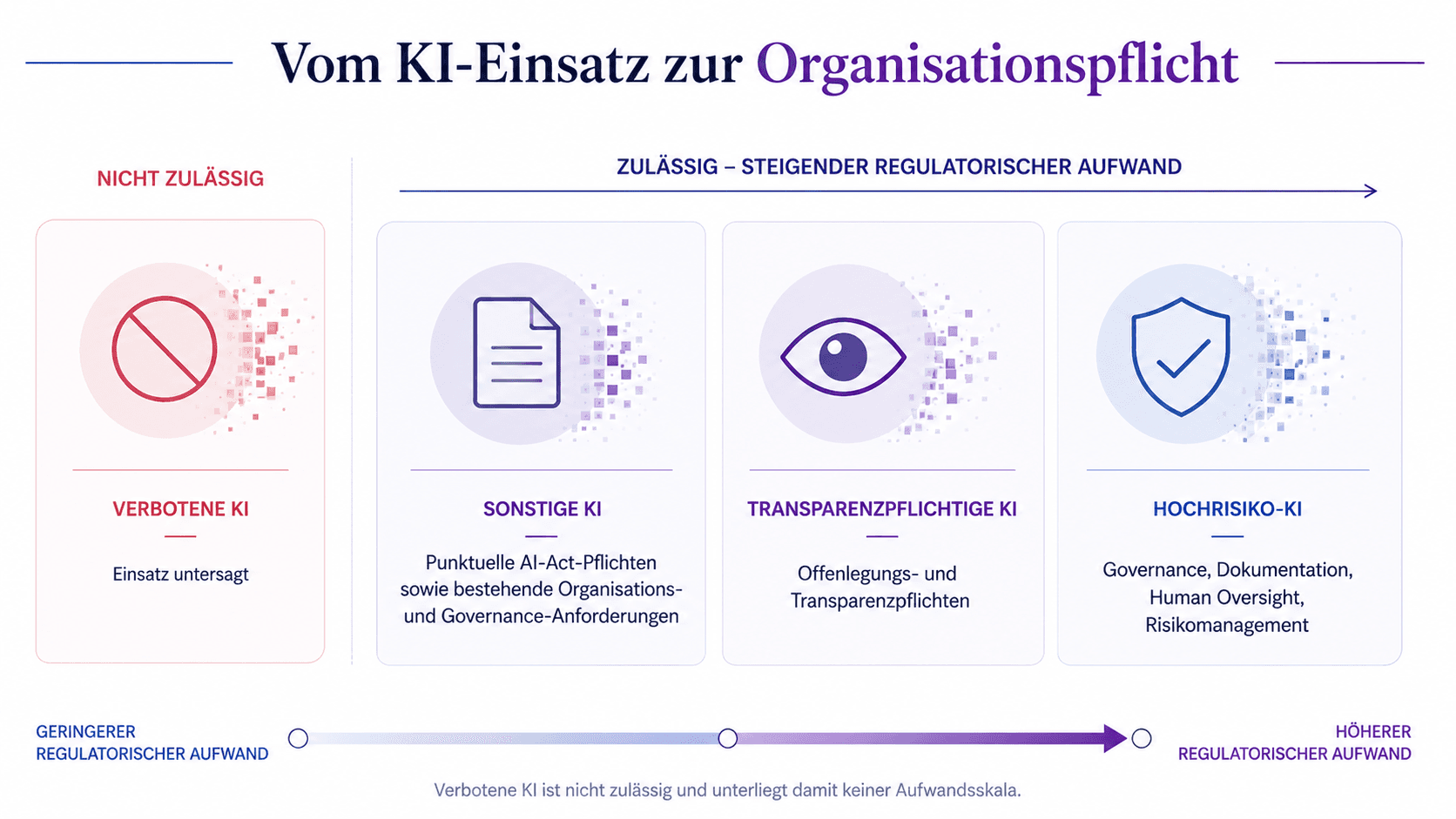
Transparency, protection of fundamental rights and human control of algorithmic decisions are necessary prerequisites for trust in regulated markets. However, its practical implementation will be decisive. Governance, documentation, control mechanisms, training and human oversight cause effort. Above all, however, they create organizational requirements that initially affect every market participant, regardless of the size of the company.
At this point, it is worth taking a look at the American economist William Baumol. He was less interested in the question of how many companies are active in a market. Rather, he was interested in how easily new competitors can enter a market at all. William Baumol would probably have asked his question about the AI Act at this very point.
This concerns the hope described at the beginning that artificial intelligence could lower the technological barriers to entry for new, smaller and innovative asset managers. But does the AI Act create new regulatory barriers to entry at the same time? This is exactly where the real regulatory issues begin.
Hardly anyone is likely to seriously deny that artificial intelligence must be used in regulated markets in a comprehensible, transparent and responsible manner. However, the benefits could sometimes be reversed if regulatory organizational obligations weaken some of the competitive effects that artificial intelligence originally made possible in the first place.
📌 The question in a nutshell is therefore:
Will the AI Act create a market in which the advantages of artificial intelligence are basically open to everyone, but in the end it is mainly the large organizations that succeed in mastering their regulation?