With the GewerbeBarometer, bulwiengesa and ImmoScout24 are publishing a joint analysis of the German commercial real estate market for the first time. The continuous market and transaction data from bulwiengesa is combined with the supply and demand data from millions of advertisements from ImmoScout24.
The result is a consistent overall picture: the market does not show a uniform
development, but is increasingly differentiated according to location, quality and
Use.
Structural change meets selective demand
From bulwiengesa’s point of view, the office market remains one of the most demanding
asset classes. Take-up fell by 8% in 2025 to around 4.1 million sqm in
Germany as a whole, while the vacancy rate was 6.3% nationwide and in the
A cities increased to an average of 8.4%. At the same time, after weak
In previous years, more large deals were registered again – especially in central locations,
which are increasingly in the focus of demand. The demand was borne
in particular by companies in the services, banking and
manufacturing.
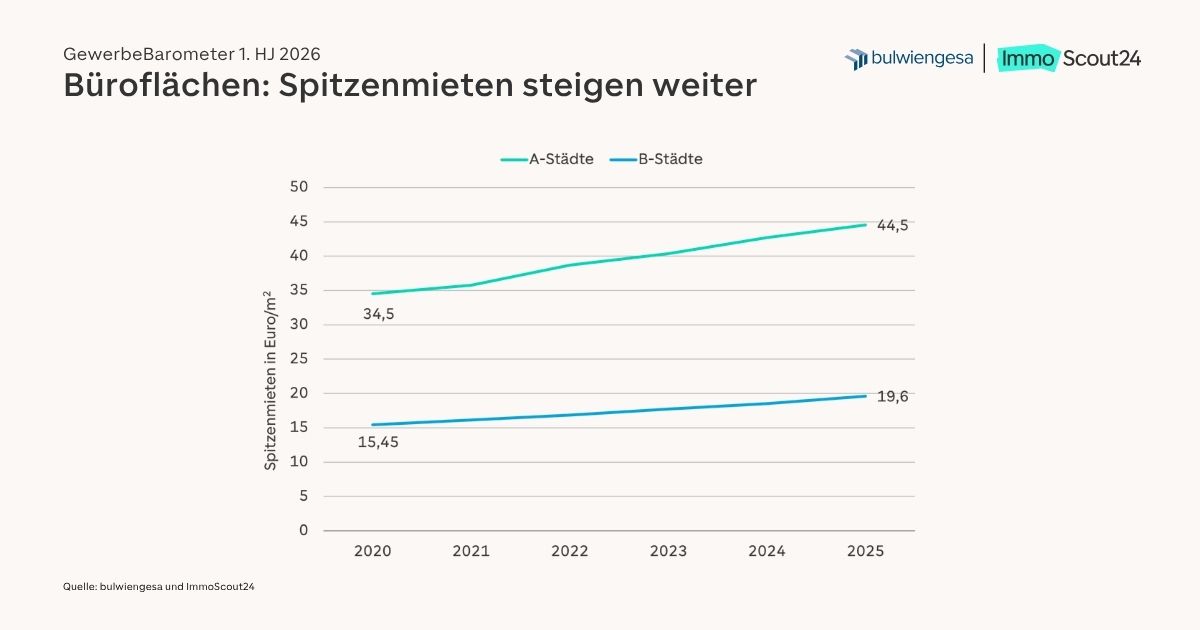
Despite rising vacancies, prime rents continue to rise. The reason lies in the
“Flight to Quality and Location”: Modern, ESG-compliant space in
good locations remain in demand, while older stocks are increasingly under pressure
.
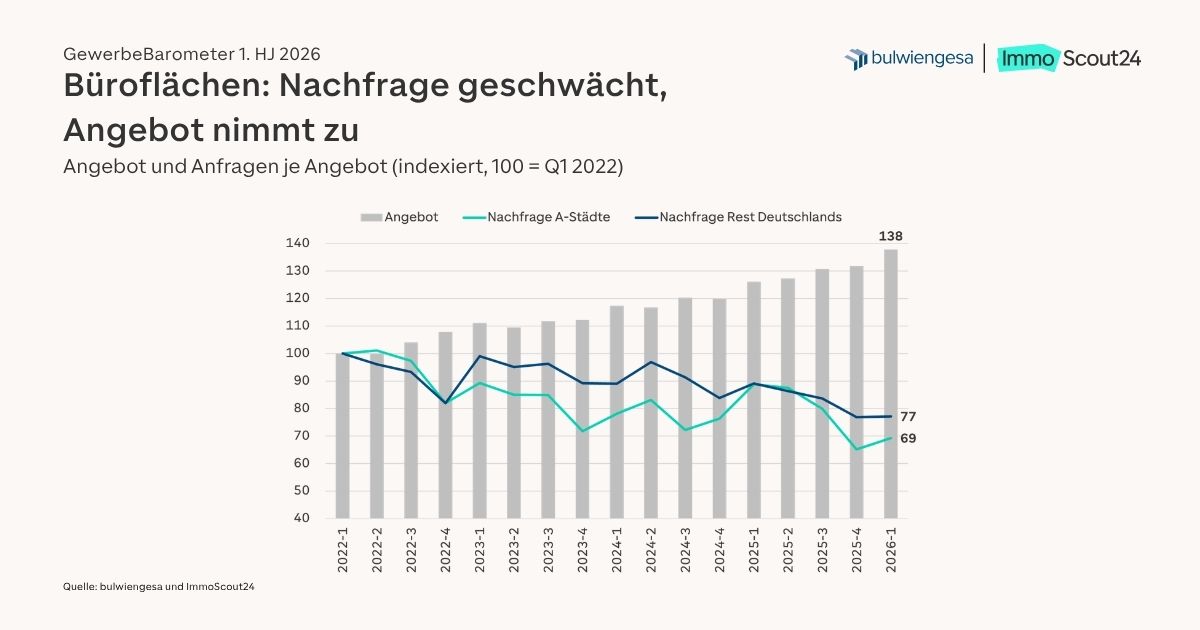
This development is also confirmed in the data from ImmoScout24: The offer
of office space has increased by around 38% since 2022, while at the same time the
Demand per supply in the top 7 cities as well as in other regions
declining.
“The office market is not facing a classic downturn, but in a
phase of structural realignment. Rising vacancies are mainly a
Quality problem – not every space is still in demand today. At the same time
high-quality properties in good locations remain in demand and drive the
Rental development continues to rise,” emphasizes Oliver Rohr, Head of Consulting at
bulwiengesa.
Conversion is gaining in importance – but remains limited
With the rising vacancy rate, conversion concepts are coming more into focus.
Currently, 7.1 million sqm of office space are vacant in the A-cities alone and contain
considerable theoretical potential for alternative uses – for example, for
urgently needed housing.
But the reality remains complex: high costs, building law hurdles and
unsuitable building structures clearly limit the actual implementation.
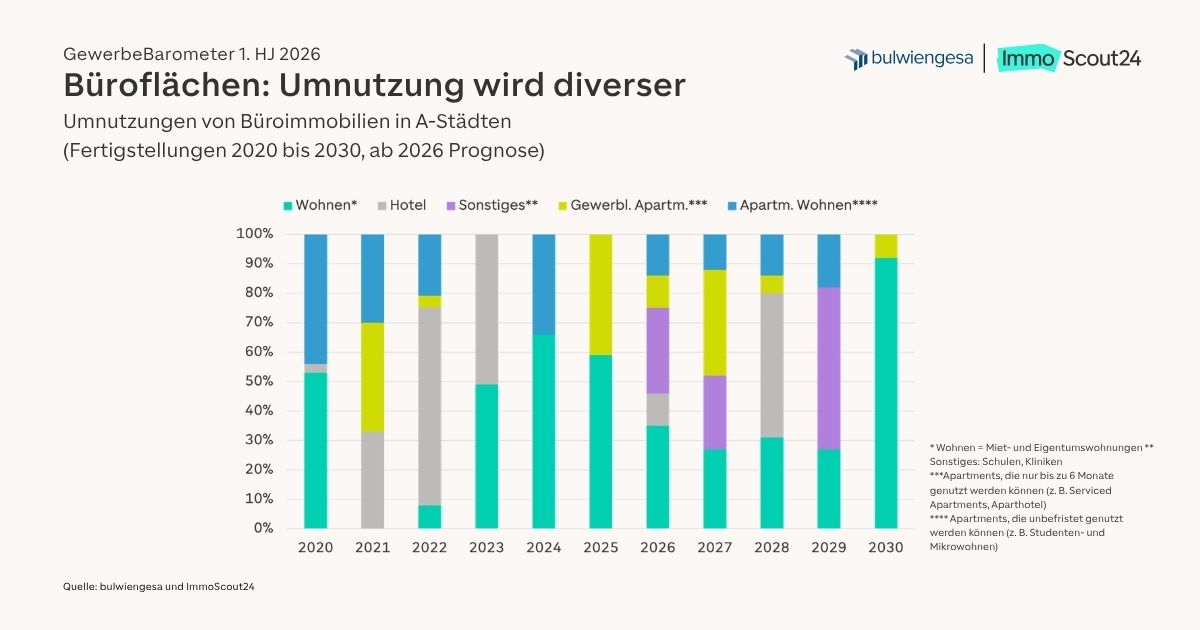
In addition to the much-discussed conversion into housing,
alternative uses are becoming increasingly important – including educational institutions, public
uses or boarding house concepts. Initial projects show that such
approaches to revitalization.
In 2025, almost 60% of the converted office space in the Class A cities was used for rental and
condominiums, the remaining share was mainly accounted for by
commercial apartment concepts. For 2026, bulwiengesa also expects a
significant increase in other forms of use such as schools or clinics, which
have hardly played a role so far.
The office market is thus increasingly diverging: into modern, strongly
sought-after premium space in urban locations on the one hand and under pressure on the other
Holdings, on the other hand.