Why air conditioning alone won’t save our cities
Germany is experiencing increasingly frequent and longer-lasting heat waves. So far, however, the reaction to this has been mainly technical. More and more new buildings are being equipped with air conditioning. According to the Federal Statistical Office, 4.3 percent of completed residential buildings already had a cooling system in 2025, more than twice as many as ten years earlier. For the real estate experts at DAVE, however, this is not a sustainable answer to climate change.
“So far, Germany does not have a national strategy for how buildings and cities should become heat-resilient in the long term. Instead, we are currently discussing air conditioning in particular. That falls far short of the mark,” says René Husfeldt, Managing Director of DAVE.
Cooling must become part of an overall system
In the opinion of the real estate network, heat protection must become an integral part of urban development in the future. Buildings, energy supply, power grids, greening and water management must be thought of together. Because the widespread use of air conditioners only postpones the problem. “When millions of air conditioning units are running at the same time on hot summer days, the demand for electricity increases massively precisely when our energy and distribution grids are already heavily loaded. Cooling must therefore never be considered in isolation, but must be part of an intelligent overall system,” explains DAVE partner Daniel Trefferer.
The real challenge lies in the existing building
From DAVE’s point of view, the building stock plays a central role. The majority of the buildings in which people will live and work in 20 or 30 years are already in place today. While heat protection can be integrated at an early stage in new buildings through low-energy concepts, concrete core activation, cooling ceilings or modular construction methods, the existing building must be retrofitted intelligently and economically. “The real transformation is not taking place in new construction, but in millions of existing apartments and buildings. This is where it will be decided whether our cities will remain livable in the summer in the future,” explains DAVE partner Wieland Münch.
Air conditioning systems are only one component
DAVE warns against reducing heat protection to the installation of air conditioning systems. External sun protection, intelligent facades, roof and façade greening, high-quality windows or the targeted cooling of individual rooms are often much more efficient and economical. “We have to say goodbye to the idea that every problem can be solved with an air conditioning system. Especially in existing buildings, an intelligent mix of structural heat protection, shading, greening and efficient technology is needed,” says Husfeldt.
Thinking about power grids and photovoltaics
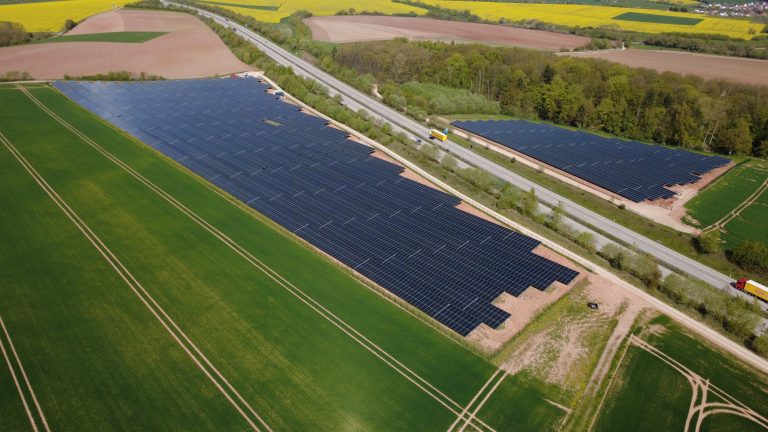
At the same time, the increasing demand for cooling must be included in energy planning. Air conditioners require a lot of electricity, especially when the sun is shining strongest. Photovoltaic systems deliver high yields at these times, but without intelligent grids, storage solutions and load management, additional consumption peaks can occur. “The energy requirement for cooling will increase significantly. That’s why we need to see buildings more as part of the energy infrastructure,” said Trefferer.
Modernising the political framework
DAVE is also calling for better framework conditions for modernisation of existing buildings. In the future, owners’ associations should be able to decide more easily on energy-efficient measures and the installation of efficient split air conditioning units. “We need fewer bureaucratic hurdles and more planning security. Heat protection must become just as self-evident as energy-efficient renovation or accessibility,” says Husfeldt.
Heat protection becomes a location factor
For DAVE, one thing is certain: The decisive factor will be which cities develop their buildings, districts and energy supply in such a way that they also function in the face of increasing heat waves. Heat protection is thus becoming an economic and social location factor. “The municipalities that develop holistic strategies today will be the more livable and economically stronger cities tomorrow,” Münch summarizes.