

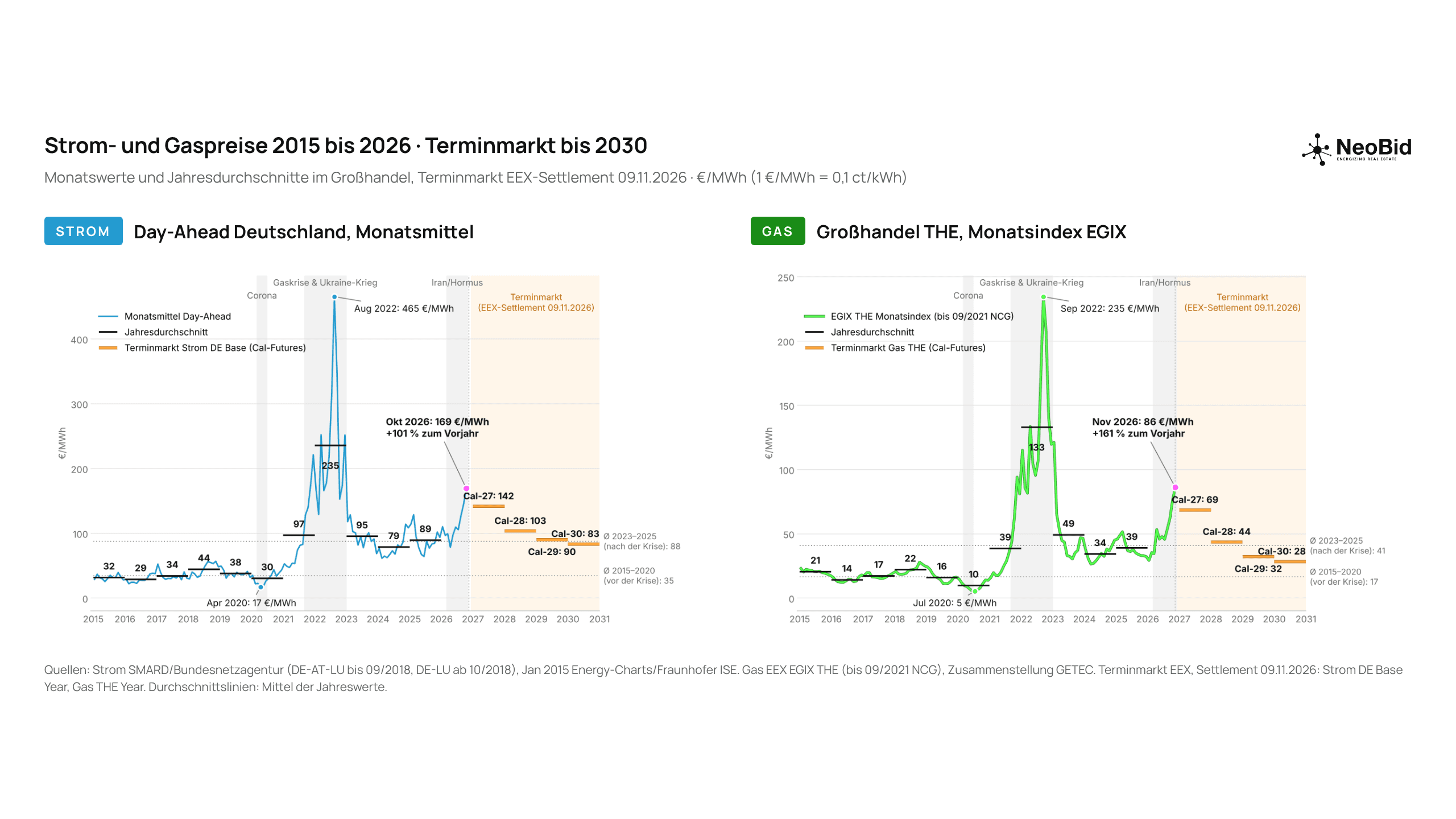
The European electricity and gas markets saw significant price rises in October, particularly for the 2027 delivery year. At the beginning of November, forward prices retreated slightly from these gains. Spot market prices, however, remained high. This is shown in the latest energy market report from NeoBid.
Particularly striking is the large price difference between delivery years: High risk premiums are being demanded for the coming winter, whilst later delivery periods are significantly cheaper.
“The recent easing of pressure is a positive sign for operating costs, but it is by no means cause for complacency. The decisive factor is which delivery years and volumes have already been hedged,” explains Prof. Dr Gunnar Gombert, Managing Director and co-founder of NeoBid.
Gas market: Low storage levels increase winter risks
German gas storage facilities began the heating season with significantly lower reserves than in previous years. This means there is less of a buffer available to cope with prolonged cold spells or supply disruptions. However, this does not imply an acute shortage: the Federal Network Agency assesses the gas supply as stable.
At the same time, Europe is more closely integrated with global gas markets through LNG. Geopolitical tensions and international demand are therefore having an impact on prices. The 2027 delivery year is trading at a significantly higher price than later years and the long-term pre-crisis level.
Electricity market: High spot prices despite a correction in the futures market
On the electricity market, too, prices have risen, particularly for near-term delivery periods. Higher gas and CO₂ costs are affecting conventional electricity generation. On the spot market, fluctuating wind and solar power output is leading to significant price variations between individual hours.
Since the energy crisis, electricity prices have risen, whilst forward prices for later delivery years have fallen. Individual consumption profiles are becoming increasingly important in determining procurement costs.
Energy procurement: taking a differentiated view of delivery years
The significant price differences between delivery years argue in favour of a differentiated procurement approach. Rather than locking in all volumes at a single point in time, staggered purchases and different pricing models can also help to spread the risks.
“It is not just the market price that is crucial, but the risk and procurement strategy. A combination of fixed volumes, tranches and flexible models can combine planning certainty with room for manoeuvre,” explains Thomas Rübelmann, Managing Director and co-founder of NeoBid.
For larger property portfolios, the bundling of consumption volumes, on-site electricity generation and Power Purchase Agreements (PPAs) can also contribute to an economically optimised supply.
Outlook: Volatility calls for forward-looking decisions
Winter temperatures, LNG imports, withdrawals from storage and weather-dependent electricity generation will continue to shape the market. Geopolitical developments may also trigger new price movements.
“These sharp fluctuations underscore the fact that energy procurement must be an ongoing process. Property owners should regularly review their procurement position and prepare options at an early stage,” said Gombert.