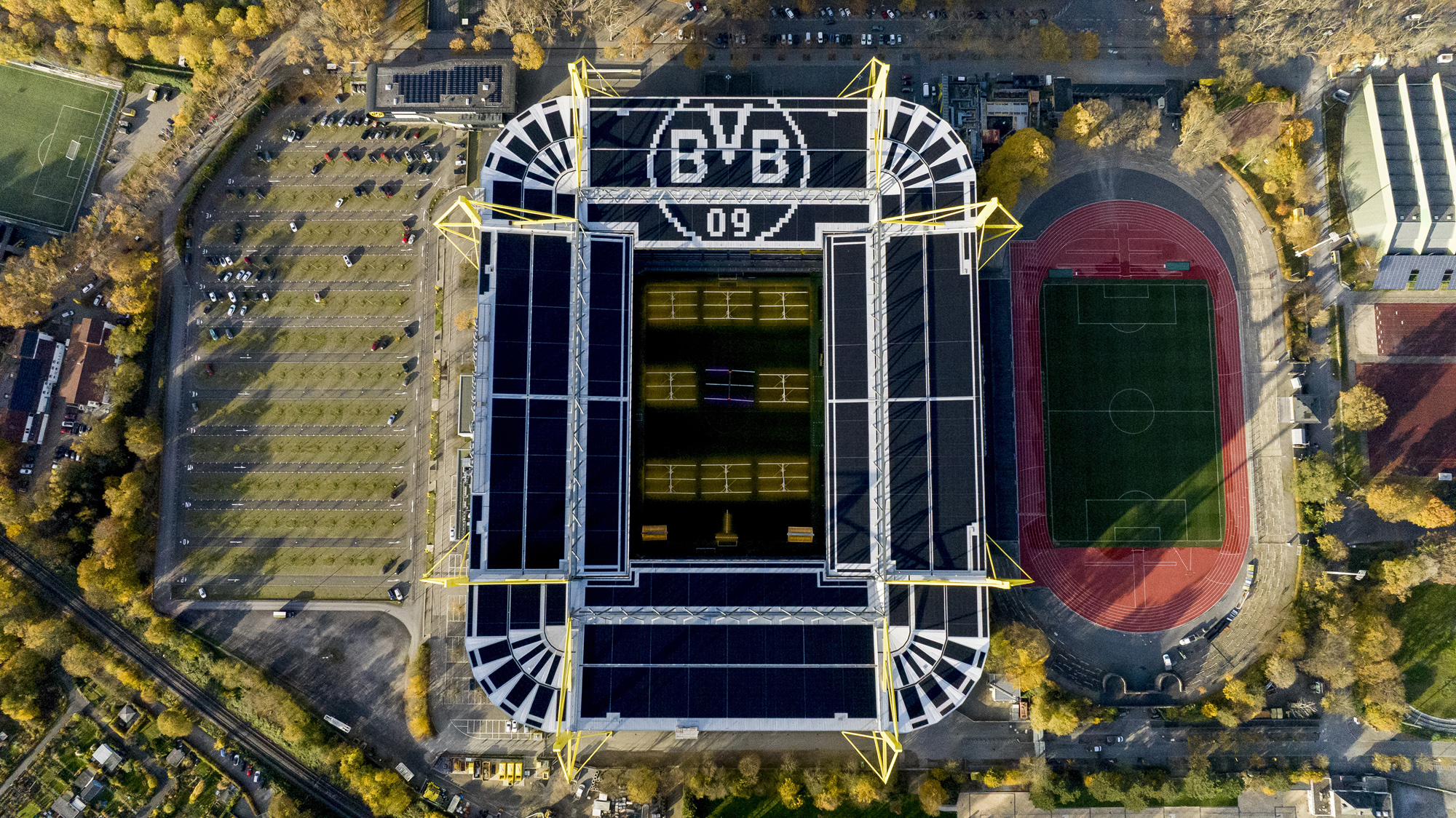
Six months after its commissioning, the world’s largest photovoltaic system on a stadium roof is becoming one of the most visible symbols of renewable energy in international sport. On the roof of SIGNAL IDUNA PARK, the home ground of Bundesliga club Borussia Dortmund, the project sets new standards for sustainable energy supply in professional football.
The record-breaking plant on the roof of one of Europe’s best-known football stadiums will generate more than 4 GWh of renewable electricity per year in the future. This corresponds to the amount of energy required to operate the stadium’s floodlight system for around 1,000 match days. At the same time, around 1,700 tons of CO₂ emissions are avoided annually.
The plant, which has been fully operational since December 2025, replaces an earlier system that could no longer meet the association’s increasing energy requirements. The modernisation is part of Borussia Dortmund’s comprehensive sustainability strategy and supports the goal of future-proofing stadium operations in the long term through large-scale clean energy generation.
“For us, this project was the next logical step on our way to greater sustainability,” says Florian Demnitz, Energy Manager at Borussia Dortmund. “We already had a solar system on the roof, but it was clear that we could achieve even more. We needed even more performance to ensure that the stadium’s energy needs could continue to be met for decades to come.”
The system was developed by Borussia Dortmund’s energy partner RWE. The focus was not only on maximising electricity generation from renewable energies, but also on maintaining the unmistakable appearance of SIGNAL IDUNA PARK. To ensure this important balance between performance and design, Borussia Dortmund and RWE chose JA (formerly JA Solar) as their technology partner.
The system consists of a total of 11,132 bifacial n-type modules of the type JA JAM54D41/LB with an output of up to 450 watts per module. Compared to conventional modules, they offer higher efficiency and lower power degradation over the entire service life. The double-glazed construction further increases durability and helps to ensure reliable operation over the planned service life of 30 years. The bifacial design makes use of sunlight on both the front and back of the modules, which further increases the energy yield.
A full black design was chosen for the facility, which blends harmoniously into the roof landscape of the stadium, retains the visual identity of SIGNAL IDUNA PARK and at the same time picks up on the black and yellow club colours of Borussia Dortmund. The modules are manufactured according to JA’s ITS Supply Chain Standard and thus meet defined requirements in terms of sustainability and complete traceability.
“We are proud to have been selected as a module supplier for such a groundbreaking project. For us, this is a testament to the quality and reliability of our technology,” says Alastair Mounsey, Vice President Europe at JA.
“The solar plant is already making an important contribution to Borussia Dortmund’s sustainability goals by providing clean, renewable electricity for match days and other events. In addition, the project impressively demonstrates how solar technology can be integrated into existing infrastructure on a large scale – from stadiums to entire cities. With millions of fans on site and in front of their screens worldwide, SIGNAL IDUNA PARK is now much more than a football stadium. It is also a strong example of how sport and renewable energy can work together on a global scale.”
“We are very satisfied with the performance of the solar system in the first months of its operation. The results are completely in line with our expectations,” adds Florian Demnitz. “The project is already having a noticeable impact on the energy supply and operational efficiency of SIGNAL IDUNA PARK. At the same time, we hope that it inspires other sports organizations to resolutely advance their own sustainability goals.”
BVB legend Karl-Heinz Riedle visits the JA stand at Intersolar 2026
On the occasion of the cooperation between Borussia Dortmund and JA, Karl-Heinz Riedle, former German national player and BVB legend, will visit the JA stand at Intersolar (Hall A2, Stand 380) at around 3:30 p.m. on Tuesday, 23 June. Visitors will have the opportunity to take a souvenir photo and get an autograph from one of the most famous personalities in the club’s history.
The installation at SIGNAL IDUNA PARK, which is officially recognised as the world’s largest solar system on a stadium roof, is one of the most visible symbols of renewable energies in international sport
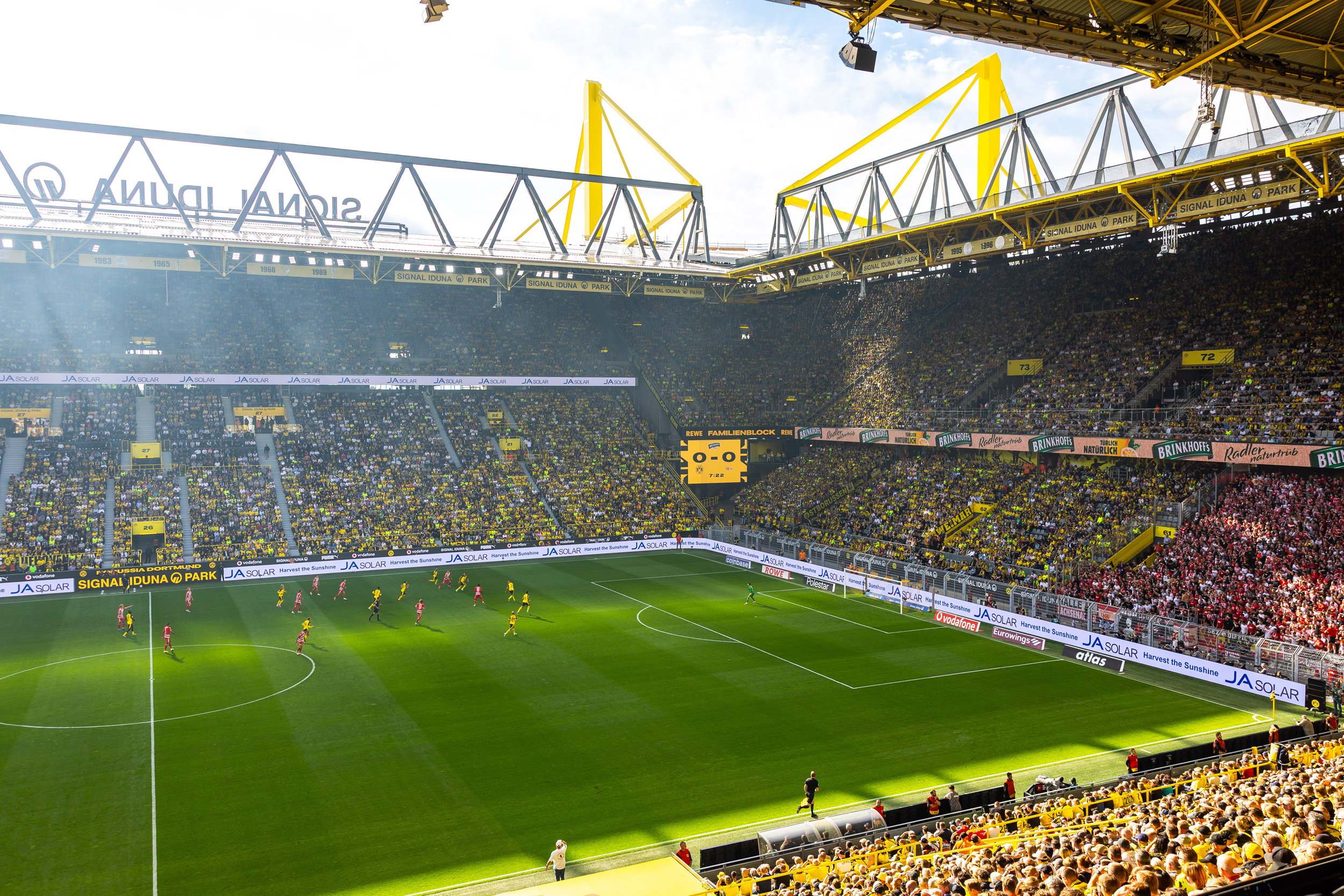
In the future, the plant will generate more than 4 GWh of renewable electricity per year – enough energy to operate the stadium’s floodlight system for around 1,000 match days
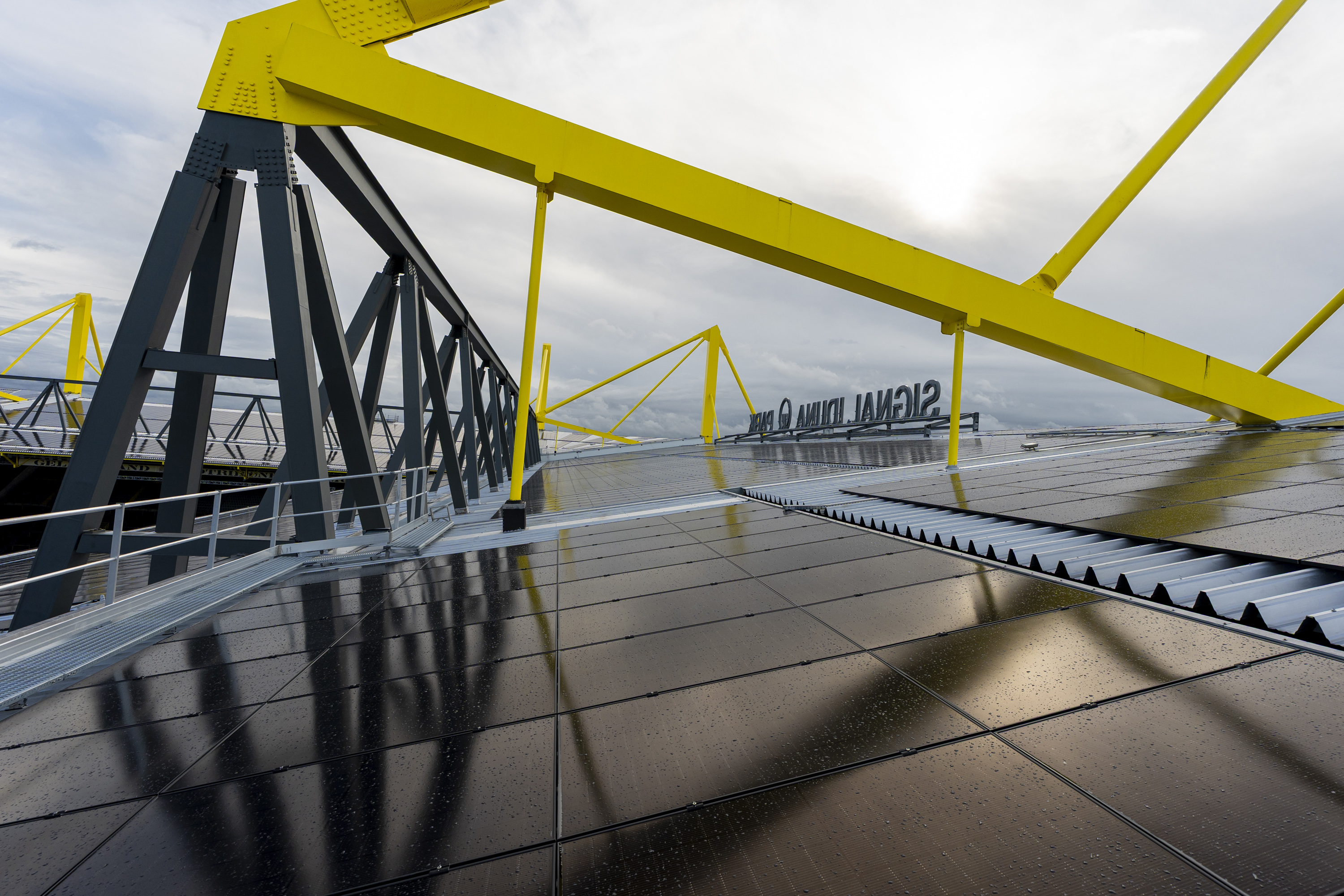
JA’s modules have been selected to meet Borussia Dortmund’s high energy requirements and ensure reliable performance over the entire 30-year lifespan
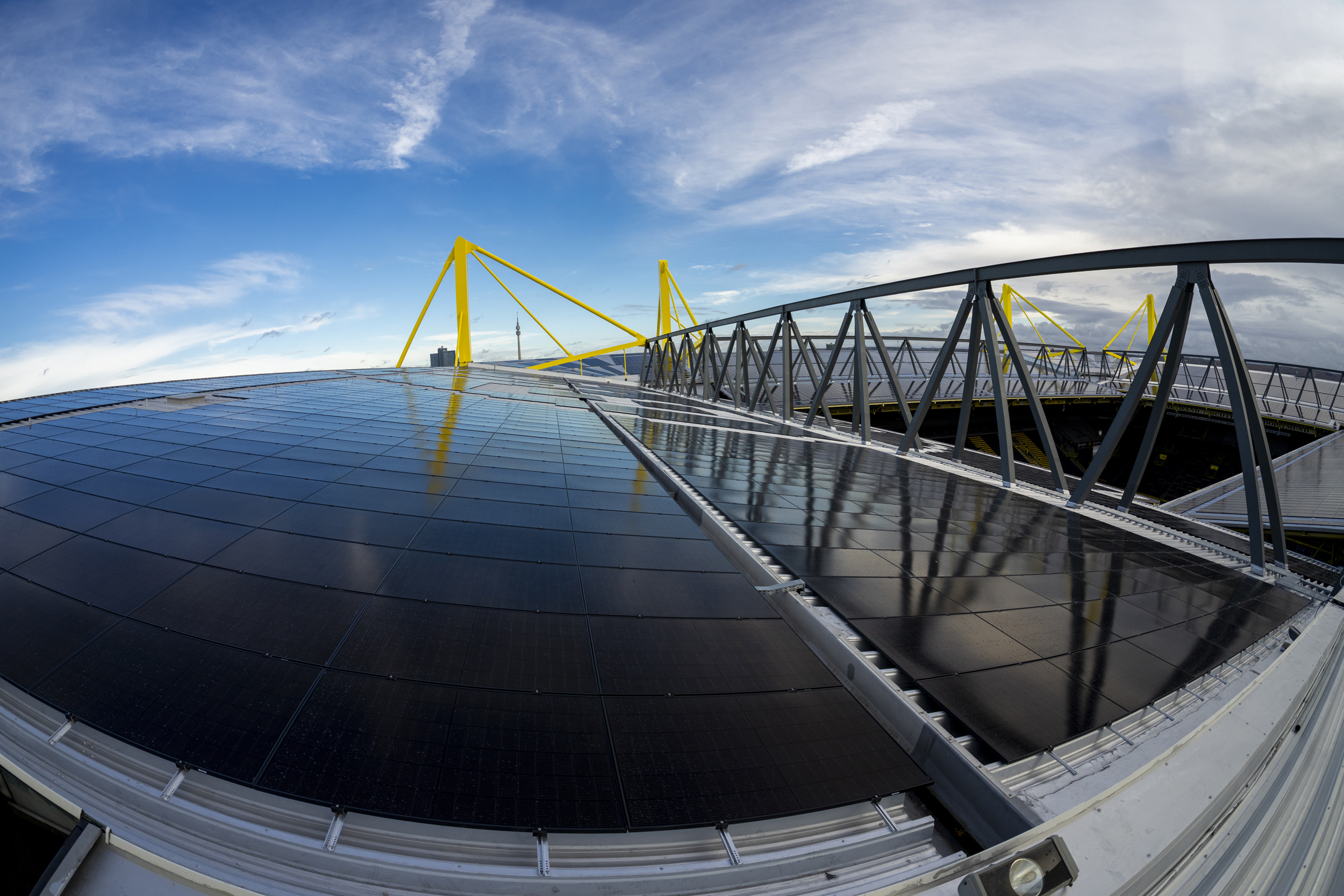
The full black design ensures that the solar system blends harmoniously into the stadium’s roofscape and at the same time reflects Borussia Dortmund’s black and yellow brand identity
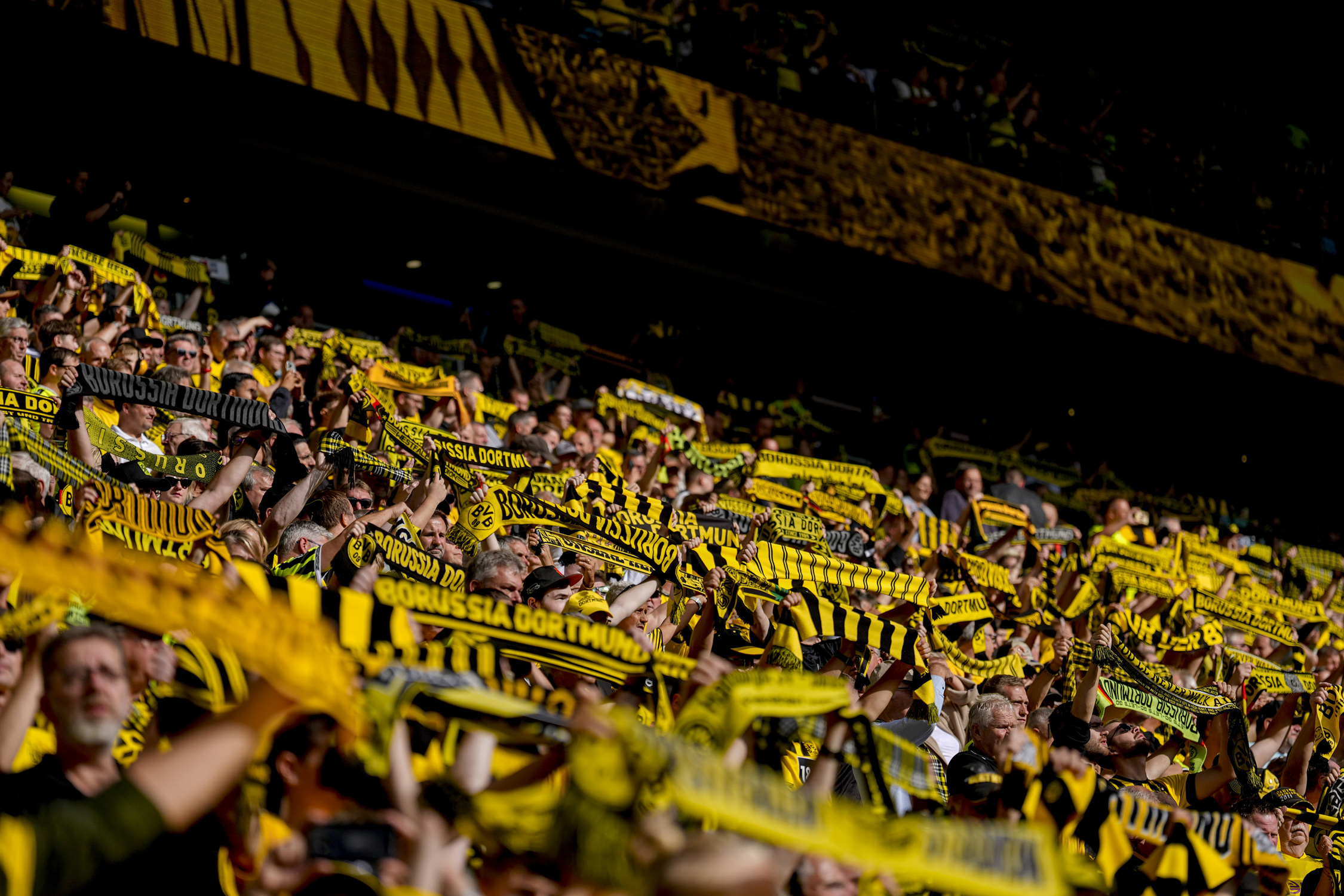
With millions of fans in the stadium and in front of their screens worldwide, SIGNAL IDUNA PARK is an impressive example of how sport and renewable energies can come together on a global scale