A transaction volume of around €16.6 billion was registered for the German real estate investment market in the first half of 2026. This exceeded the result from the same period of the previous year by 5%. In a market for which a sideways movement can be observed overall, the residential segment remains the strongest asset class with a slight drop in take-up of almost 3% and an investment volume of € 4.4 billion. The commercial real estate market (€12.3 billion) recorded an increase in turnover of 8%. With well over 700 transactions, it was the strongest first half of the year since 2022 in terms of closing momentum. This is the result of the latest analysis by BNP Paribas Real Estate.
“Events on the German real estate investment market in the second quarter were impacted by the armed conflicts in the Middle East with all their implications for overall economic development as well as for the financing conditions that are crucial for real estate investments. The closing momentum was temporarily severely curtailed, but picked up significantly again in the first half of the year, so that we can report a total investment volume of € 16.6 billion, an increase of 5% across all asset classes,” emphasises Marcus Zorn, CEO of BNP Paribas Real Estate Germany, and explains: “Especially at the beginning of the second quarter, the geopolitical developments in the Middle East have further exceeded capital market assumptions about rising energy price and inflation risks once noticeably postponed. Not only have interest rate expectations and financing conditions changed – economic forecasts have also been revised significantly downwards. Many market participants had to readjust financing, business plans and purchase price expectations again. As a result, purchase price negotiations have taken a new direction in many places, which has delayed processes and significantly curbed transaction activity in the meantime. With the memorandum of understanding signed between the USA and Iran and the emerging interest rate corridor of the leading central banks, there is now more certainty of action and closing momentum in the market again. Buyers and sellers have adapted their calculations to the changed environment.”
Housing is by far the asset class with the highest turnover
With an investment volume of around € 4.4 billion, residential remains the asset class with the highest turnover in the German real estate investment market. The previous year’s result was missed by just under 3%. The half-year result was largely driven by a significantly stronger second quarter, in which around €2.4 billion was placed. “Especially in the recently more volatile investment environment, the high relevance of residential real estate for national and international investors is evident. The decisive factor here is above all the robust user site. In many regions, rising rental demand, limited availability and declining new construction completions are coming together. Accordingly, we see that investors are again willing to secure larger housing stocks. In the past three months alone, around € 900 million has been placed in the German residential investment market through package sales in the three-digit million euro range,” explains Marcus Zorn.
Slight increase in commercial investment revenue – curbed transaction momentum in Q2
In the first half of 2026, the volume of commercial investment totalled €12.3 billion, up 8% on the previous year’s level. A buoyant first quarter of the year, in which around €6.9 billion was placed, was followed by a significantly curtailed second quarter (€5.4 billion).
“However, the second quarter was not a standstill, but rather a recalibration of the market. Risks are being repriced in the current environment. Refinancing issues, more defensive user market assumptions and higher risk premiums have once again realigned negotiations in some asset classes. That cost speed, but was ultimately necessary. This is because the market is not only coming back through the hope of lower interest rates, but through prices that realistically reflect financing, rental prospects and property complexity. Where this succeeds and sellers enter the processes with a clear framework for action, transactions are successful, as we saw especially at the end of the second quarter. Refinancing, strategic portfolio adjustments or hard-defined exit windows can be the drivers,” explains Nico Keller, Deputy CEO of BNP Paribas Real Estate Germany.
Office remains the strongest commercial asset class. Logistics and retail almost on a par
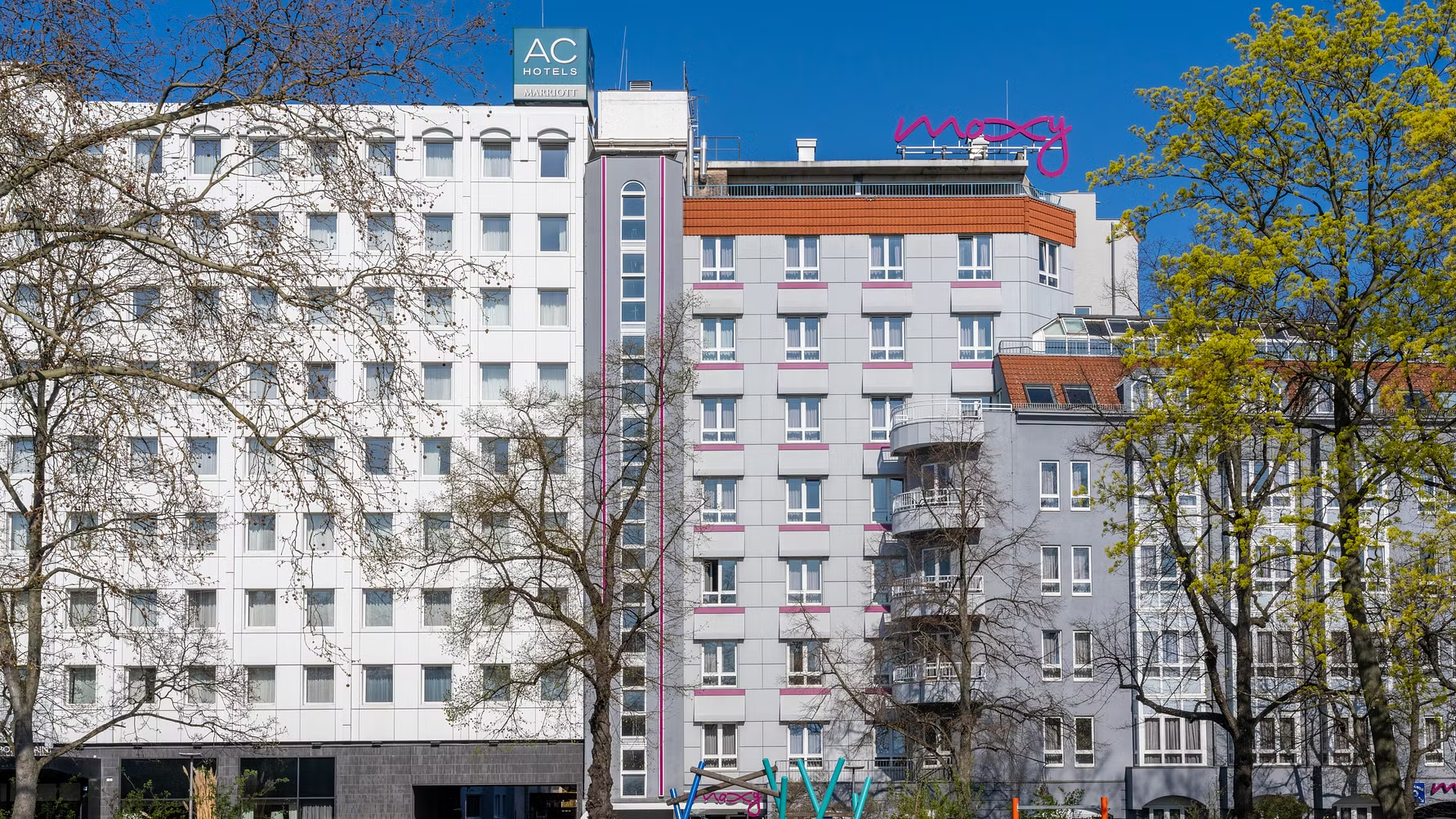
With a transaction volume of just under €3.2 billion (+19% compared to H1 2025) and a market share of 26%, office properties occupy the top position among commercial asset classes in the first half of 2026. Although the market continues to move well below the long-term average, a gradual upward movement has been evident since the cyclical low point in 2024. There is more movement in the large-volume segment in particular: office transactions in the three-digit million range totalled around €1.2bn in the first half of the year, doubling the investment volume in the large-scale segment compared to the same period last year.
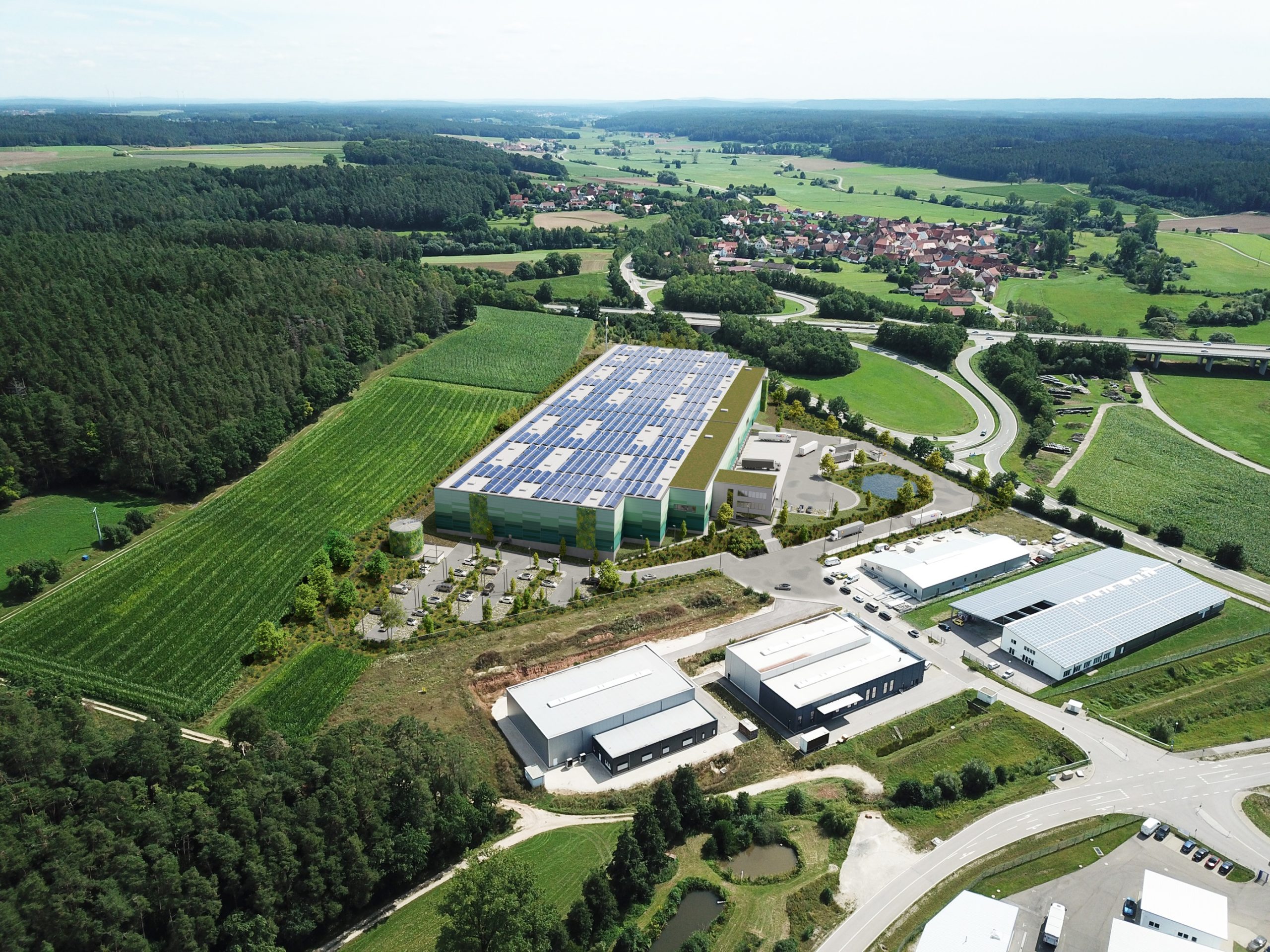
Logistics investments follow with just under €2.5 billion. This was 10% short of the previous year’s result, which is primarily due to the temporary decline in transaction momentum in the mid-size segment. At the same time, almost 70 deals in the last three months and a 16% increase in investment volume compared to the previous quarter demonstrate growing market activity. Larger transactions are also increasingly being successfully concluded: the investment volume of deals over €100 million amounted to almost €750 million in the first half of the year.
Retail investments amount to almost €2.3 billion. The year-on-year decline of around 21% is mainly due to lower volumes at shopping centers as well as in the discounter, specialty and supermarket segment. However, especially in the case of food-anchored formats, this is less an expression of declining demand than of limited supply. The fact that half of the total retail volume was attributable to this segment at the end of the first half of the year is clear evidence of the high interest in local supply properties with stable user structures.
Investment activity in the Healthcare segment has continued to accelerate in recent months. At €1.6 billion, earnings were 71% above the previous year’s level and 30% above the 10-year average. In addition to Aedifica’s acquisition of 80% of Cofinimmo’s shares, which was signed in the first quarter, other large-volume portfolio transactions contributed to the strong result.
Individual transactions dominate
In the current market environment, individual transactions dominate with around 9.2 billion euros. € (+7% year-on-year) and a market share of around 75%. Portfolio transactions totalled €3.0 billion, with the importance of package sales differing significantly between asset classes. In the office segment, classic portfolio transactions currently play almost no role and only account for around 5% of the volume. At the other end of the spectrum is the healthcare segment, where portfolio transactions account for around 80% of the volume.
Foreign investors with a strong presence in the logistics and healthcare segment
The commitment of foreign investors currently varies greatly between asset classes. In relation to the overall market, their market share is 44%, which is in line with the long-term average. While the market for office and retail investments is clearly dominated by domestic buyers (market share at 80% in each case), foreign investors dominate in logistics (75%) and healthcare (87%).
Munich is the undisputed No. 1 German A-location
Munich is at the top of the list of A-locations with a good €1.2 billion (+35% compared to H1 2025). Here, two office transactions in the three-digit million range were registered in the second quarter: Prinzregentenplatz 7–9 and Lindberg-Haus. This is followed by Hamburg with just under €970 million (+19%), Düsseldorf with €750 million (+34%) and Berlin with €630 million (-52%). The weak Berlin result is mainly due to the lack of office transactions. The capital’s office volume at the middle of the year was only around €85 million, which marks a historic low. This is followed by Frankfurt with around €600 million (+153%), Cologne with around €350 million (+12%) and Stuttgart with €250 million (+35%).
Yield increases in all asset classes for the first time since the end of 2023
For the first time since the end of 2023, net prime yields recorded noticeable increases across all asset classes in the second quarter. The main decisive factor is that the financing environment has become more challenging again after the increased capital market volatility in the meantime and that higher borrowing costs have been included in the purchase price calculations. Risks are also being repriced in the current environment. At the same time, the valuation remains differentiated within the asset classes: yield adjustments are particularly evident where financing costs are met with greater uncertainty in rental development, property quality, operator structure or economic sensitivity.
In the office segment, the net prime yield in the average of the A locations rose by 11 basis points to 4.49%. Munich remains the most expensive office investment market at 4.20%, while Frankfurt is also stable at 4.50%. Increases of 15 basis points (bp) were recorded in Berlin (4.50%), Düsseldorf (4.65%) and Stuttgart (4.65%). In Hamburg, the net prime yield rose by 10 bps to 4.35%, in Cologne by 20 bps to 4.60%.
In the logistics segment, the prime yield rose slightly in the second quarter and now stands at 4.60% (+10 bp) on average for A locations. The demand for modern logistics real estate is intact, but the higher financing costs are also reflected in the purchase invoices.
The Healthcare segment recorded the most significant adjustment, up 30 bp to 5.20%. Here, increased financing costs meet a market environment that was already characterized by sector-specific issues such as operator creditworthiness, cost development and regulatory requirements.
In the residential segment for new-build properties, the net prime yield has risen to 3.65% on average for A-locations.
In the retail sector, a differentiated picture emerges. At 6.00%, shopping centers yield 10 basis points higher than in the previous quarter, while DIY stores, which are strongly dependent on the economic situation, are even 25 basis points higher at 6.20%. In the high-street segment, on the other hand, a sideways movement can be observed. The net prime yield remains unchanged at 3.85% on average for A locations. The prime yields of food-anchored retail parks as well as supermarkets and discounters are also stable, with prime yields of 4.65% and 4.90% respectively.
Prospects
The investment market environment is likely to gradually brighten in the coming months. Although geopolitical uncertainties will remain an overarching issue and economic momentum is likely to continue to disappoint for the time being, the corridor forward is narrower and more calculable for market participants both in terms of developments on the capital markets and in the real economy.
For the German economy, it will be crucial how the current transformation process is shaped positively. The reform package now presented is a first step towards promoting future viability and growth. Economically prosperous regions such as the Munich area with its strong technology sector as well as globally recognized successes in robotics show the potential that German business and companies can have. Foreign investors in particular monitor where attractive investment opportunities are offered. Additional security in investments is offered by the solid user markets – where location and property fit, with extensive rental growth potential.
The decisive component for the rest of the investment year will be the development of financing costs. Surprising changes of direction are not expected. A possible further interest rate hike by the ECB has been priced in and the latest inflation data in the euro area have dampened concerns about further rising inflation. However, this is not associated with a complete all-clear and a sustainable reduction in financing conditions is unlikely. Accordingly, defensive financing assumptions, increased risk premiums and property quality continue to determine transactions.
“The decisive factor will be less the pure availability of capital, but whether buyers and sellers bring together the changed framework conditions in a price level that can be concluded. The current transaction processes show that sellers and buyers find it somewhat easier to come together again when it comes to determining the purchase price. For the time being, this development is unlikely to be directly reflected in a comprehensive expansion of the investment volume, but we expect a significant acceleration of transaction momentum in the large-volume segment towards the end of the year. For long stretches, the market is thus likely to move sideways compared to 2025, with a chance of a stronger end to the year. The full-year volume will most likely set course for the €40 billion mark. Selective yield increases are still to be expected,” says Marcus Zorn, summarizing the outlook.