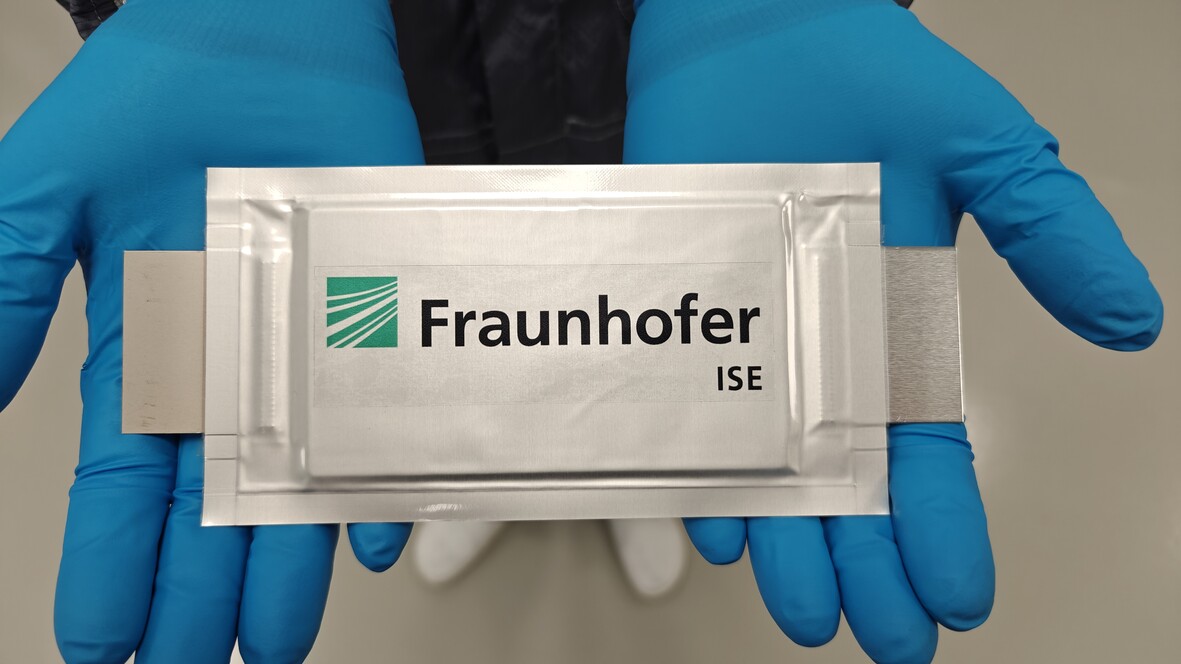
“Normally, the anode and cathode—the two electrodes of a battery cell—consist of many thin, alternating layers of electrode coating and current collectors,” explains Dr. Oliver Fitz, group leader for battery cell technology at Fraunhofer ISE. “We’ve managed to increase the thickness of the electrode coating from the previously standard 100 to 200 micrometers to up to 800 micrometers, thereby significantly reducing the number of current collectors required. As a result, we have much more space for active material, which increases the energy density by 10 to 15 percent, depending on the battery type and design.” The research team at Fraunhofer ISE initially validated the new electrode architecture for zinc-ion, sodium-ion, and lithium-ion batteries experimentally using small battery cells in the laboratory. For lithium-ion batteries, they also manufactured prototypes of pouch battery cells with the newly developed electrode structure on a semi-automated production line in the modern cleanroom of the Fraunhofer ISE Battery Materials and Cell Production Lab. “The cell concept can also be easily adapted to other cell chemistries,” adds Oliver Fitz.
The battery electrodes are PFAS-free and are manufactured without the use of toxic solvents. The new cell architecture was developed with future mass production in mind: A potential electrode production line exhibits significantly lower process complexity compared to a state-of-the-art wet-coating system. As a result, capital costs are significantly lower. Operating costs are also reduced due to the lower space and energy requirements. This technology thus opens up the possibility, particularly for small and medium-sized enterprises, to establish their own battery cell production facilities in Germany. The project results demonstrate a promising approach toward the future industrialization of this novel electrode and cell architecture. Helmut Hechinger GmbH & Co. KG is supporting the research consortium as an industry partner and contributing its manufacturing expertise. The machinery manufacturer acp systems AG- also a project partner-is developing the equipment for manufacturing the electrodes. “Having started out as a traditional automotive supplier, we have long been diversifying into future-oriented markets, products, and industries,” explains Markus Duffner, CEO of Hechinger. “For example, we already generate over 30 percent of our revenue in the field of e-mobility. If the next steps in scaling up and validation show promising prospects in terms of both cost and performance, we could explore industrialization. We see great potential in Baden-Württemberg for battery production focused on stationary storage.”
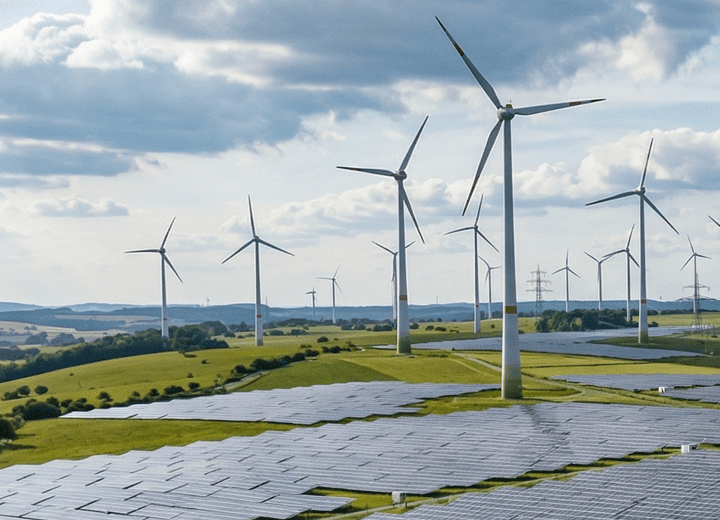
“In a climate-neutral energy system with fluctuating energy sources like solar and wind, stationary battery storage is an integral component for covering morning and evening electricity peaks,” says Prof. Dr. Andreas Bett, director of the Fraunhofer ISE. “In California, for example, battery storage systems already provide most of the electricity in the evenings. Germany would be well advised to build up manufacturing capacity to meet the growing demand for batteries and thereby create value within the country. If we can contribute to that, we’d be very happy.”
“This technology is the result of many years of research at Fraunhofer ISE. We owe our success in reaching this developmental milestone in part to funding from the BMWE, BMFTR, and the Baden-Württemberg Ministry of Economic Affairs, as well as to the trusting collaboration with our partners,” says Dr.-Ing. Daniel Biro, head of the Electrical Energy Storage Department at Fraunhofer ISE.
The research team developed the new electrode and cell design as part of the projects “VORAN – Innovative Sodium-Ion Battery Storage for Stationary and Mobile Applications” (running through June 2027), “INFAB – Zinc-Ion Batteries for Stationary Energy Storage – Manufacturing and Assembly” (completed), and “WinZIB2 – Globally Deployable, Innovative Zinc-Ion Battery System” (completed), in collaboration with the partners acp systems AG, Helmut Hechinger GmbH & Co. KG, the University of Stuttgart’s Institute for Photovoltaics (ipv), and the Karlsruhe Institute of Technology/Helmholtz Institute Ulm. The Federal Ministry for Economic Affairs and Energy (BMWE) funded the research in the VORAN and InFAB projects, while the Federal Ministry of Education and Research (BMBF) funded the WinZIB2 pro-ject.