Between January and September 2026, turnover on the German office investment market totalled around €4.4 billion, meaning that the volume remained roughly at the previous year’s level (-1.7 per cent). Offices thus remain the asset class with the highest turnover, ahead of logistics investments, in which around €4.0 billion was invested. This is according to an analysis by BNP Paribas Real Estate.
“Nevertheless, market momentum has slowed somewhat since the outbreak of the war in Iran. At the same time, the interest rate rises of recent months have triggered new pricing processes, which have increasingly prolonged transactions. Whilst turnover of just over €1.8 billion at the start of the year therefore pointed to a market recovery, turnover fell in the following quarters to €1.3 billion and €1.2 billion respectively,” said Franc Gockeln, Managing Director and Head of Office Investment at BNP Paribas Real Estate GmbH.
Against this backdrop, corrections in net prime yields were already evident in the second quarter, and these continued across almost all locations in the third quarter. The average net prime yield for all A-class locations was therefore a good 20 basis points above the previous year’s figure at the end of the third quarter, although the trend varied considerably from city to city. Munich remains the most expensive investment market with an initial yield of 4.20 per cent and is the only location to have shown stable performance since the end of 2023. In Hamburg, the peak yield stands at 4.35 per cent (+10 bp), whilst in Berlin and Frankfurt it is slightly higher at 4.60 per cent (+35 bp and +10 bp respectively). Cologne follows with 4.70 per cent (+30 bp), just ahead of Düsseldorf and Stuttgart at 4.75 per cent (+25 bp and +35 bp respectively).
Prime locations with strong transaction volumes – Berlin still under-represented
In prime locations, the volume of office investment stands at just over €3.1 billion, representing a fall of just under 9 per cent compared with Q3 2025. Much of this decline is attributable to Berlin, where only €280 million has been recorded so far. Munich has recorded significant growth of 26 per cent to almost €820 million, whilst Düsseldorf, Frankfurt, Hamburg and Cologne have also posted strong results with transaction volumes of between around €450 million and €500 million. Stuttgart, with over €130 million, has achieved a similar volume to the previous year. Particularly noteworthy is the contribution to turnover from locations outside the major cities: around 29 per cent of the office investment volume is accounted for by B, C or even D-class locations – a clear sign that transactions are still being concluded even in these times, provided they involve core properties and/or the pricing is right.
The picture is also positive when looking at investment volumes by size category: the two largest categories – €50–100 million and over €100 million – contribute by far the most to turnover, at 26 per cent and 33 per cent respectively; furthermore, both segments saw an increase on the previous year’s figures. By contrast, investment in the €25–50 million category was significantly lower than in the previous year, meaning that this category now accounts for only 17 per cent of the total. Transactions in the €10–25 million range accounted for just under 18 per cent of turnover, whilst smaller deals in the segment up to €10 million, at 6 per cent, round off the overall picture.
Outlook
The outbreak of the war in Iran and the ECB’s further interest rate rises have led to a temporary halt in the market recovery over the course of the year and triggered yet another realignment of the commercial property investment market. Whilst sellers and buyers were able to agree on a price level more swiftly at the start of the year, this is now back on the table in light of the improved returns offered by alternative investment opportunities – with corresponding implications for the duration of transaction processes. Investors are currently showing interest in a wide variety of properties: on the one hand, properties in the absolute core segment offering the prospect of secure, stable long-term cash flows; and on the other, very attractively priced non-core assets offering short-term potential for value creation. It is precisely this segment that is likely to see an increase in supply in the coming months as part of portfolio restructuring.
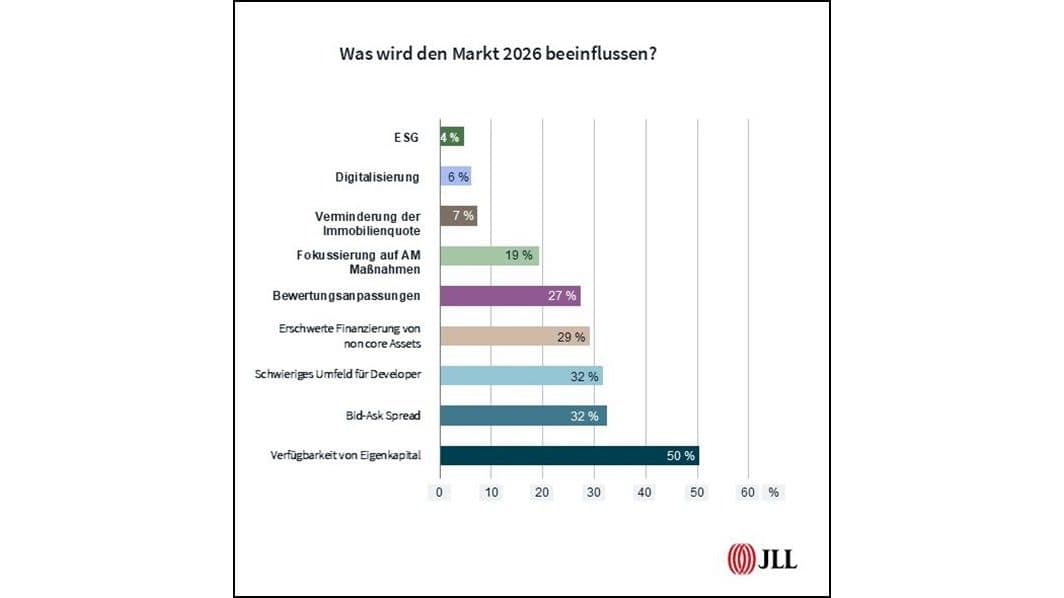
“Recent developments in the capital markets and the ongoing – and in some cases intensified – geopolitical unrest leave no scope for falling yields in the near future. Rather, the price-discovery phase is likely to continue and lead to further adjustments. Accordingly, value growth for office investments will stem solely from rental growth or the realisation of untapped potential. This is being driven by the tenant markets, which, for the most part, reported impressive turnover figures at the end of Q3 and suggest that rents are likely to rise slightly going forward. Office investments are therefore likely to remain a sought-after asset class in the future, as confirmed by the volume of ongoing negotiations. “Should the majority of these transactions be finalised, it is entirely possible that the €6 billion mark will be exceeded by the end of the year,” explains Franc Gockeln.
Link to the market report: https://www.realestate.bnpparibas.de/marktberichte/buero-investmentmarkt/deutschland-report