The expansion of renewable energy is changing the requirements for energy and property investments. In addition to generation capacity and site quality, available grid capacity and the timing of generation and consumption are increasingly determining a project’s economic viability. Battery storage can help to use and market electricity more flexibly. This is demonstrated by the ‘Renewable Energy 2026/2027’ market report from Wüest Partner.
In the first three quarters of 2026, renewable energies accounted for around 64 per cent of Germany’s net electricity generation. As their use continues to expand, the importance of the infrastructure that transmits, stores and makes electricity available to consumers is growing.
“A suitable site alone is not enough. As part of the valuation, we must also assess whether the required grid capacity is available and how energy generation and consumption can be economically integrated. This applies to wind and solar farms just as much as it does to data centres, industrial or logistics properties,” says Thomas Lehmann MRICS, Head of Infrastructure Valuation at Wüest Partner.
Grid capacity is limiting the implementation of investments
The expansion of renewable energy infrastructure opens up long-term investment opportunities for generation facilities, grids, storage systems and integrated supply solutions. However, implementation requires approved sites, available grid connections and viable revenue models.
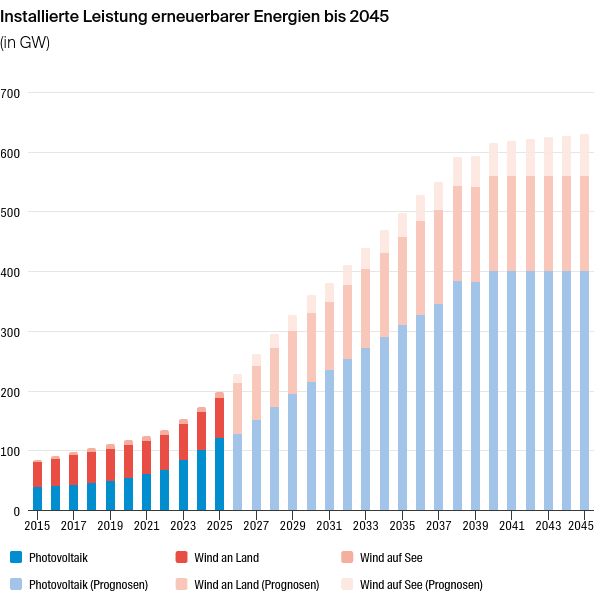
Whilst photovoltaics have grown significantly in recent years – and the interim target for the statutory expansion path set out in the EEG for 2026 was already achieved in August – grid expansion is lagging behind the pace of generation in many places. The resulting grid bottlenecks meant that, in 2025, around 9,400 gigawatt-hours of renewable electricity could not be fed into the grid. The volume of redispatch for photovoltaic systems rose by 94 per cent. Connection conditions, regional grid capacities and potential curtailments must therefore be taken into account at an early stage in site selection decisions and profitability analyses.
The allocation of scarce grid connection capacity is also changing. From April 2026, transmission system operators will gradually replace the existing ‘first-come, first-served’ principle with a maturity-based approach for storage facilities and large electricity consumers. Where grid capacity is limited, projects will in future be prioritised more on the basis of their readiness for implementation and their benefits to the overall system.
Marketing opportunities and economic viability are coming more into focus
For project developers and investors, the key factor is when and at what price the electricity generated can actually be sold. High generation volumes alone do not guarantee high revenues. At times when there is a high level of simultaneous wind or solar power generation, low or negative market prices can undermine profitability.
“The energy transition is entering a new phase. It is no longer just installed capacity that determines a project’s success, but increasingly also the ability to integrate electricity efficiently into the energy system,” explains Lehmann.
Battery storage systems make it possible to store surplus electricity and defer its use or sale until a later date. Installed storage capacity has risen sharply in recent years. Whilst domestic storage systems continue to account for the largest share, the large-scale storage segment in particular is growing; in future, this segment will be able to make a greater contribution to the integration of wind and solar farms and to the optimisation of energy management. However, their economic benefits depend on the location, the technical design and the operational strategy.
The report also provides its own comparative data for the economic assessment of wind and solar farms: to this end, around 50 sales and prospectus documents were analysed. The key figures derived from this – relating to investment costs, financing and ongoing operating costs – serve as benchmarks for verifying the plausibility of economic viability assumptions and for evaluating individual projects.
Energy infrastructure is also becoming more important for property investors
The energy transition is increasingly making energy infrastructure a strategic factor for the property sector. Photovoltaic systems, battery storage and smart energy management systems help owners to reduce energy costs, tap into potential returns and make their energy supply more flexible. At the same time, a high-performance grid connection may in future become just as important as a property’s location or structural quality.
The report shows that property is increasingly becoming a venue for the generation and storage of electricity in its own right. The Site Promotion Act, which came into force in 2026, also expands the scope for funds, REITs and special-purpose property funds to hold and operate renewable energy installations and charging infrastructure. As a result, property and infrastructure investments are converging further, both in regulatory and economic terms.
In an interview, Dr Peter Brodehser, Managing Director at DWS and a board member of the German Federal Association for Alternative Investments, assesses current developments from an investor’s perspective. Among other things, he explains the role that grid connections, flexible electricity trading models and the combination of generation facilities and storage systems play in investment decisions.
You can find the full study here: Renewable Energy Market Report 2026/2027
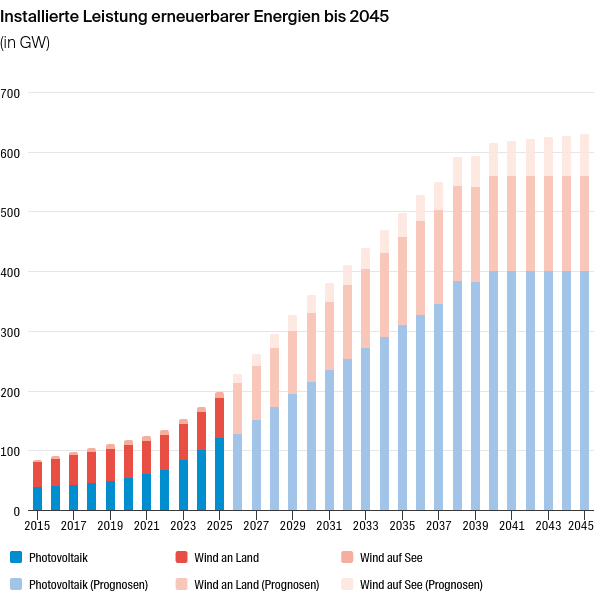
Note: Target from 2026 onwards in accordance with the EEG/WIndSeeG
as at 2026. Sources: Federal Ministry for Economic Affairs and Climate Action, EEG. Calculation and presentation: Wüest Partner