The data requirements of banks and investors have a major impact on the operational activities of real estate companies. At the same time, inconsistent requirements and unclear KPI definitions make it difficult to provide building data. Manual processes continue to play a major role in the survey. This is shown by a recent survey by Apleona, the ZIA and Coalition-X among 112 market participants from the real estate industry.
Around 40 percent of respondents rate the influence of banks’ data requirements on their operational activities as strong to very strong. The assessment of the requirements of investors is similarly high. Here, 39 percent rate the influence as strong or very strong. In comparison, regulatory requirements are rated as less relevant: Around 24 percent rate the influence of sustainability reporting according to CSRD/ESRS as strong to very strong, for the EU taxonomy it is around 22 percent and for the SFDR disclosure regulation around 18 percent.
Manual data collection remains very common
Manual collection is still widespread for ESG and building data: At around 54 percent, it is mentioned more often than any other collection method. Around 40 percent of respondents receive data from property managers, around 33 percent from facility managers. Digital solutions are used less frequently: IWMS as well as energy management or smart metering systems are used by almost 30 percent each, ESG software platforms by a good fifth.
“For many years, the real estate industry has come to terms with heterogeneous data sets and manual processes. This will work less and less in the future. Digitalization, automation and, in particular, the use of AI require that data is reliable, uniformly defined and thus usable. Data quality is thus becoming a crucial prerequisite for being able to leverage the new potential in the first place,” says Dr. Jochen Keysberg, CEO of the Apleona Group.
There are further hurdles in making the data available to banks and investors. At 70 percent, inconsistent data requirements are by far the most frequently cited problem. One in two also sees unclear definitions and reference values of KPIs as a challenge. Lack of data at the building level and manual, error-prone transfer processes are each cited by around 41 percent of respondents.
Traceability as a new key factor
The pressure to act is growing: Banks and supervisory authorities increasingly expect the origin and processing of risk-relevant data to be traceable – keyword data lineage. It must be possible to identify where relevant data comes from and how it has been processed or changed before it is used. According to the survey, the topic has already arrived in the real estate industry: Almost half of those surveyed are aware of the increasing requirements and are actively preparing for them. A further 30 percent are familiar with it, but have not yet taken any measures.
At the European level, too, there is a greater focus on uniform building data. The EU is pushing ahead with a digital building logbook and corresponding standards. At the same time, the industry initiative Coalition-X is testing trustworthy and machine-readable data signing to confirm authenticity. The ZIA has taken over the patronage of the initiative and Apleona is one of the pilot partners testing the authenticity of ESG building data in operation. In the future, the data should also be usable for automated processes and AI applications.
“We need clear definitions and reliable certificates of authenticity between the parties involved. Data should be collected and sealed where it is created, and then be able to be passed on and used in a secure manner. This is exactly where Coalition-X comes in. At the same time, AI is making the issue even more urgent: The potential of AI-supported processes can only be fully exploited on the basis of high-quality and reliable data. Conversely, AI can also help to improve data quality itself, for example by detecting and correcting errors as soon as they are recorded,” says Jochen Schenk, Vice President of ZIA.
Panel at EXPO REAL
The results of the survey will be presented and discussed on October 6 as part of the panel “Success Factor Building Data” at EXPO REAL. Dr. Jochen Keysberg (Apleona Group), Jochen Schenk (ZIA), Jitka Steinmetz (Manova Partners) and Brigitte Bourscheidt (Federal Institute for Real Estate) will discuss from 1:15 to 2:30 p.m. in conference room B11 how the real estate industry can cope with increasing demands on building data and what role digitalization, AI and Coalition-X play in this. The panel will be moderated by Nikolaus von Raggamby (RUECKERCONSULT).
Registration: https://panel-gebaeudedaten.rueckerconsult.de/

Influence of regulatory requirements on the operational activities of real estate companies, based on a survey by Apleona, ZIA and Coalition-X. Image source: Apleona, ZIA, Coalition-X, Rueckerconsult
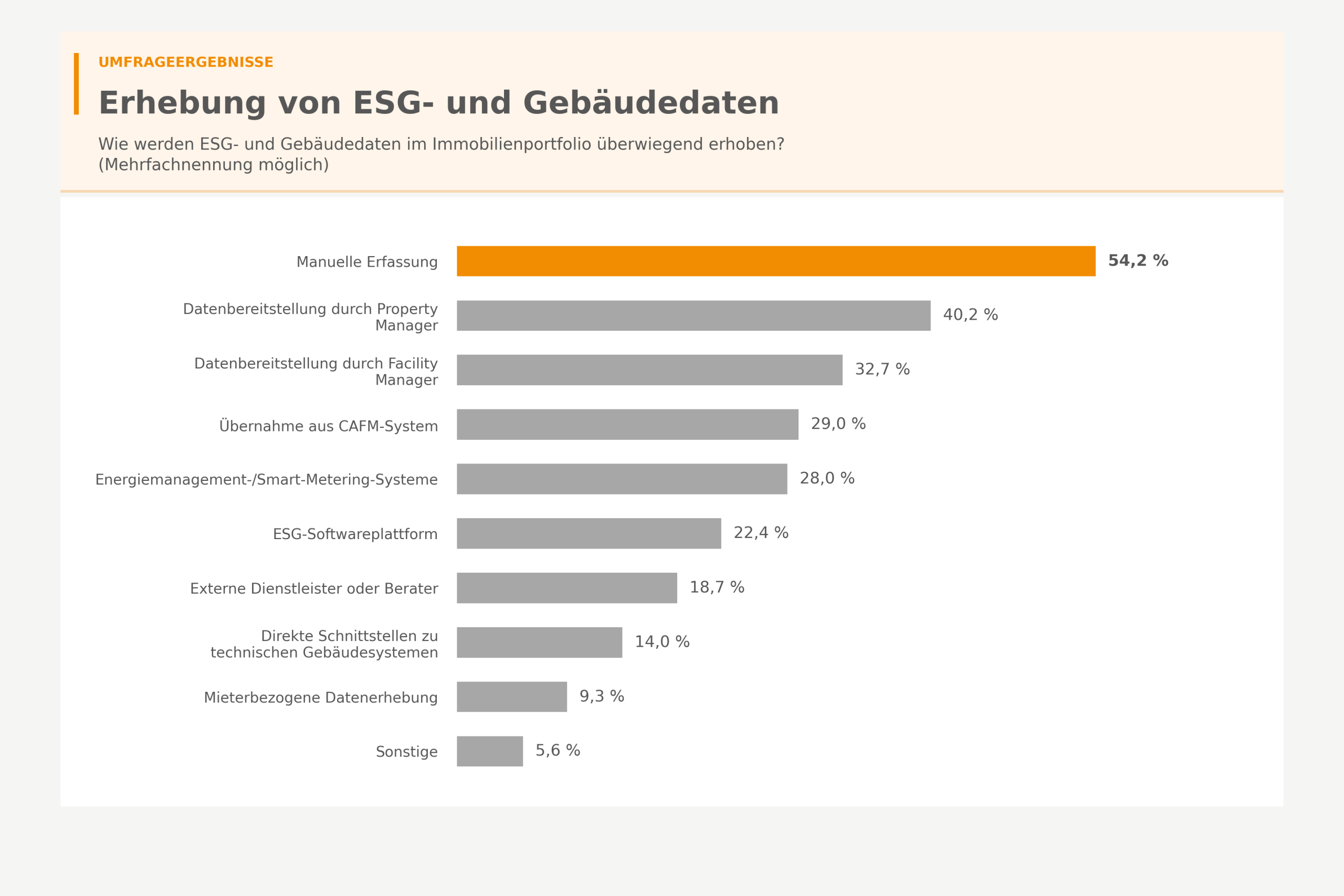
Graphical evaluation for the collection of ESG and building data in the real estate industry. Image source: Apleona, ZIA, Coalition-X, Rueckerconsult
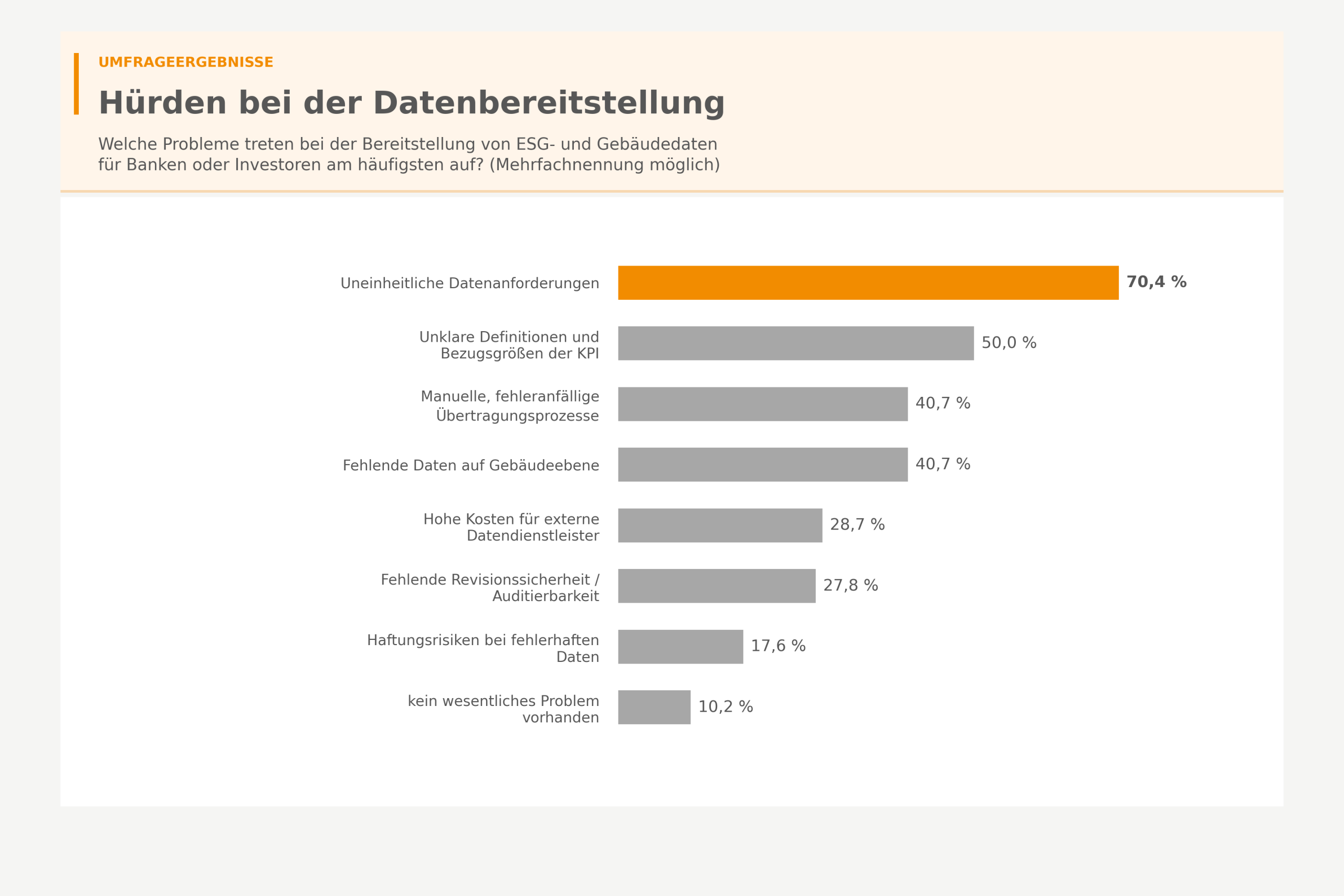
Graphical evaluation of hurdles in the provision of ESG and building data according to a survey by Apleona, ZIA and Coalition-X. Image source: Apleona, ZIA, Coalition-X, Rueckerconsult
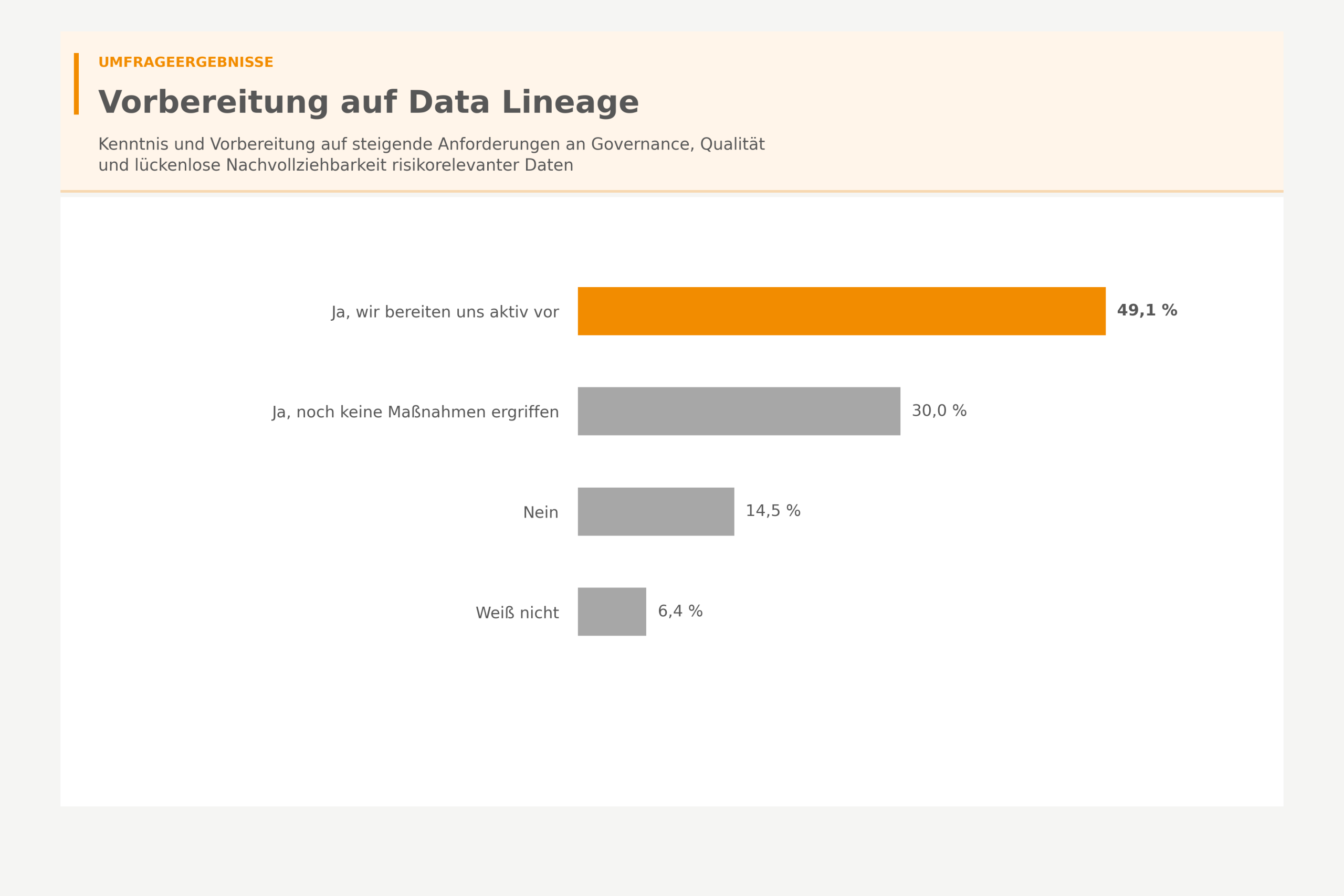
Graphical evaluation in preparation for increasing demands on data lineage in the real estate industry, based on a survey by Apleona, ZIA and Coalition-X. Image source: Apleona, ZIA, Coalition-X, Rueckerconsult