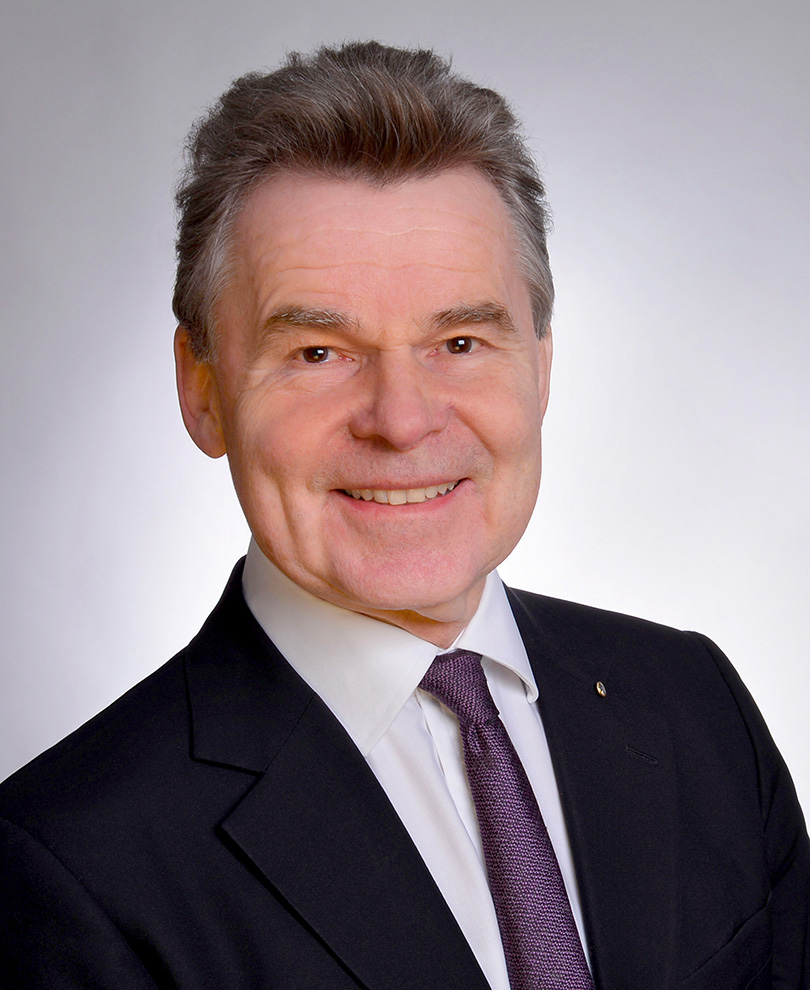
A webinar by SCHICK Immobilien with around 600 registered participants dealt with an annual outlook for 2026 for the residential investment market. The three panelists Jürgen Michael Schick (founder and managing director of SCHICK Immobilien and honorary president of the real estate association IVD), Jan Grade (managing director of empirica regio) and Stefan Hillbrand (CEO of Interhyp) talked about key developments and assessments of the real estate market and presented their forecasts.
Statements on the annual outlook for the residential investment market 2026
Jürgen Michael Schick, CEO of Schick Immobilien, Honorary President IVD
- “In a two-year comparison, we recorded a 30 percent increase in the number of transactions in apartment buildings and residential and commercial buildings in Berlin. This is a clear sign that the market is very dynamic again. The price development is astonishing, which has not risen like the number of transactions. In terms of purchase prices, we have so far seen a sideways movement in Germany’s largest residential investment market, Berlin.”
- “Real estate investments are becoming more affordable again, especially in the A-cities. If you compare the prices with those of 2021, the peak of the real estate boom, you can see that an apartment building in one of the seven A cities today has the same factor as a comparable property in a C city in 2021. This illustrates the comparatively attractive entry conditions of the current market environment.”
- “For many investors, it is no longer interest rate hikes or new ESG guidelines that are the biggest risk, but the announced changes in tenancy law. In particular, the results of the Berlin election and the possible resulting socialisation of large portfolio holders or the suspension of index-linked leases make Germany unattractive for residential investments. This could potentially further exacerbate the situation on the housing market. In the long term, this erodes confidence in the German market.”
- On the declining affordability for owner-occupiers: “The scandal lies above all in the drastic increase in real estate transfer tax in the last 20 years. Politicians are thus erecting unnecessary hurdles and ensuring that fewer and fewer families can afford property.”
Jan Grade, CEO, empirica regio GmbH
- “In terms of price development, we have bottomed out in all segments. For example, we registered a price increase of 2.6 percent again in the new construction segment of condominiums. However, rents have risen even more. In 2025, the asking price in the new construction segment rose by 4.0 percent and in the existing segment by 4.4 percent. Rents are therefore rising faster than purchase prices. This offers a favourable entry window for investors and owner-occupiers.”
- “In the case of financing, two effects in particular are relevant. On the one hand, the sharp rise in interest rates has led to a certain income segment no longer being able to afford their own property. On the other hand, we are observing that it is becoming increasingly difficult for the younger generation to raise equity. This makes it difficult for many to access property. It would also be a relief for the rental housing market if more people were able to afford their own property again. Lower ancillary acquisition costs, for example in property tax, could also significantly relieve the rental market in the big cities.”
- “We see the rent regulatory projects as a major factor of uncertainty. Be it the discussion about the rent brake, socialization or the indexed rent. Regular evaluations, for example which cities are subject to the rent brake, also unsettle investors and do not create new living space, which is so urgently needed in many German cities.”
Stefan Hillbrand, CFO Interhyp Group
- “At Interhyp, we notice a great deal of motivation to acquire a property – especially due to the sharp rise in rents and the low supply on the rental market. Banks are once again increasingly willing to grant construction loans to end consumers. The financing environment has therefore improved significantly compared to the difficult market environment in 2022.”
- “Over the past decades, the proportion of investors has gradually increased. Here, a doubling from 12 to 27 percent has taken place in the last 15 years. This clearly shows the increasing attractiveness of real estate investments.”
- “For many interested parties, the lack of equity is the biggest barrier to entry. After all, banks usually do not co-finance the ancillary costs of the acquisition. In markets such as Munich, the required equity share for a two-room apartment can be as high as 80,000 to 100,000 euros. This increases the rental rate in the big cities. Here it would be desirable for politicians to create more opportunities, for example in the form of funding programs, to overcome this hurdle. Investors often have better subsidies, e.g. depreciation options, than owner-occupiers.”
- “Housing is and will remain a crisis-resistant asset for investors. Surveys show that 95 percent of Germans are most concerned about housing, along with health. Investors are therefore guaranteed to invest in a market in which there will be brisk demand at most locations.”