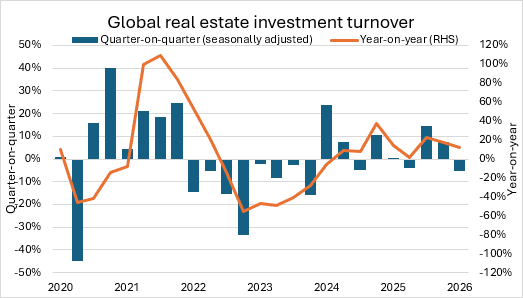
The global private equity sector is not experiencing a temporary downturn. Rather, the market environment has undergone structural change. Higher financing costs, longer holding periods and a more selective exit environment are now having a lasting impact on the asset class. This also shifts the key question for investors: it is no longer simply a matter of how much capital can be invested, but how capital can be successfully returned to investors.
This is the conclusion reached by Mark Zünd, Head of Private Equity Solutions at Sagard, in the latest edition of Private Equity Insights. His analysis describes a new market regime in which operational value creation, liquidity management and disciplined portfolio management are increasingly decisive for investment success
From a rocket launch to a safe re-entry
“The laws of physics have not changed – but the gravitational field certainly has,” says Zünd, describing the current situation. Whilst, during the period of low interest rates, favourable financing, rising valuations and a dynamic exit environment supported many investments, higher costs of capital and more complex market conditions now require significantly greater discipline throughout the entire investment cycle.
Successful private equity is therefore not achieved simply by taking a stake in a company. A convincing value creation plan, the continuous development of the companies, and credible exit strategies are crucial. At the same time, actual capital returns (Distributed to Paid-In Capital, DPI) are becoming increasingly important compared with pure valuation metrics such as the TVPI. The targeted use of the secondary market can also help to manage capital more efficiently and support distributions to investors.
Why the small and mid-market could have the edge
Against this backdrop, Sagard continues to see attractive investment opportunities, particularly in the small and mid-market. Compared with large buyout transactions, medium-sized companies often offer lower entry multiples, attractive potential for organic growth and a broader range of possible exit strategies.
Small and medium-sized enterprises, in particular, often have considerable potential for growth – for example, through digitalisation, internationalisation, ‘buy-and-build’ strategies or the professionalisation of management structures. Many operate in attractive niche markets or are still run by their founders. As a result, value growth is increasingly driven by the companies’ operational performance rather than by favourable capital market conditions.
At the same time, Sagard points out that these opportunities also carry risks. Market volatility, operational challenges and a more demanding funding environment call for careful selection of companies and fund managers.
Artificial intelligence is transforming the entire investment process
In addition to changing market conditions, artificial intelligence is also emerging as a key factor influencing private equity investments. AI can help companies to automate processes, speed up decision-making, improve fraud prevention and tap into new product potential.
At the same time, particularly in the case of software- and technology-oriented business models, existing competitive advantages can change fundamentally over a typical holding period. In Sagard’s view, AI should therefore not be regarded as an isolated investment theme, but should be taken into account throughout the entire investment process – from underwriting through operational value creation to exit planning.
Discipline is becoming a key competitive factor
The new market environment is likely to further widen the gaps between fund managers. According to Sagard, success in future will be less about those who invest capital as quickly as possible or manage the largest funds. Rather, the decisive factors will be disciplined underwriting, active portfolio management, operational value creation and the ability to reliably return capital to investors across different market phases.
As the private equity market undergoes structural change, the focus is shifting more towards the quality of the investment process than simply the speed of capital allocation.