Geopolitical uncertainties are slowing down the recovery of the German real estate market. This is shown by a recent survey of asset and investment managers by Real Blue Kapitalverwaltungs-GmbH (Real Blue). Around three-quarters of those surveyed rate the impact of the situation in the Middle East on the real estate investment market as negative: 24 percent see very negative consequences and a further 52 percent rather negative. Only three percent expect positive effects.
From the point of view of the respondents, the geopolitical situation has a particularly strong impact on expectations of interest rate developments. Around 70 percent assume that interest rate cuts by the European Central Bank will be significantly delayed, while a further 15 percent expect at least slight delays.
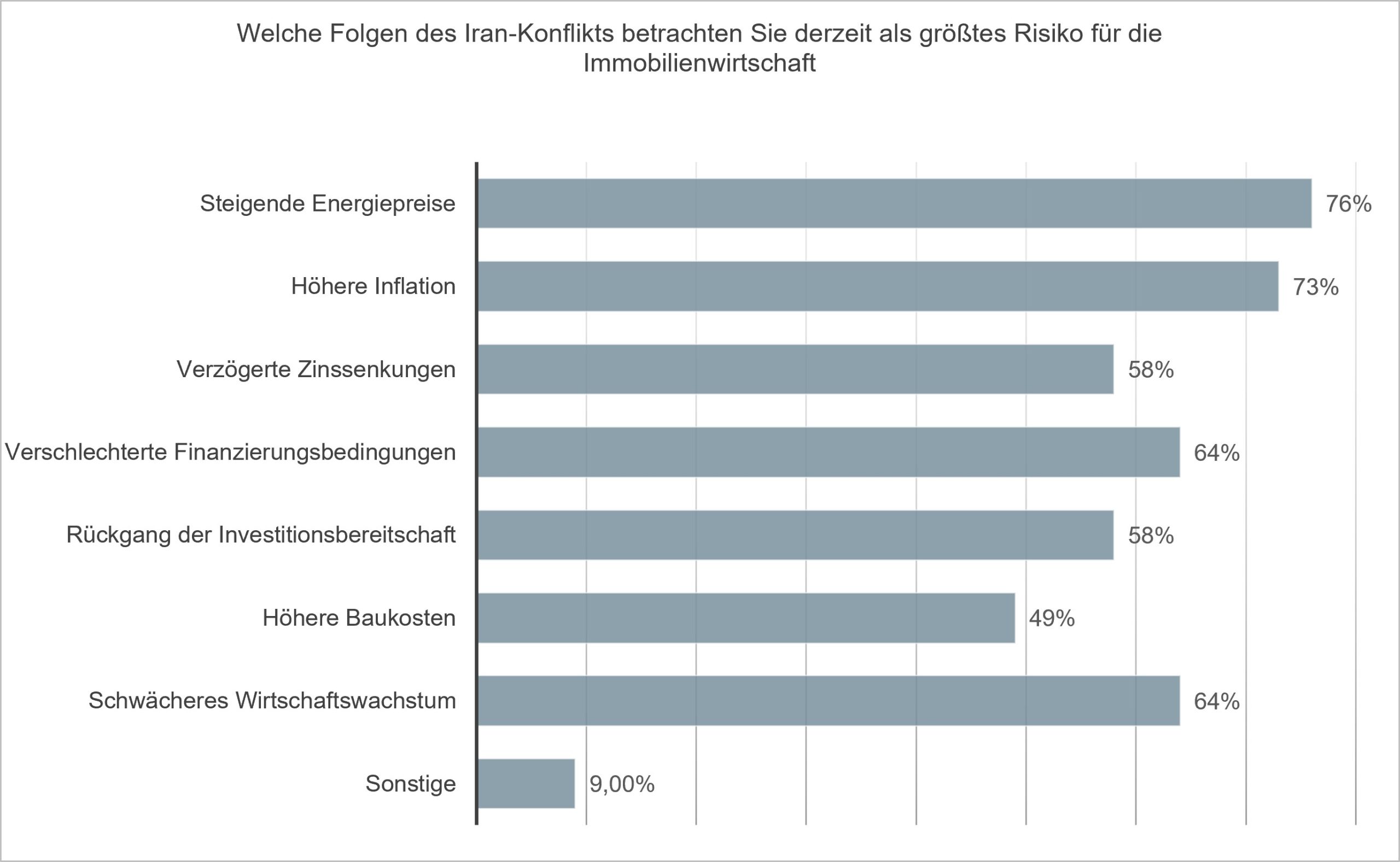
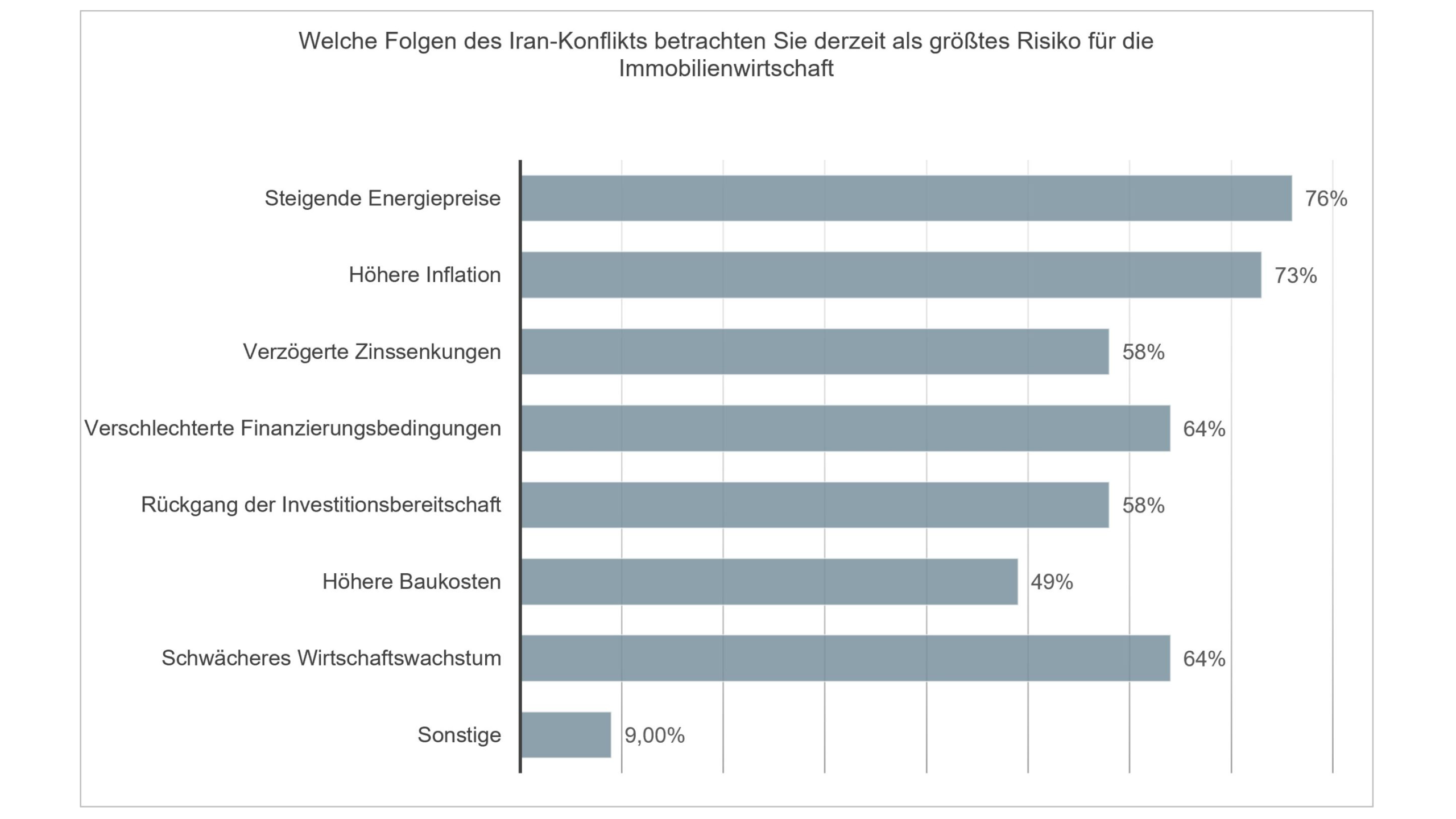
The respondents cite rising energy prices at 76 percent and higher inflation at 73 percent as the greatest risks for the real estate industry. Almost two-thirds each also see deteriorating financing conditions and weaker economic growth as major risks.
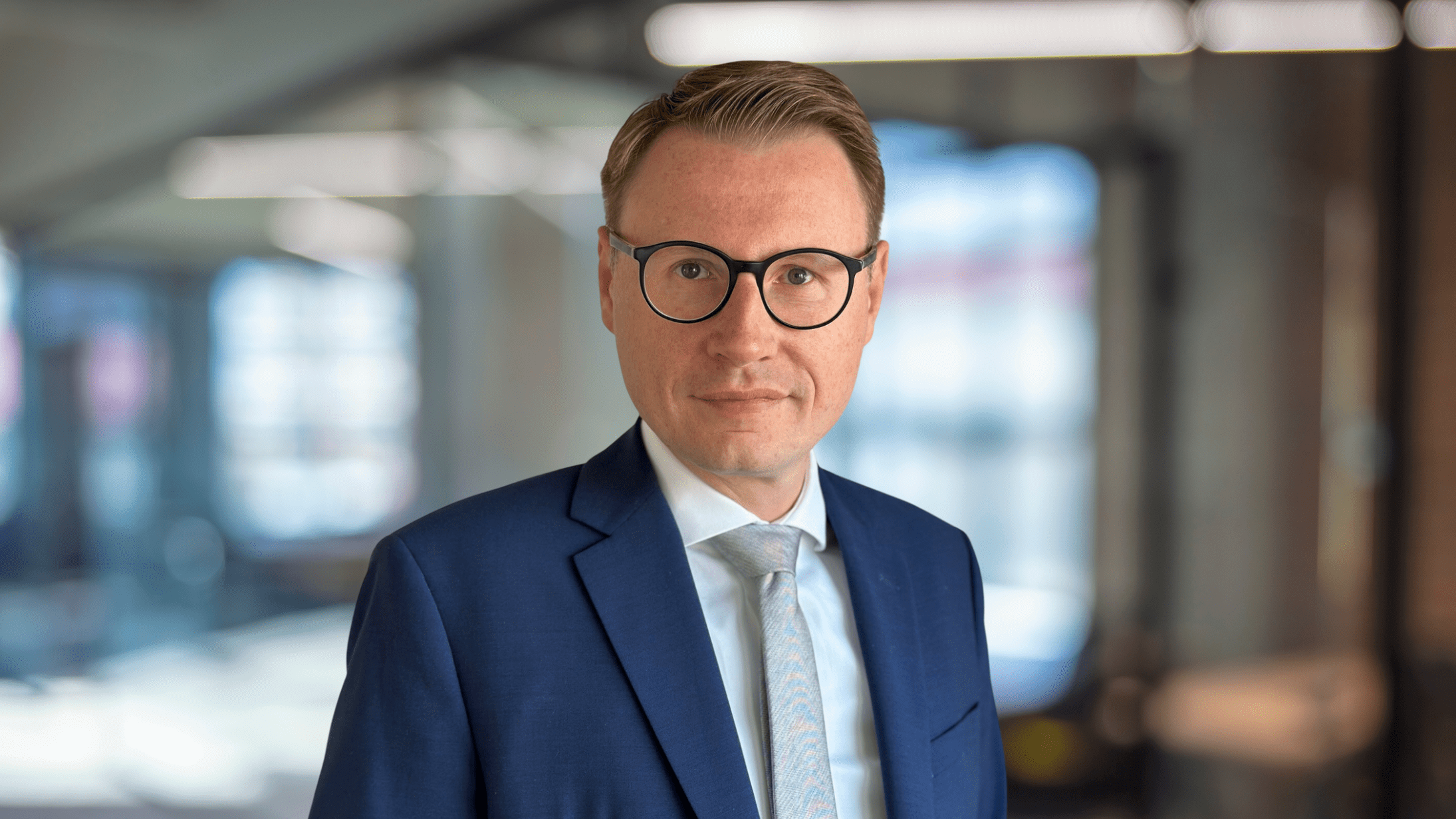
Michael Eisenmann, Managing Director of Real Blue, comments: “Geopolitical uncertainty is currently affecting the real estate market primarily indirectly through energy prices, inflation, financing costs and the overall economic outlook. As a result, market stabilisation is likely to take longer. In this market phase, there will be an even greater differentiation according to type of use, location and property quality. In particular, investments and uses with long-term stable demand and resilience to the economic environment are likely to become increasingly important in this context.”
This differentiation is particularly evident in the types of use. At 85 percent, residential is by far the most resilient type of use. This is followed by food-anchored retail with 42 percent and logistics with 39 percent. Healthcare properties as well as infrastructure and energy properties each come to 36 percent. Data centers are considered particularly resilient by 27 percent of respondents.
According to the survey, expectations for the investment market have clouded over. A total of 55 percent expect a decline in transaction volume in the second half of 2026. A third expect a stable market volume. Only 12 percent expect a slight increase.
Only a minority expects a quick easing of the situation. Only 18 percent expect market sentiment to normalize within the next six months. 30 percent expect this within a year, another 24 percent only after more than twelve months. More than a quarter do not dare to make a forecast at the moment.
Despite the current geopolitical situation, interest rate developments remain the most important factor for the German real estate market in the coming twelve months. 30 percent cite it as a decisive influencing factor, followed by economic growth at 24 percent. Geopolitical crises are only in third place at 15 percent.
About the surveyA total of 33 institutions took part in the survey between 31 July and 30 August 2026. Half manage up to one billion euros, 26.7 percent manage between one and five billion euros, and a further 23.3 percent manage more than five billion euros.