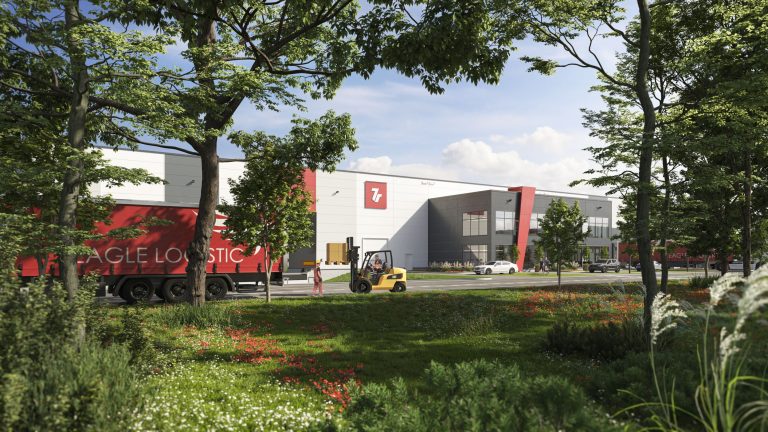
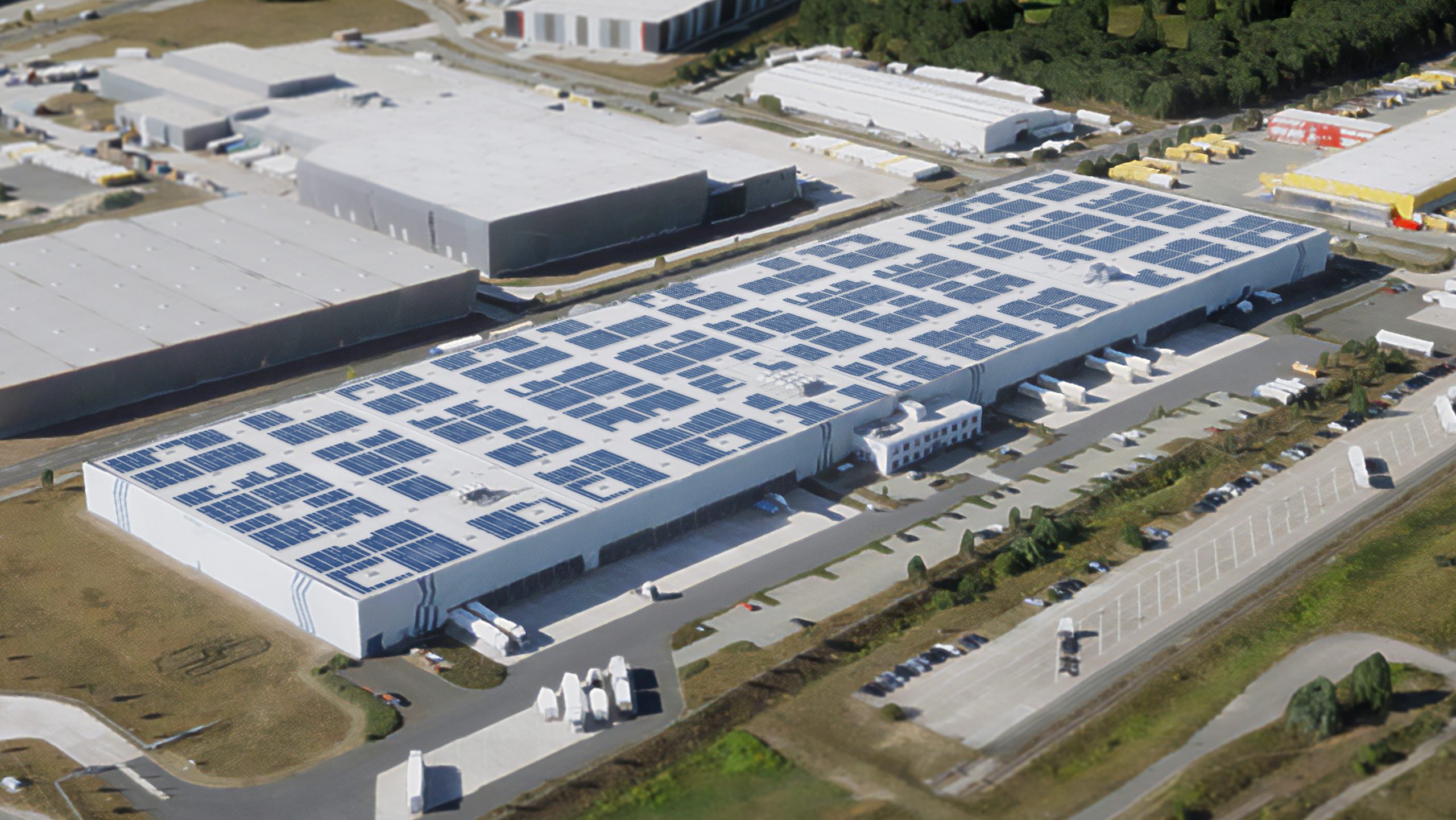
The rooftop PV system is being built on the logistics property of around 35,000 m² and forms the basis for decentralised power generation at the site; an expansion to include controllable flexibility with battery storage is planned as the next expansion step.
At a glance:
- 3,427.2 kWp PV output
- More than 3.3 million kWh annual electricity production
- 7,616 PV modules on around 15,000 m² of generator area
- 1.3 million kg CO2 savings per year
- 24 Inverters
- Implementation in the roof rental model
- On-site use of the solar power generated by the Nagel Group
The decentralised energy supplier ENVIRIA is implementing a photovoltaic system at the Wustermark logistics site together with Real I.S. AG, a fund service provider specialising in real estate investments, and the Nagel-Group. The system will be installed on the roof of the property and will supply the site with locally generated solar power in the future.
With an installed capacity of 3,427.2 kilowatt peak, the plant generates more than 3.3 million kilowatt hours of electricity annually. This corresponds to the annual supply of about 1,100 average households. 7,616 PV modules will be installed on a roof area of around 15,000 m². The projected CO2 savings are just under 1.3 million kilograms per year.
PV as the basis for local power generation
The photovoltaic system uses the large roof structure of the logistics property to generate electricity directly at the site.
“Large logistics roofs provide the technical basis for generating electricity exactly where it is consumed,” says Melchior Schulze Brock, CEO of ENVIRIA. “In Wustermark, we are creating the basis for a local energy supply with the PV system. On this basis, other building blocks such as storage and energy management can be systematically supplemented.”
The implementation of the PV system is the first step in the further development of the site. The initial focus is on the generation of solar power on a free roof area that has not yet been used for energy.
Use of existing roof areas in the Real I.S. portfolio
For Real I.S. AG, the integration of a PV system at the Wustermark logistics site is part of its portfolio-wide PV strategy to reduce greenhouse gas emissions:
“The photovoltaic system turns a previously unused roof area into a component of the site’s energy supply. For us, this is particularly relevant from a portfolio perspective: the property is given an additional level of use without changing its existing function. At the same time, we are making plannable contributions to the decarbonisation of the portfolio and to the energy-efficient development of our logistics areas,” says Michael Thomann, Director Asset Management at Real I.S. AG.
Nagel-Group as a tenant: solar power for site operations
For the Nagel-Group, the focus is on the use of the electricity generated on site during ongoing site operations:
“At the Wustermark site, we need reliably available energy for our logistics processes. The solar power generated on site can replace a significant part of our electricity from the grid and thus has a direct impact on the site’s energy cost structure,” says Christian Hanke, Area Manager at the Nagel-Group.
Roof rental as an implementation model
The implementation is carried out via the roof rental model. ENVIRIA is responsible for the planning, financing, installation and operation of the photovoltaic system. Real I.S. AG provides the roof areas, while the Nagel-Group uses the electricity generated on site. The model also reduces the investment expenditure on the owner and tenant side.
Outlook: Next expansion step with controllable flexibility through battery storage
Based on the PV system, an expansion to include controllable flexibility is planned at the Wustermark site. The next expansion step is to examine how battery storage and energy management can control the use of the electricity generated as well as the grid purchase in terms of time.
A battery storage system would not replace the PV system, but complement it: The PV system generates electricity, the storage system enables consumption and grid consumption to be postponed over time. This can reduce peak loads and optimise grid charges. In addition, electricity can be purchased at favourable times, stored and later used or marketed.